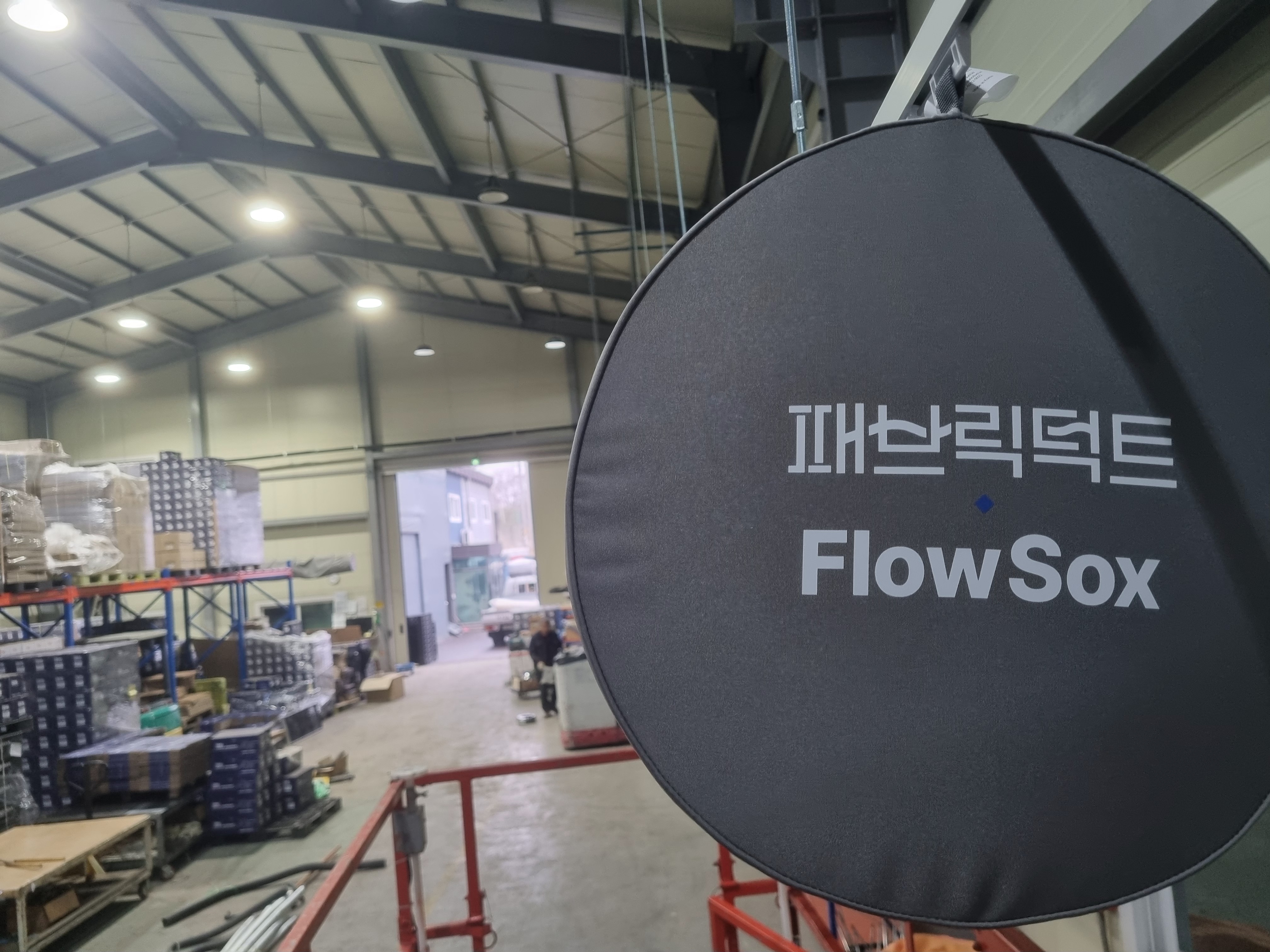
The AutoBreeze site was an automotive manufacturing plant where workers operated along fixed production lines. It was more important to deliver cooled air to the specific lines where workers were stationed rather than cooling the entire large space uniformly.
If a 3,500 sq. ft. manufacturing plant is designed for total space cooling, areas without workers are cooled unnecessarily. This increases equipment capacity requirements and run times, leading to higher installation and operating costs.
Installing air conditioners alone can cause cold air to stagnate near the equipment or in limited zones. To distribute cooled air evenly across the entire production line, a design was needed to transport and disperse the air from the unit to the required locations.
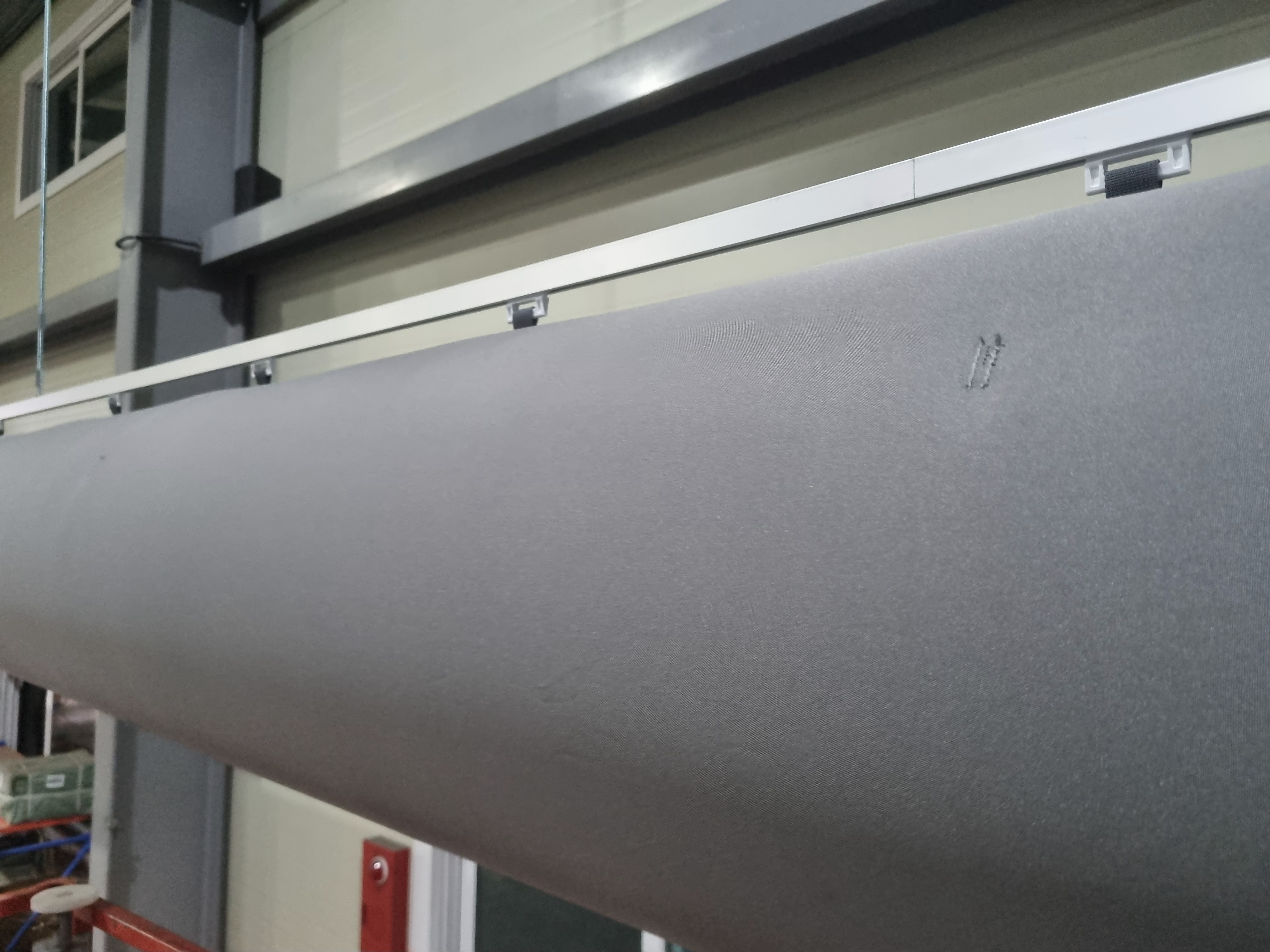
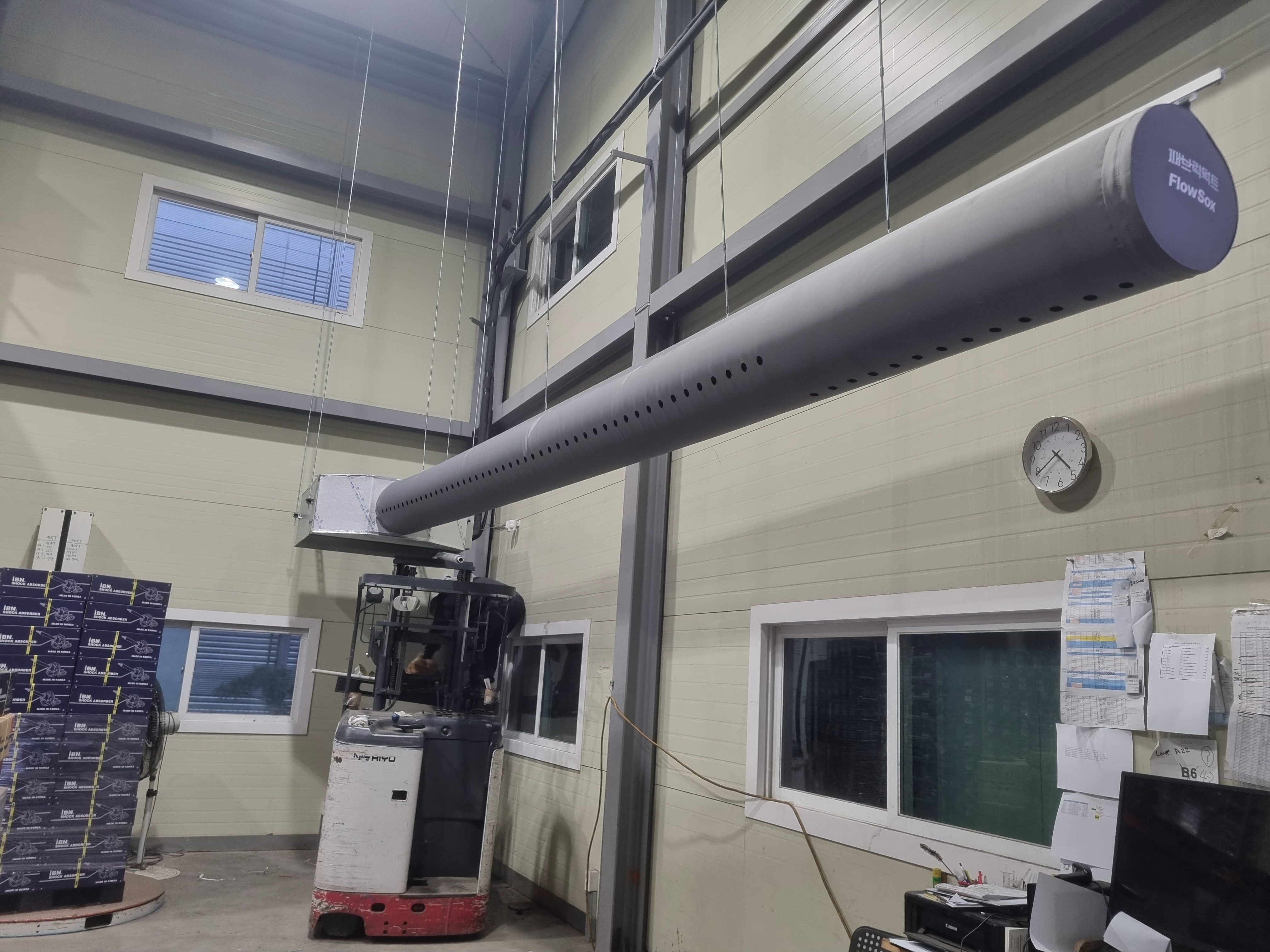
We installed one 2,800 sq. ft. capacity ceiling-mounted air conditioner and connected the airflow to fabric ducts. By configuring the system so that cold air travels toward the production lines rather than staying near the unit, we designed a way to utilize a single cooling device more efficiently.
Instead of cooling the entire factory to the same temperature, we set the production lines where workers are actually stationed as the target cooling zones. By aligning the duct discharge direction and installation points with the workflow, we ensured that cooled air reaches the locations where workers can feel it.
Rather than adding more cooling equipment based on the total 3,500 sq. ft. area, we optimized the system capacity based on the production lines that actually required cooling. By distributing cooled air to the necessary sections via fabric ducts, we designed the site to be serviced by a single 2,800 sq. ft. capacity unit without the need for additional air conditioners.
Although it was a manufacturing plant of approximately 100 pyeong, we designed a spot-cooling system focused on the production line rather than cooling the entire space, allowing us to complete the project with just one 80-pyeong capacity air conditioner. By concentrating the cooled air exactly where it was needed, we minimized the number of units required.
By using fabric ducts to distribute the air conditioner's output toward the production line, we ensured that cool air reaches the areas where workers are stationed. This structure creates a more effective cooling experience for workers compared to running an air conditioner on its own.
Instead of adding more cooling equipment, we designed the system to concentrate the output of a single 80-pyeong capacity air conditioner onto the production line. By avoiding the need to cool the entire factory, we reduced both the number of units and the cooling load, leading to significant savings in installation and operating costs.
.jpg)
.jpg)