
Areas directly exposed to the unit cooler's airflow were prone to moisture loss and cold damage, leading to a decline in product quality.
Insufficient airflow between boxes and in peripheral areas caused ethylene gas to stagnate, accelerating spoilage and degrading storage quality.
Bulky metal ducts and distribution devices occupied overhead storage space and interfered with forklift maneuvering paths.
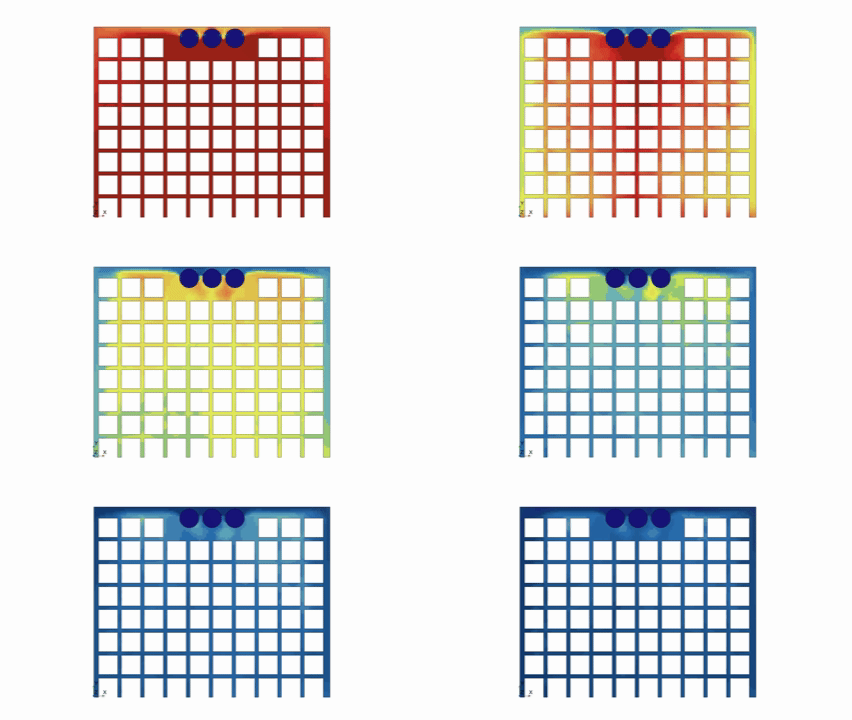
Before installation, computational fluid dynamics (CFD) analysis was used to verify that airflow between boxes remained uniform within the 0.2–0.5m/s range, proactively eliminating potential cold spots and dead zones.
By designing the location and size of perforations based on internal duct static pressure, we ensured uniform airflow distribution across the entire facility, regardless of the distance from the cooler.
A three-row straight-pipe structure installed in front of the central cooler ensures optimal air distribution while maximizing overhead storage space and maintaining clear paths for forklift operations.
By maintaining a temperature variance of within ±1℃ throughout the entire storage facility, we have minimized environmental differences based on location and ensured long-term storage stability.
We have created ideal conditions for maintaining storage quality by implementing an airflow of approximately 0.3m/s, which minimizes moisture loss on the apple surface while reducing ethylene buildup.
With over 95% correlation between CFD predictions and actual data, we have confirmed a precision HVAC design verified by data rather than estimation.
By simultaneously reducing the risks of cold damage, gas stagnation, and localized overheating, we have secured an environment favorable for maintaining apple firmness and storage quality.


%201.jpg)
