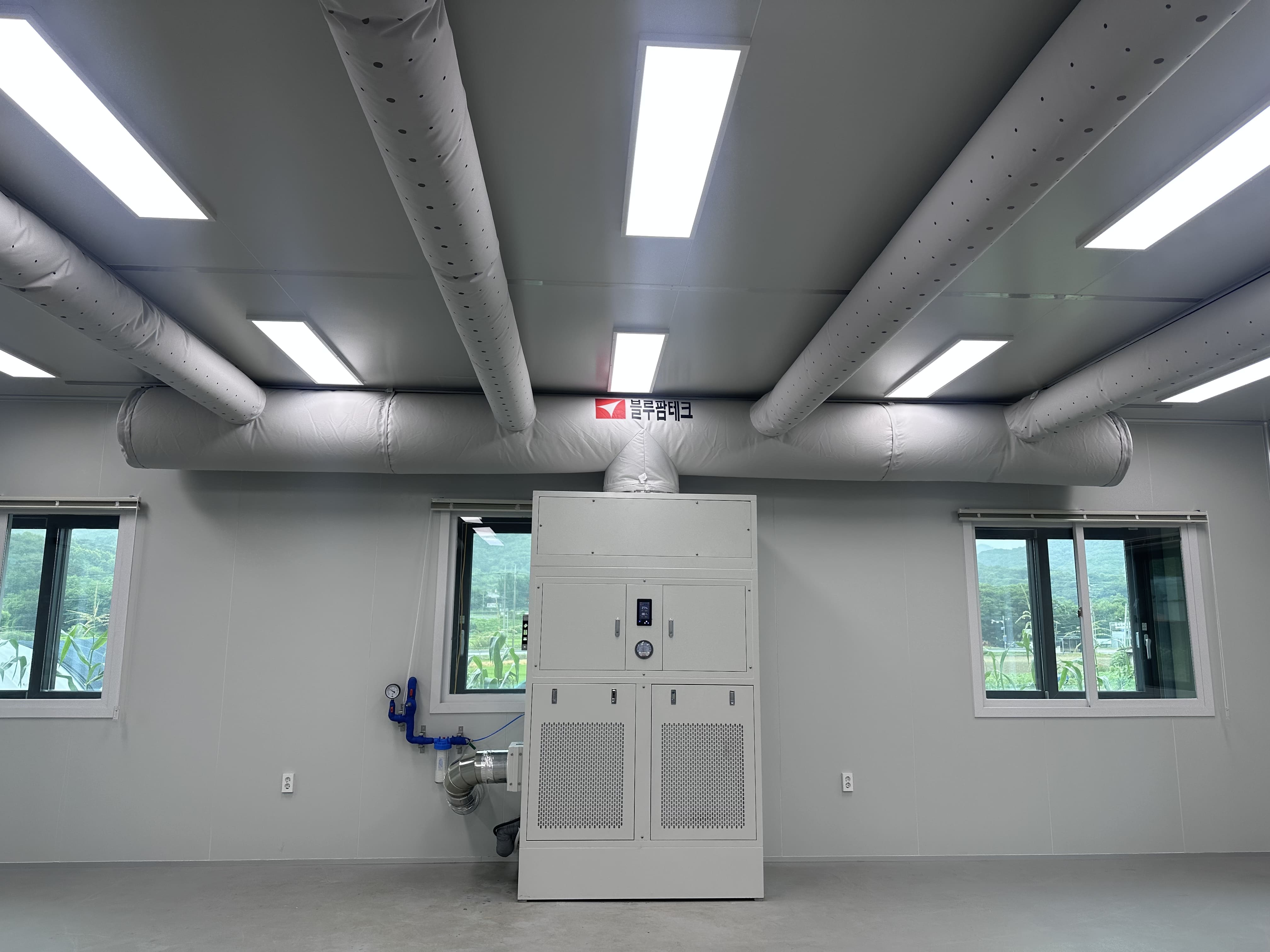
Due to the rack structures, lighting, and crop foliage blocking airflow, it is difficult for standard HVAC systems to deliver air deep into each rack.
Heat from lighting can accumulate at the top while cold air settles at the bottom, leading to growth variations across different rack levels within the same room.
If the airflow is too low, heat and humidity stagnate around the leaves and fruit; if it is too strong, it can cause unnecessary moisture stress to the crops.
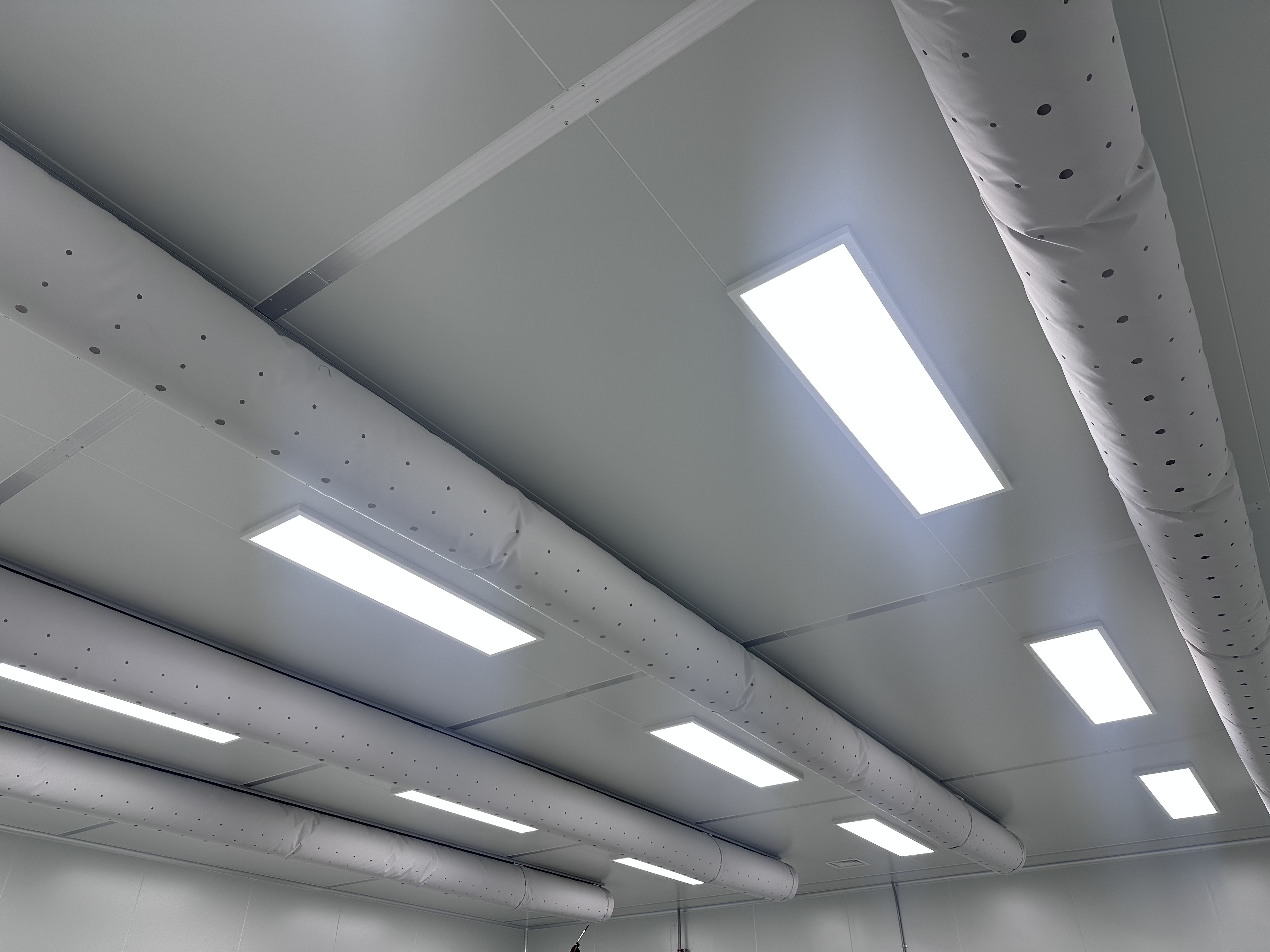
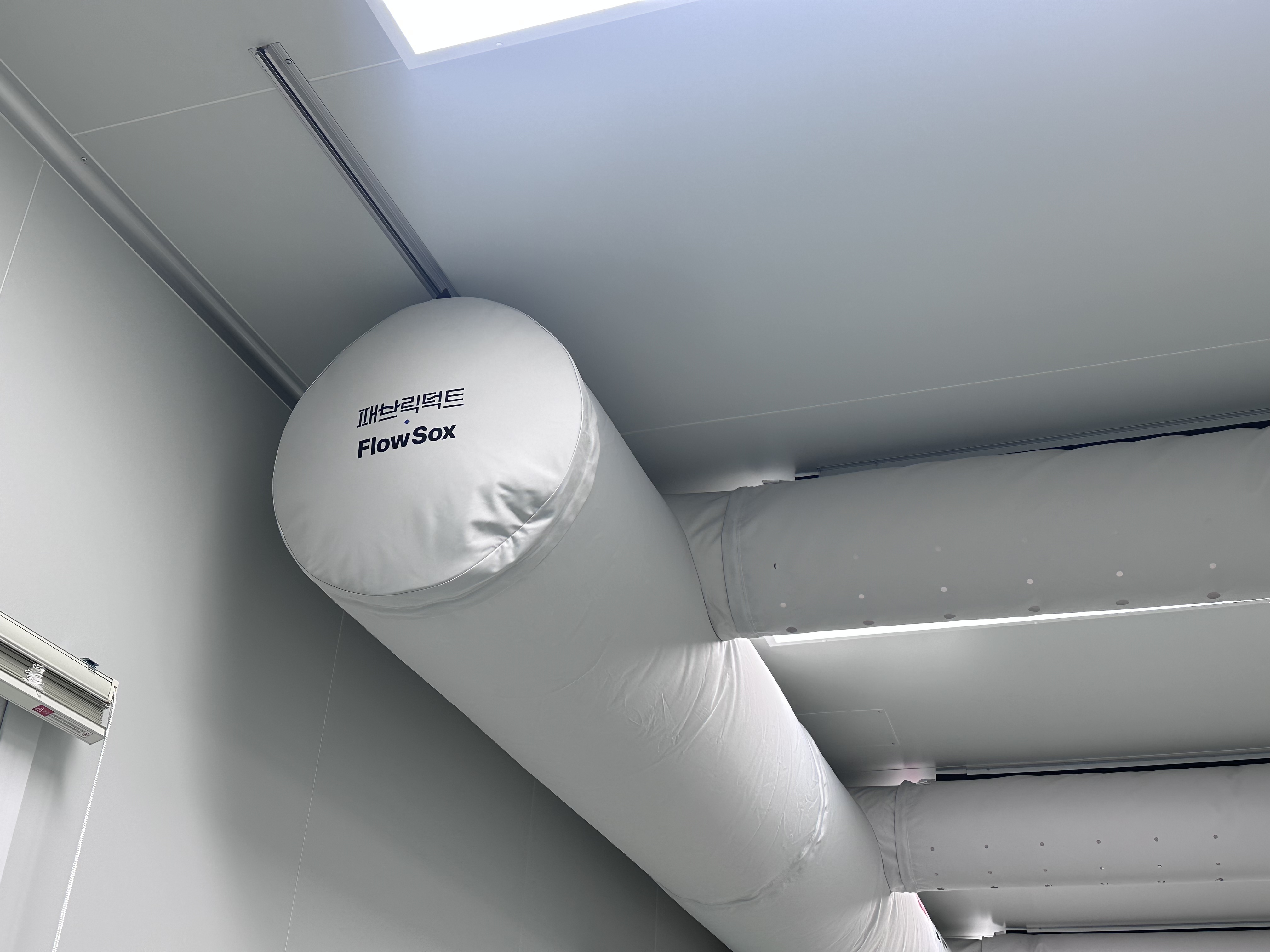
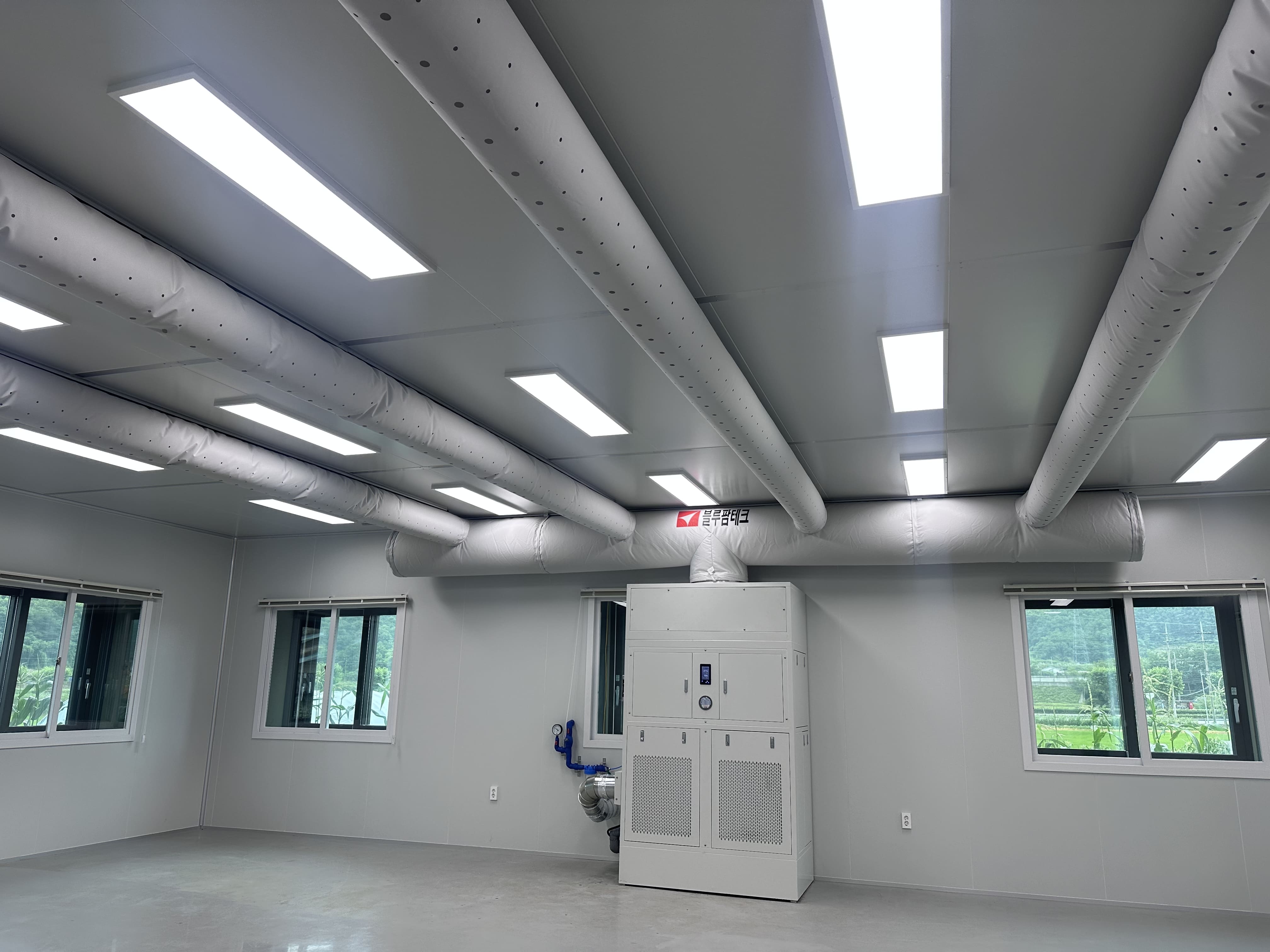
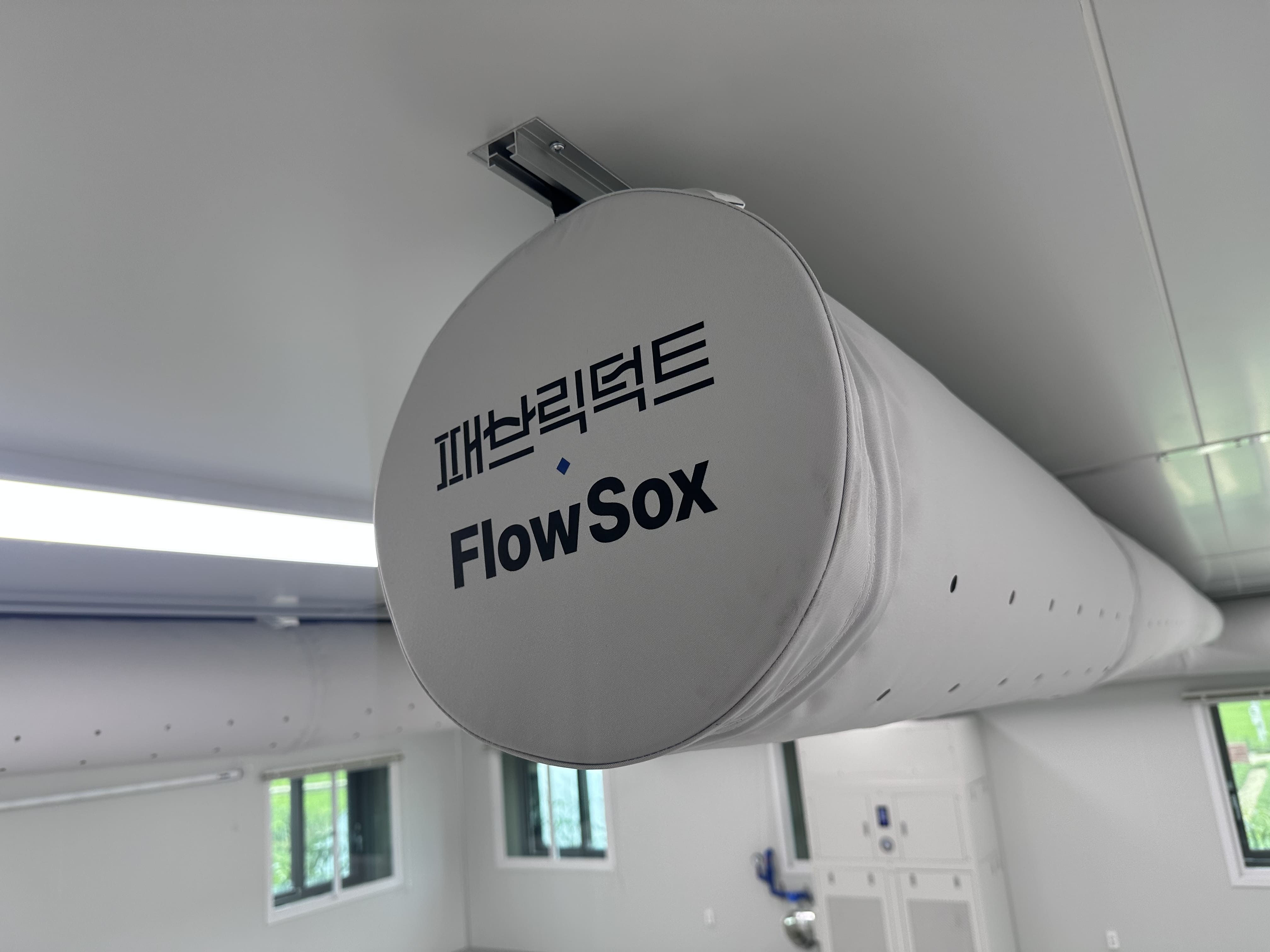
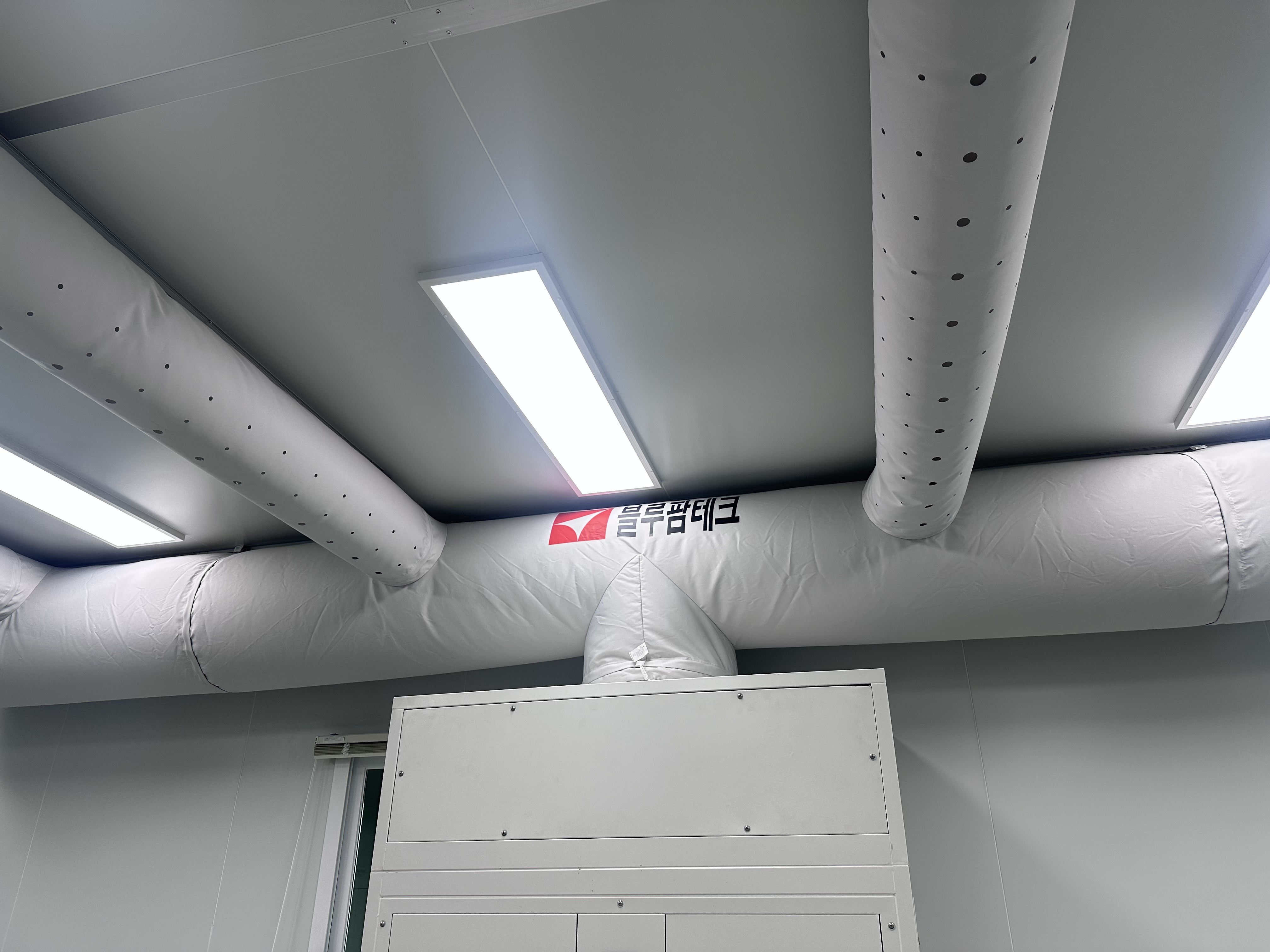
To reduce temperature and humidity variations by rack location, we designed the size and direction of the fabric duct discharge outlets to ensure even air distribution to each level.
We designed the size and direction of the discharge outlets to maintain a 0.5m/s airflow at the crop level, reducing air stagnation around strawberry leaves and fruit while preventing harsh direct drafts.
We designed the layout and specifications of the fabric ducts by accounting for rack height, spacing, and the placement of lighting and equipment, ensuring that the required air is delivered to each growing zone.
We maintained temperature fluctuations within 1℃ across the entire cultivation area, creating a uniform growing environment regardless of location.
By supplying a 0.5m/s airflow to the strawberry growing zone, we promoted healthy development while reducing the buildup of heat and humidity around the leaves and fruit.
We built a cultivation environment that ensures uniform strawberry quality by delivering air evenly to every crop location on each rack, minimizing growth variations.