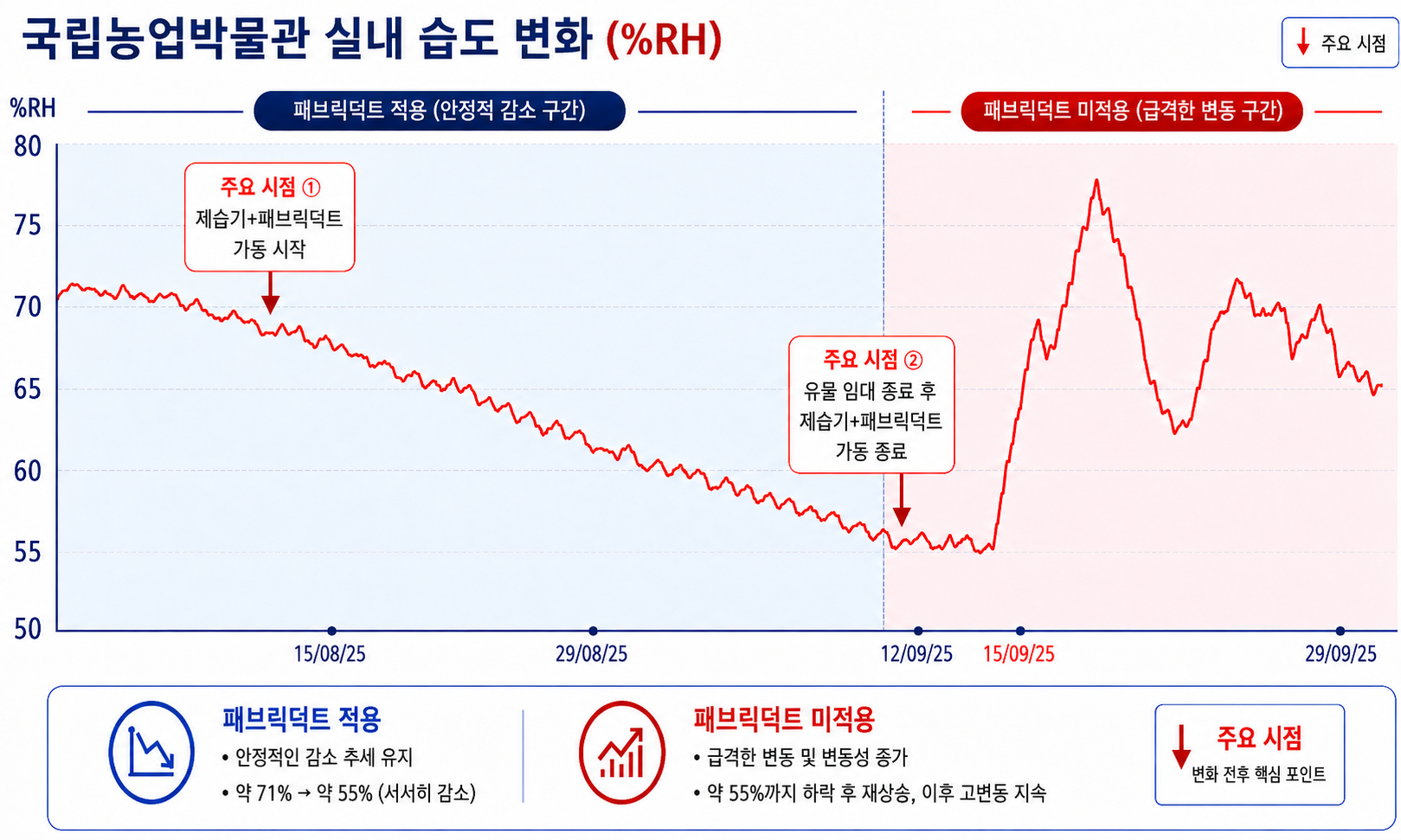
To safely display artifacts on loan, indoor humidity had to be maintained at 50%. However, the existing HVAC system was insufficient to reach the target humidity level.
Although dehumidifiers were installed to lower the humidity, the dry air did not circulate effectively throughout the large space. The layout created a risk of humidity imbalances between areas near the dehumidifiers and those further away.
A supply and return structure was needed to distribute air from the dehumidifiers throughout the space and to recover the humid air.
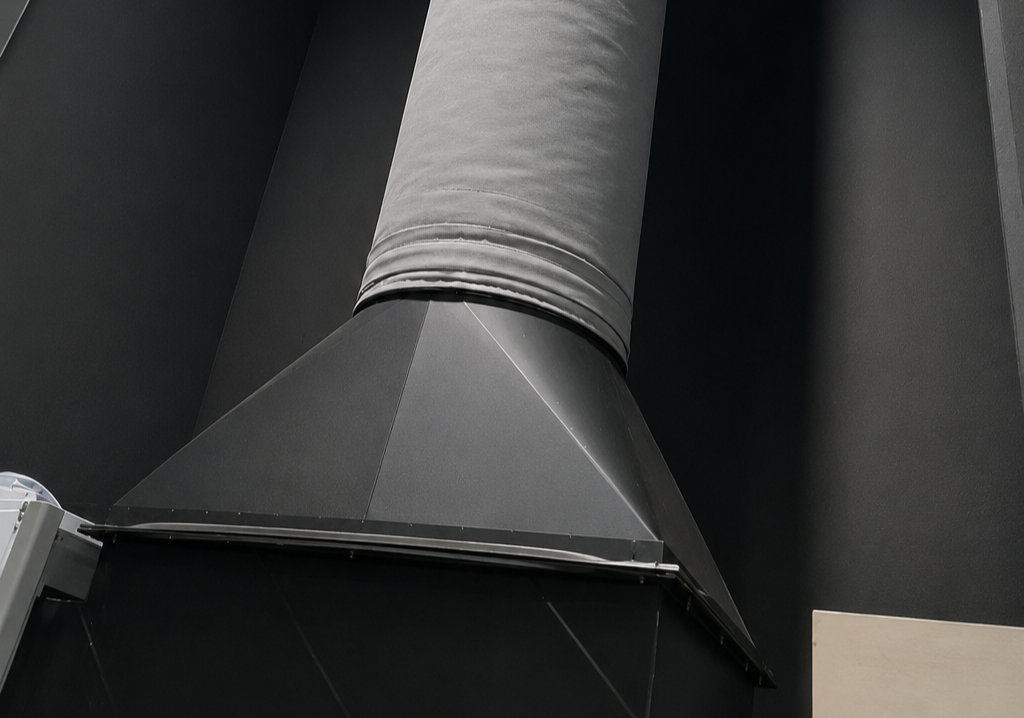
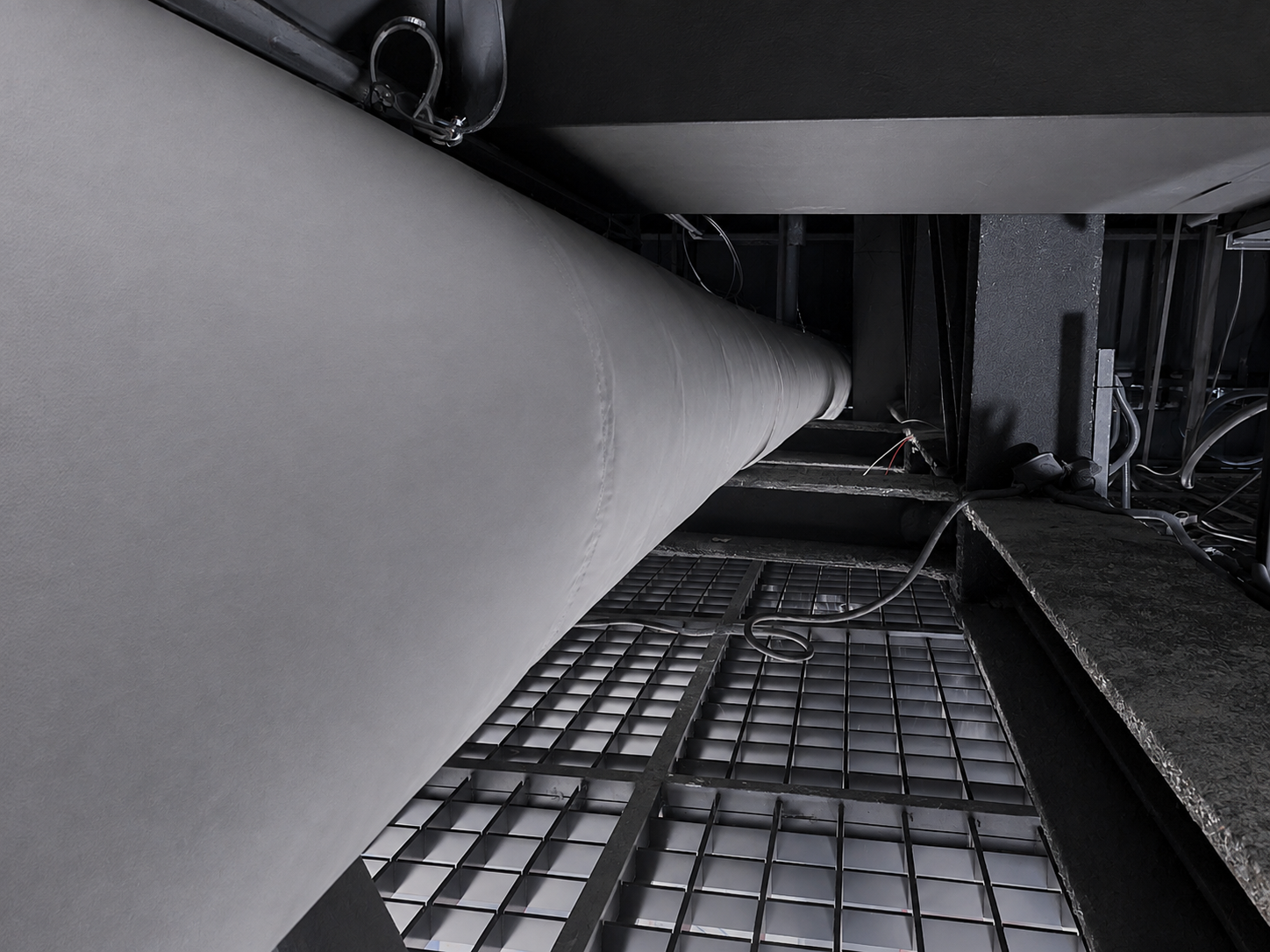
Dry air from the dehumidifiers was supplied through fabric ducts installed on the ceiling. The system was designed to distribute air from the ceiling downward, ensuring that dehumidified air reached the entire exhibition space.
By adjusting the position and direction of the fabric duct outlets, we ensured that dry air was not concentrated in specific areas. The system was designed to supply air throughout the exhibition space at a low velocity.
Return ducts were installed to draw humid air from the lower part of the space back into the dehumidifiers. By linking the ceiling supply with the bottom return, we created a continuous circulation of air within the exhibition space.
We established a dehumidification environment that maintains the 50% humidity level required for the preservation of loaned artifacts by distributing dry air from the dehumidifier through fabric ducts.
We implemented a circulation system that supplies dehumidified air from the ceiling while extracting humid air from the lower levels. This reduces air stagnation and humidity variations between zones that can occur when using a dehumidifier alone.