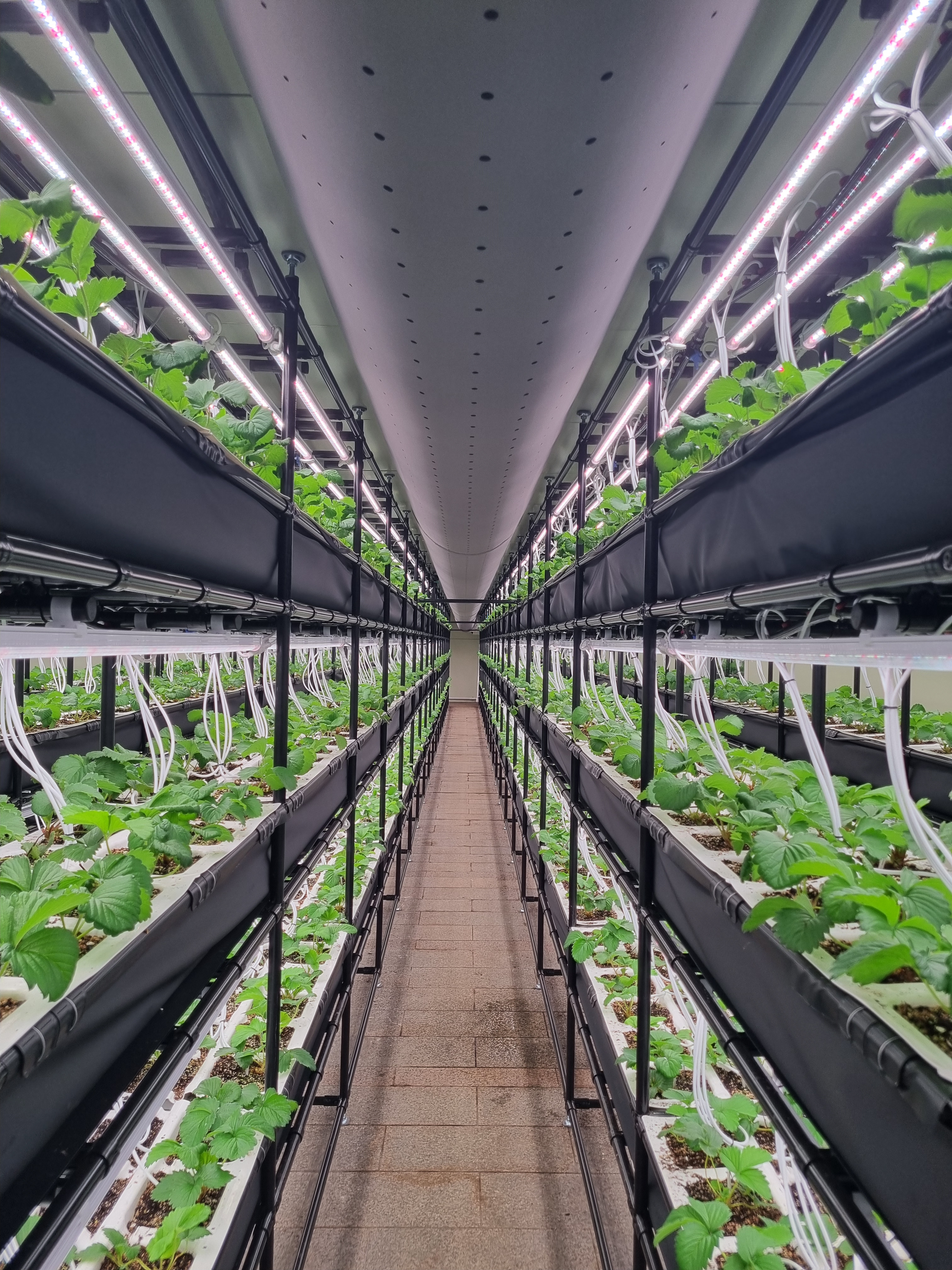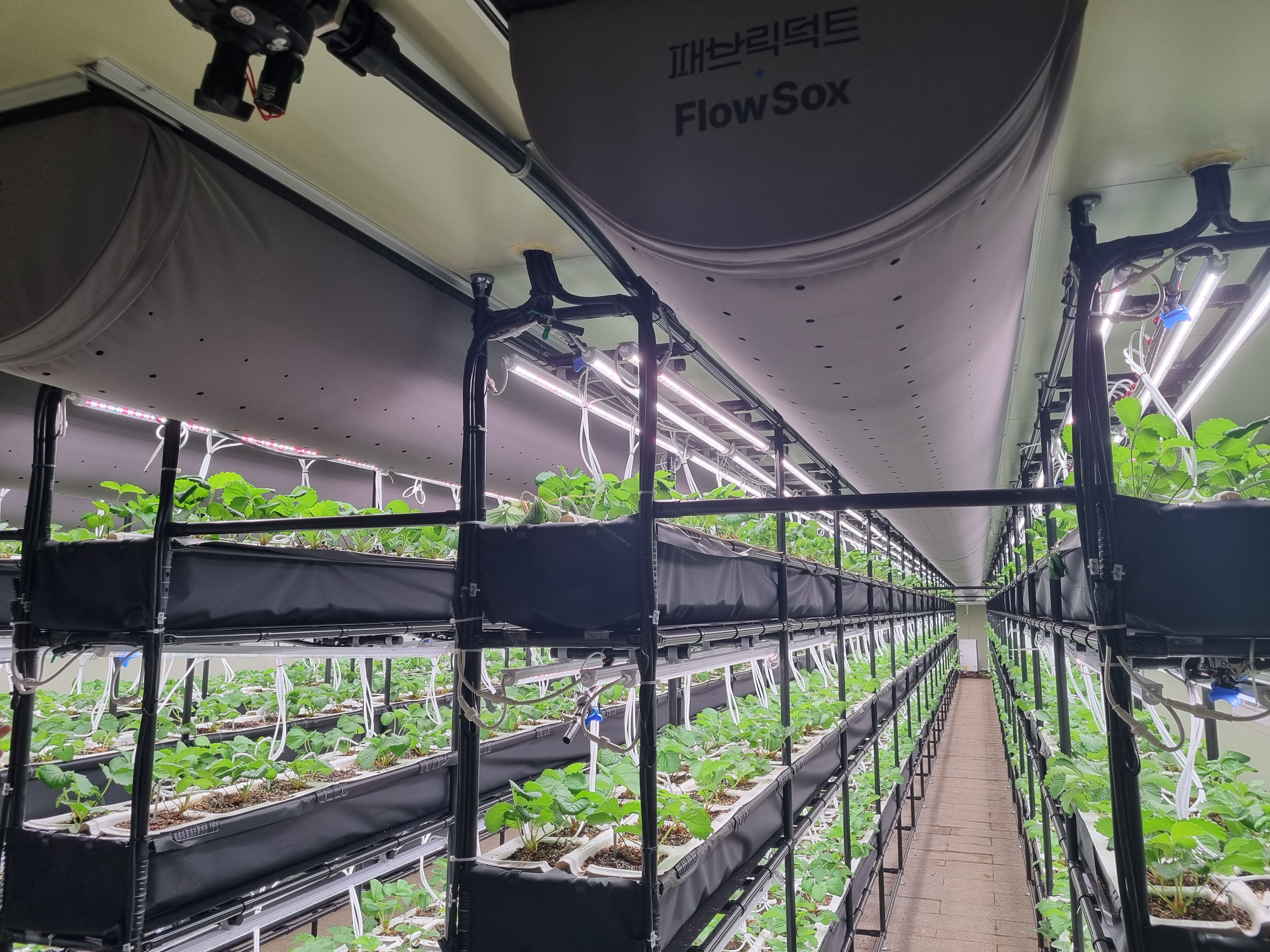
Airflow was strong near the cooler but sharply reduced toward the 24 m endpoint, creating differences in strawberry growth between zones.
Round ducts interfered with racks and lighting in the underground space. Strong direct drafts could also cause leaf drying and growth stress.
Added CO₂ accumulated in stagnant zones or concentrated in isolated areas, making overall yield difficult to predict.
Ceiling-mounted half-round ducts fitted the limited space between the ceiling and racks, reducing interference with growing operations while maintaining a stable HVAC route.
Maintaining pressure through the far end minimized airflow variation and created uniform low-speed airflow of approximately 0.4 m/s throughout the racks.
Leaf distance, airflow direction and outlet angles were precisely adjusted to gently surround strawberries rather than strike them directly.
Temperatures were stabilized to within 1°C across the full growing length, minimizing location-dependent growing conditions.
Consistent low-speed airflow supported photosynthesis and transpiration without stressing crops.
Reducing temperature, velocity and CO₂ differences provided a foundation for more consistent growth, predictable harvest timing and improved operations.