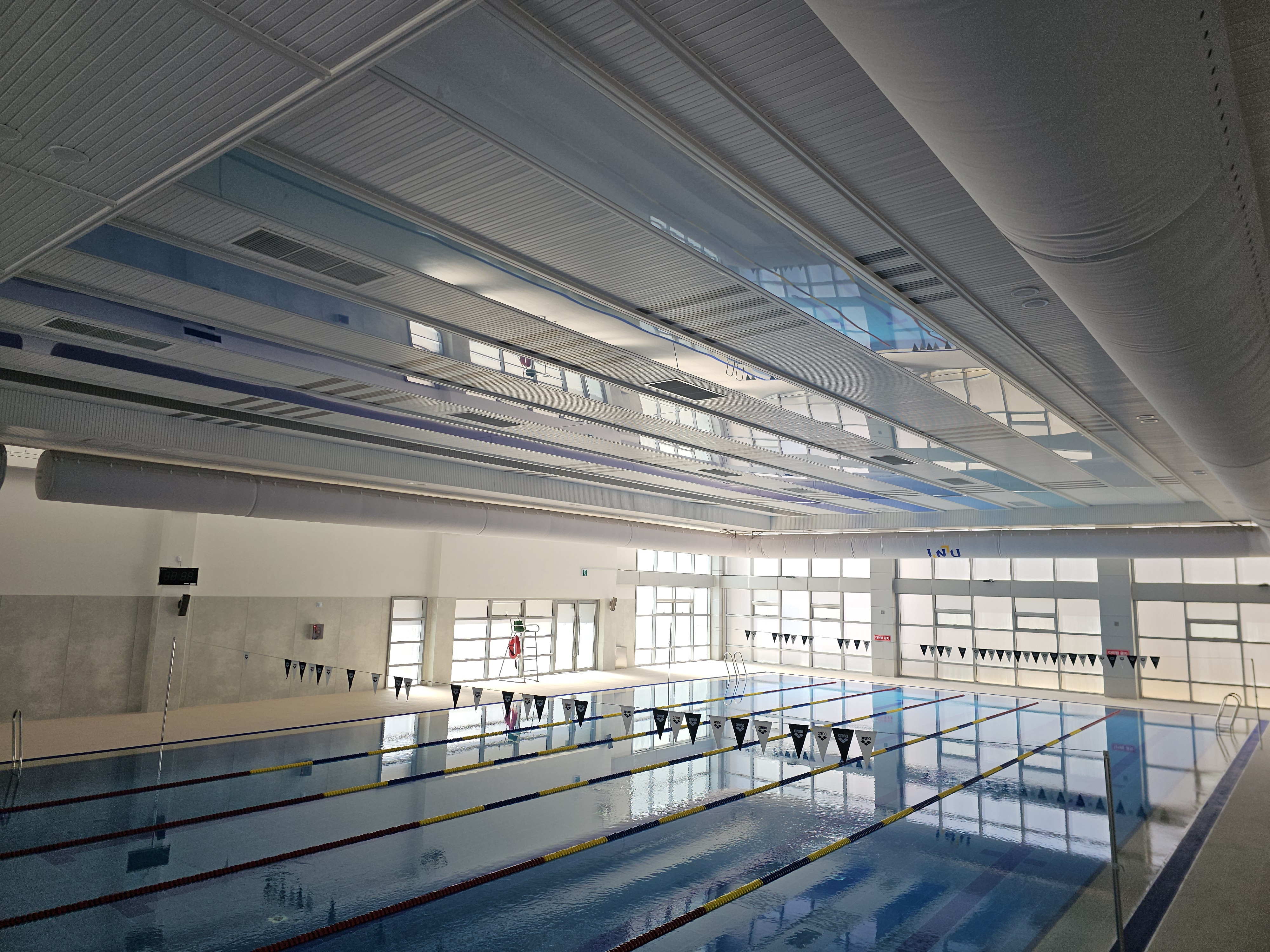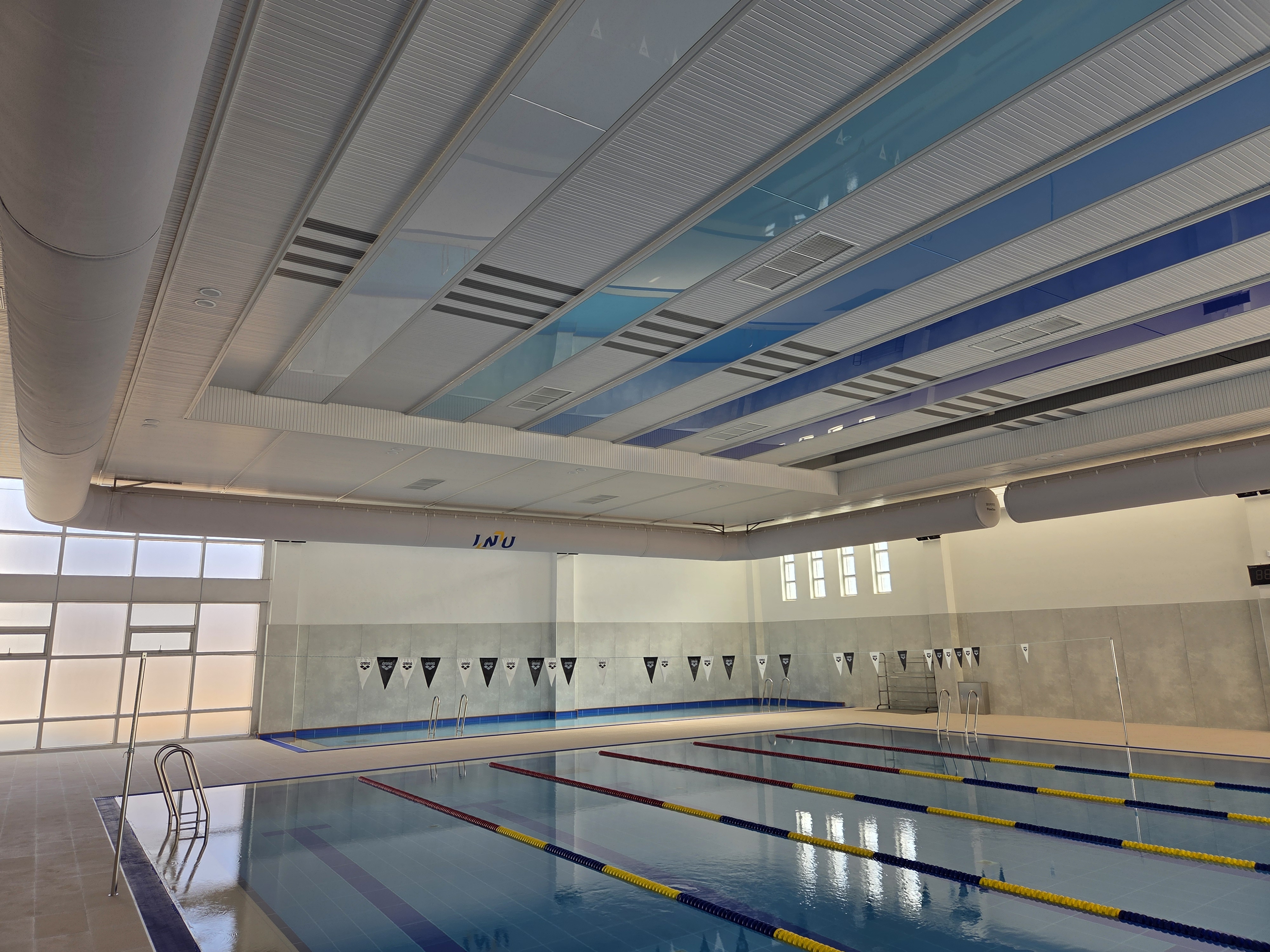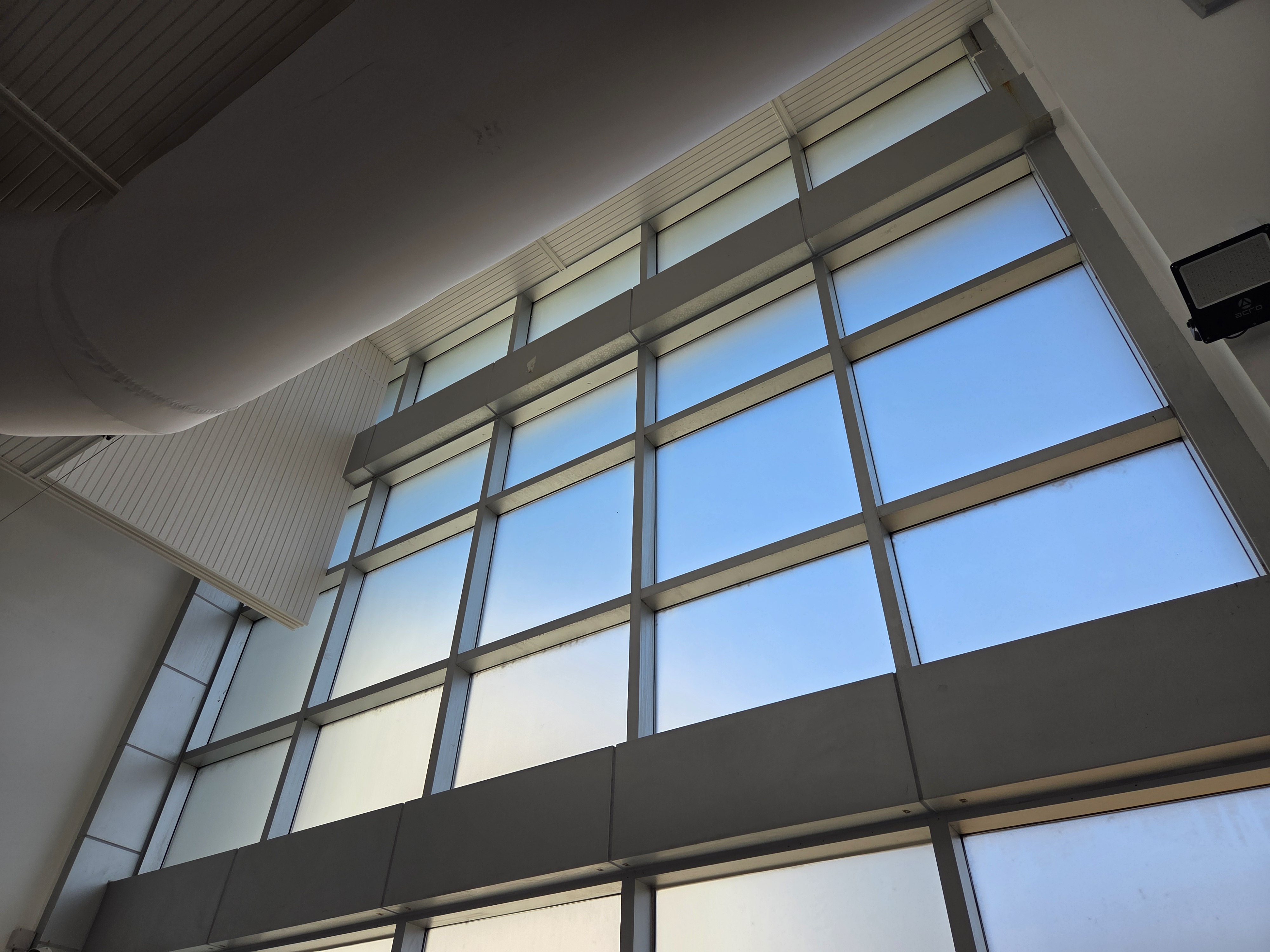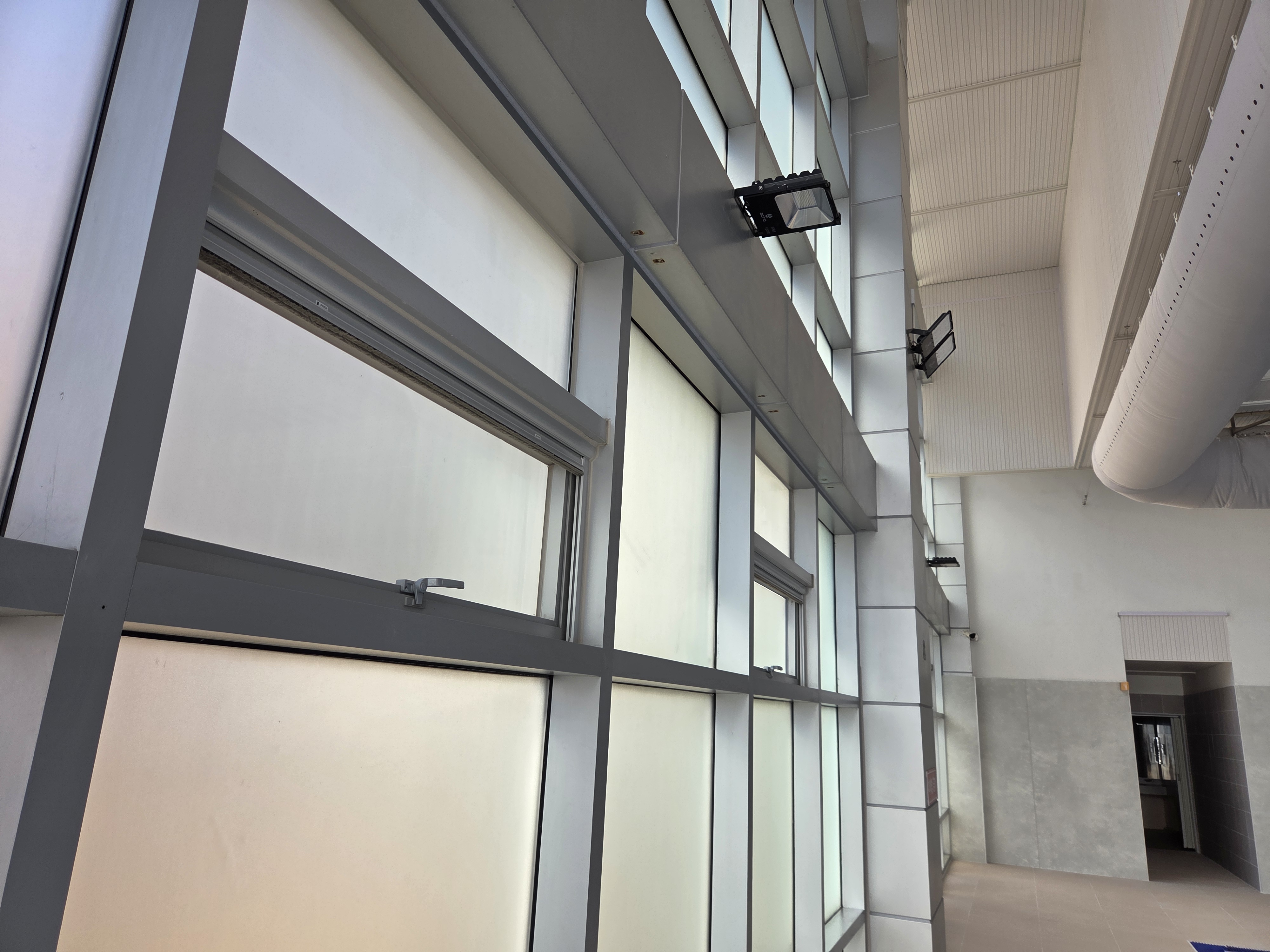
Humid indoor air at around 30°C condensed on cold walls and ceilings in winter. This damaged finishes and accelerated corrosion of metal ducts and structures, increasing maintenance costs.
Chloramines formed when disinfectants reacted with ammonia accumulated near the water surface, reducing ventilation effectiveness and contributing to respiratory and skin irritation.
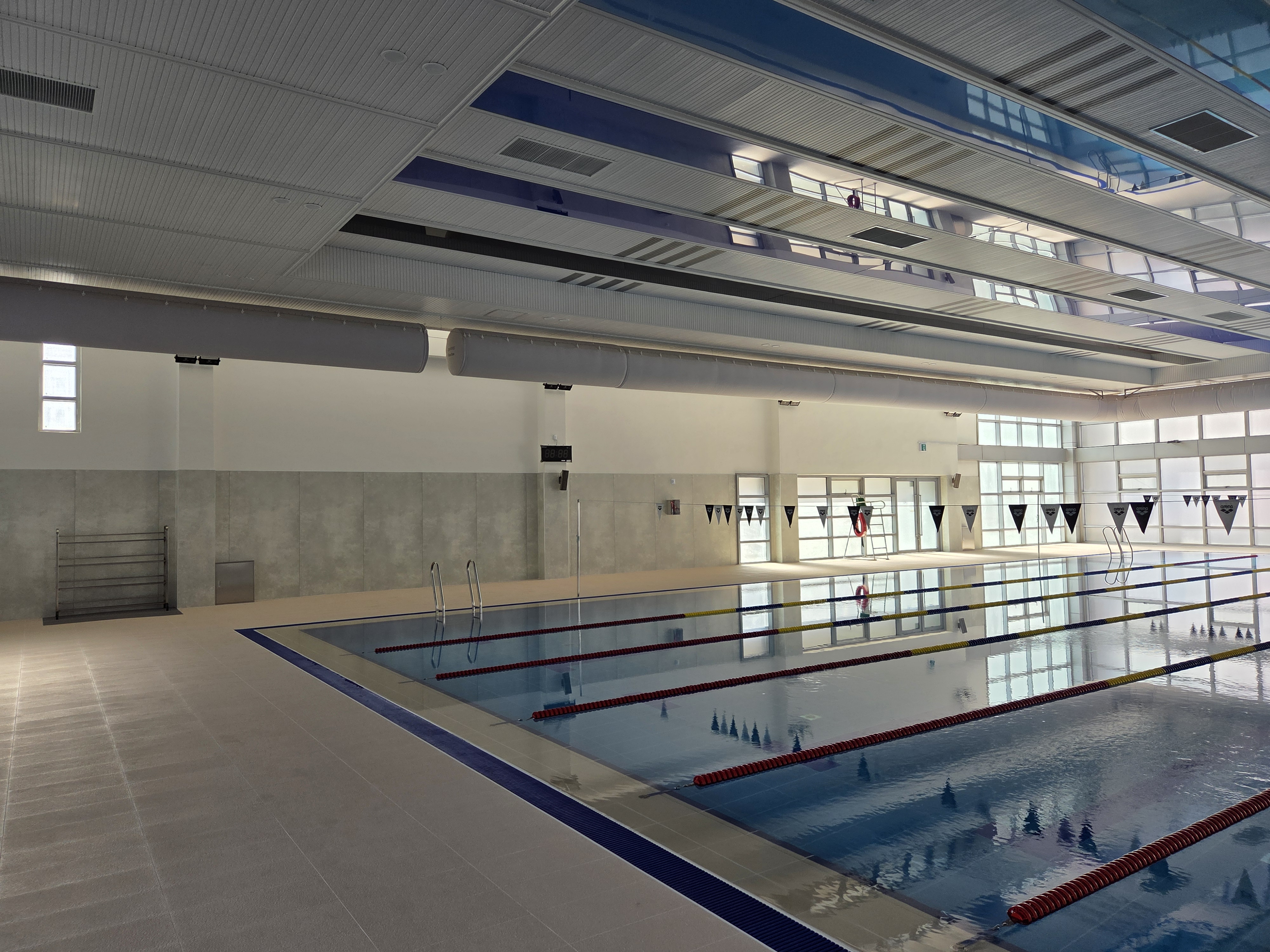
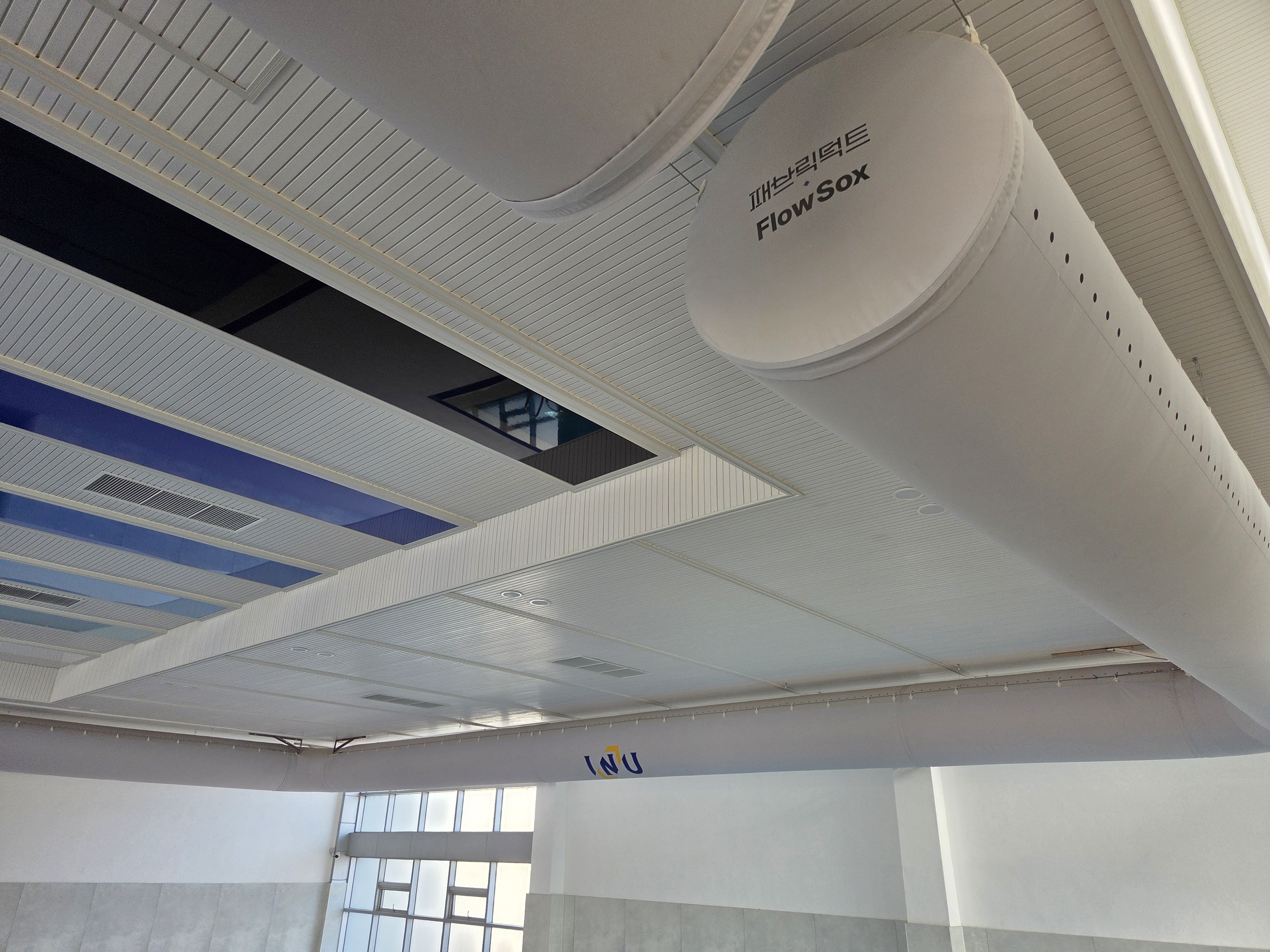
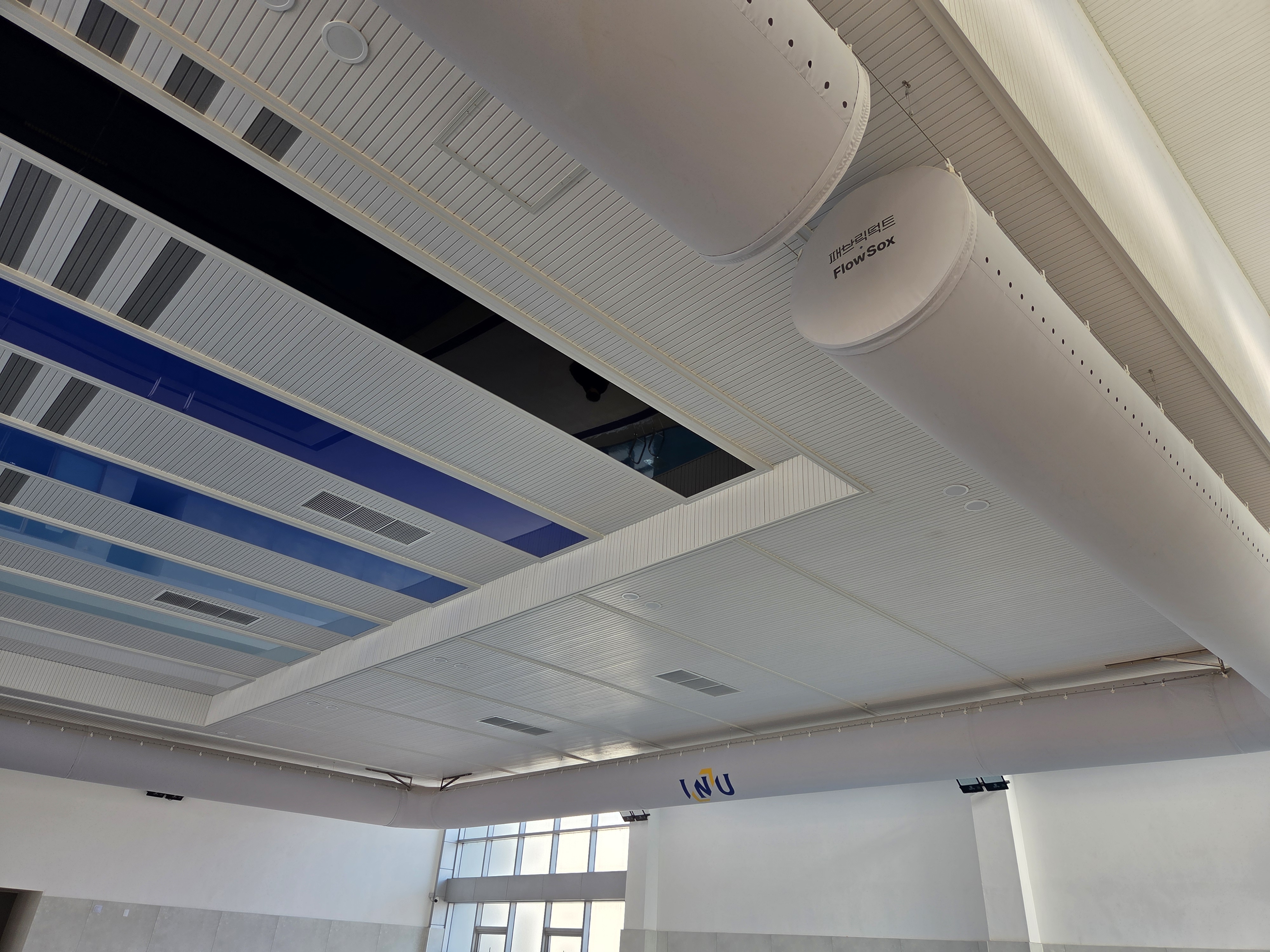
Laser-hole spacing and angles created a thin stream of dry air along condensation-prone walls and ceilings. This reduced areas below the dew point and stabilized surface conditions on walls, glazing and ceilings.
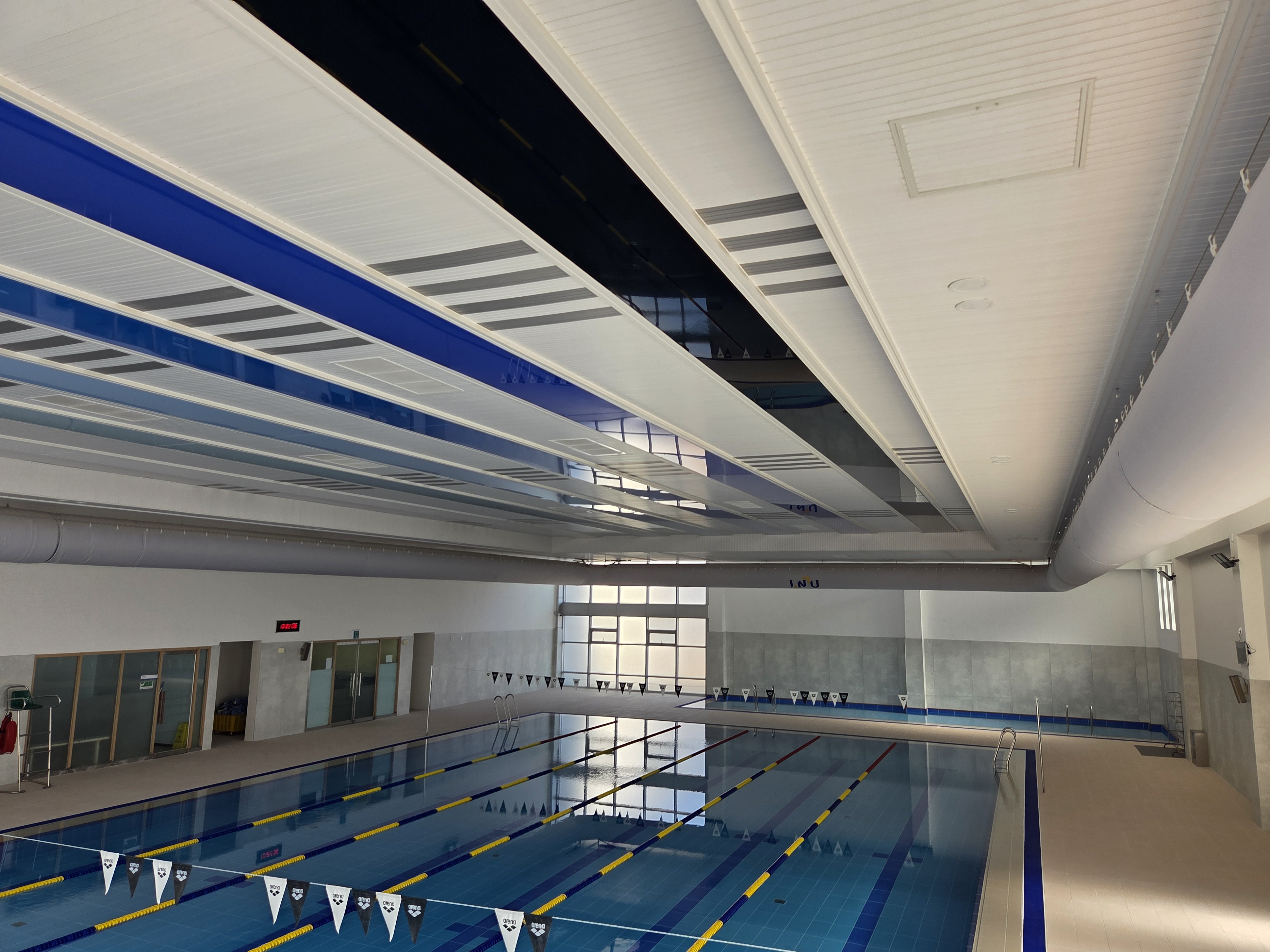
A greater share of airflow was directed toward the lower space. Air moving along the floor rose near the water surface, guiding accumulated chloramines toward the central exhaust.
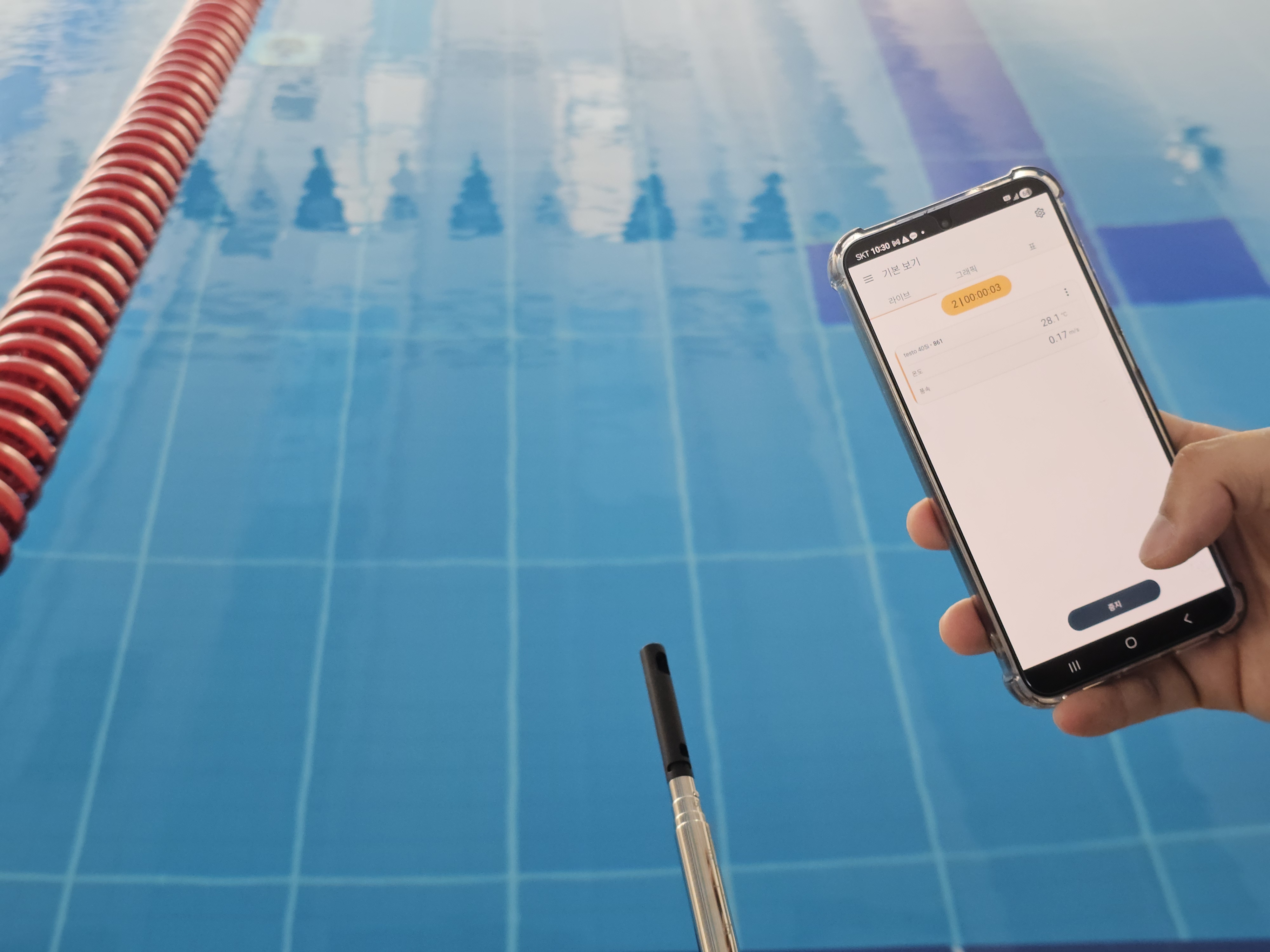
Air velocity reaching the water surface was controlled to 0.15 m/s, providing airflow for chloramine removal while limiting evaporation and increased latent load from excessive air speed.
Water-surface airflow was controlled to 0.15 m/s to support chloramine removal while limiting excessive evaporation and latent cooling load.
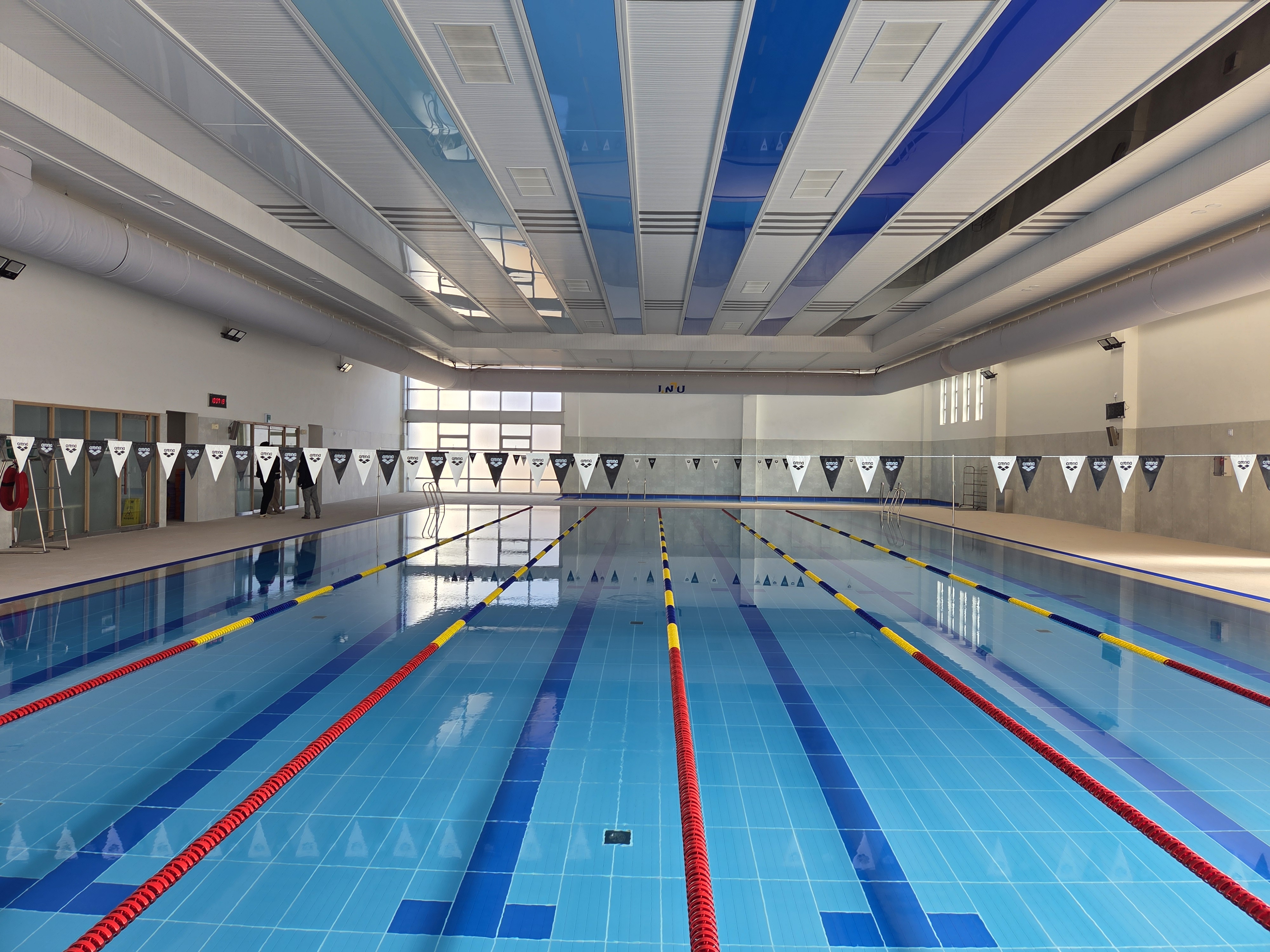
With outdoor air at 7°C and indoor air at 30°C, no condensation was observed anywhere, including the glazing and ceilings.
Removing stagnant air above the water substantially reduced disinfectant and chlorine odors compared with conditions before installation.
Installation costs were approximately 70% lower than stainless-steel ducts. The fabric resisted chlorine-related corrosion, supporting a long service life.
Field measurements confirmed the target water-surface air velocity of 0.15 m/s, verifying agreement between the design and actual performance.