.png)
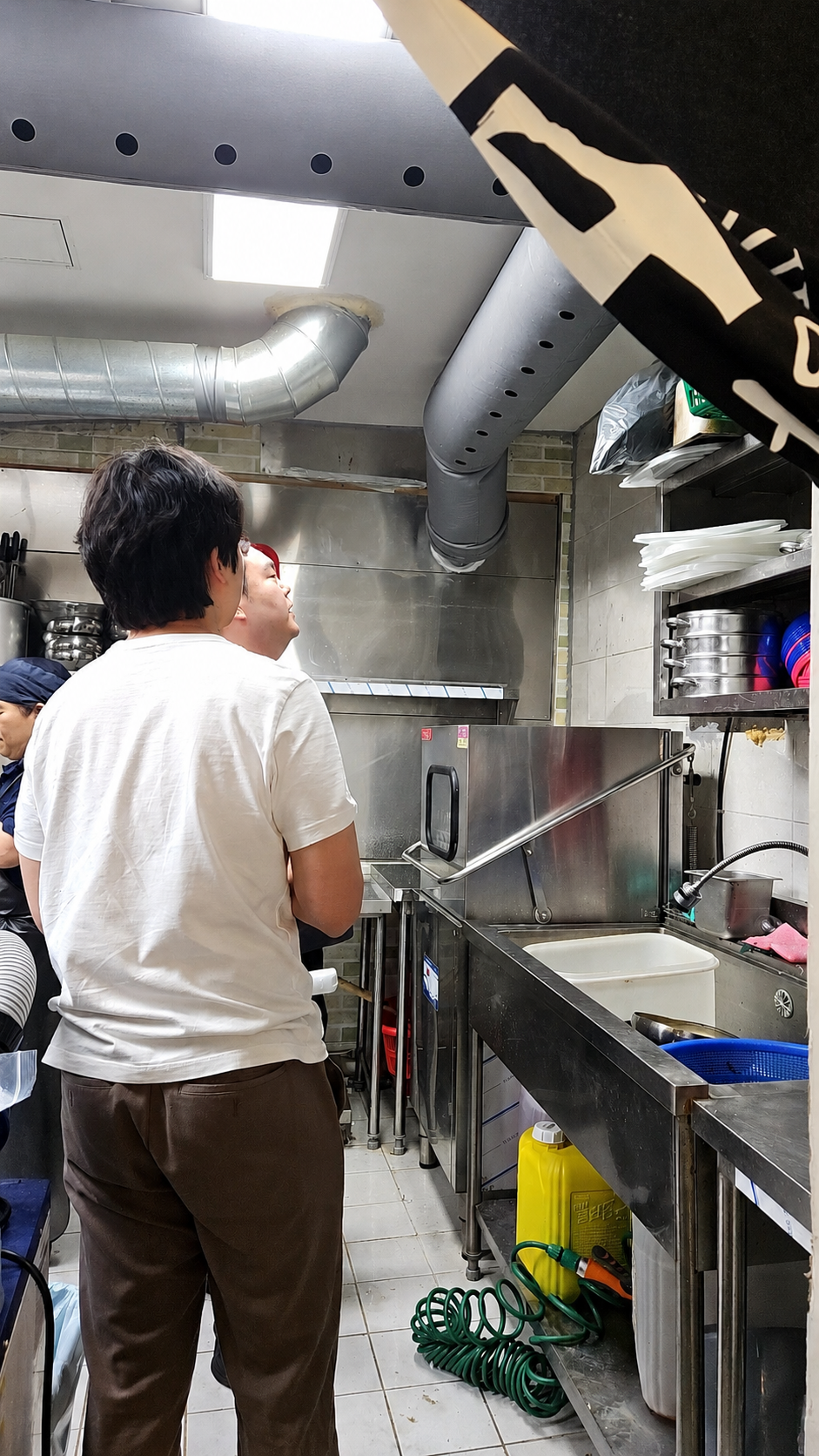
Cooking ranges continuously generated heat in the Hyundaiok kitchen in Jeonju. Although exhaust ducts were installed, they could not remove enough hot air, and the kitchen temperature reached approximately 38°C.
The existing portable spot coolers reached only a narrow area. Cooling was concentrated at specific locations instead of spreading throughout the kitchen, leaving workers dissatisfied.
Kitchen cooling cannot be solved simply by increasing airflow. Air directed at the ranges can interfere with cooking. The design needed to cool workers while keeping direct airflow away from the ranges.
Ducts followed the kitchen workflow and delivered cool air where workers were stationed. Rather than cooling just a few spots, the design created perceptible cooling throughout the main work areas.
Air from the fabric ducts displaced hot kitchen air toward the exhaust ducts and outdoors. Supplying cool air while reducing hot-air stagnation eased the heat load inside the kitchen.
We adjusted discharge directions to avoid blowing directly at the ranges. Cool air reached workers without disturbing cooking flames or the workflow.
Before installation, cooking heat raised the kitchen temperature to approximately 38°C. Fabric ducts created a cooling environment of around 27°C in the work areas, providing a temperature improvement workers could feel.
Cool air spread along the workflow instead of remaining at a few locations. This improved workers’ cooling satisfaction and reduced heat fatigue during long cooking shifts.
High kitchen temperatures had imposed a substantial load on the air conditioners. Spot cooling with fabric ducts concentrated cool air in the necessary work areas, helping reduce the overall cooling load and electricity cost burden.
.png)