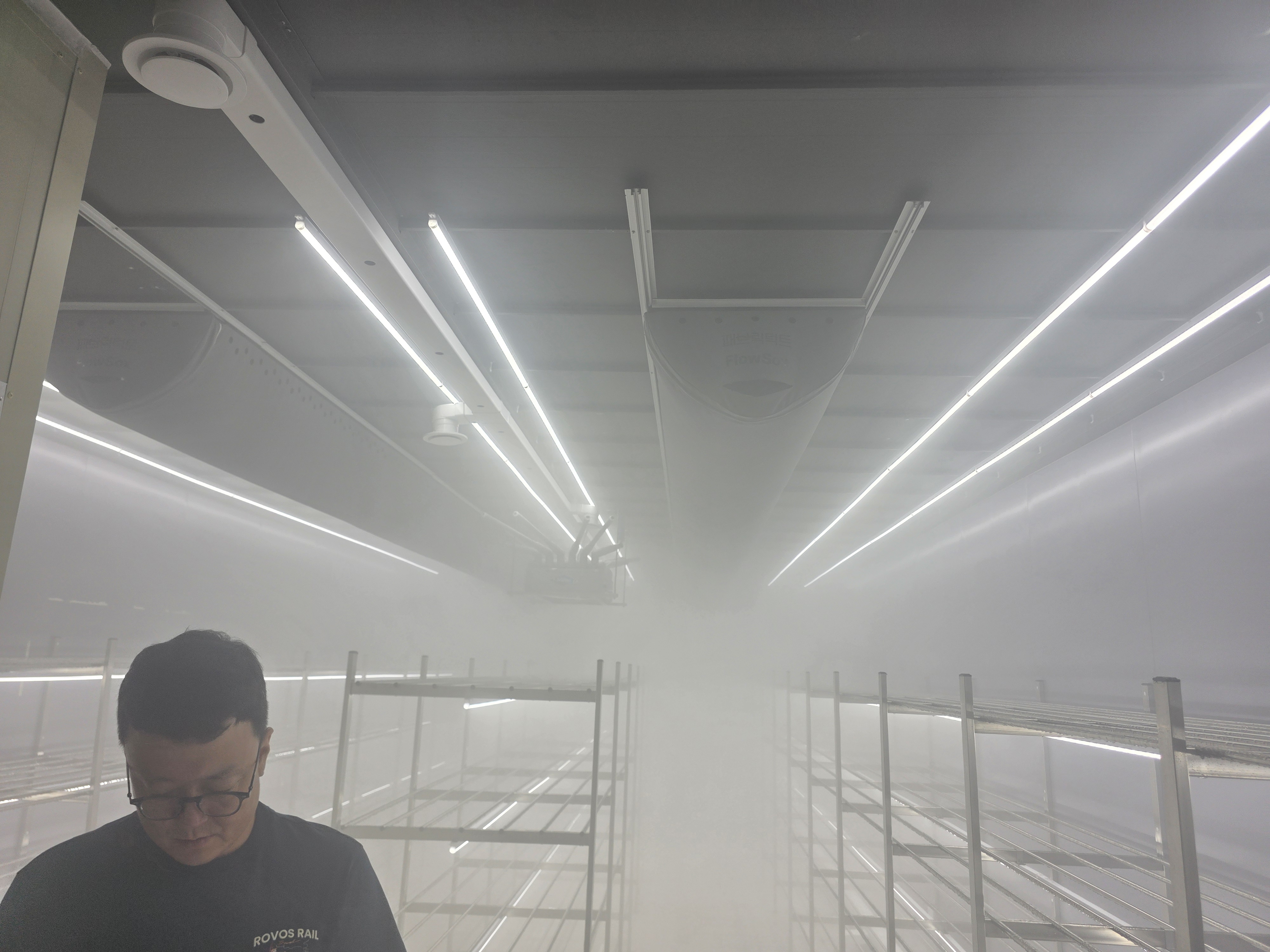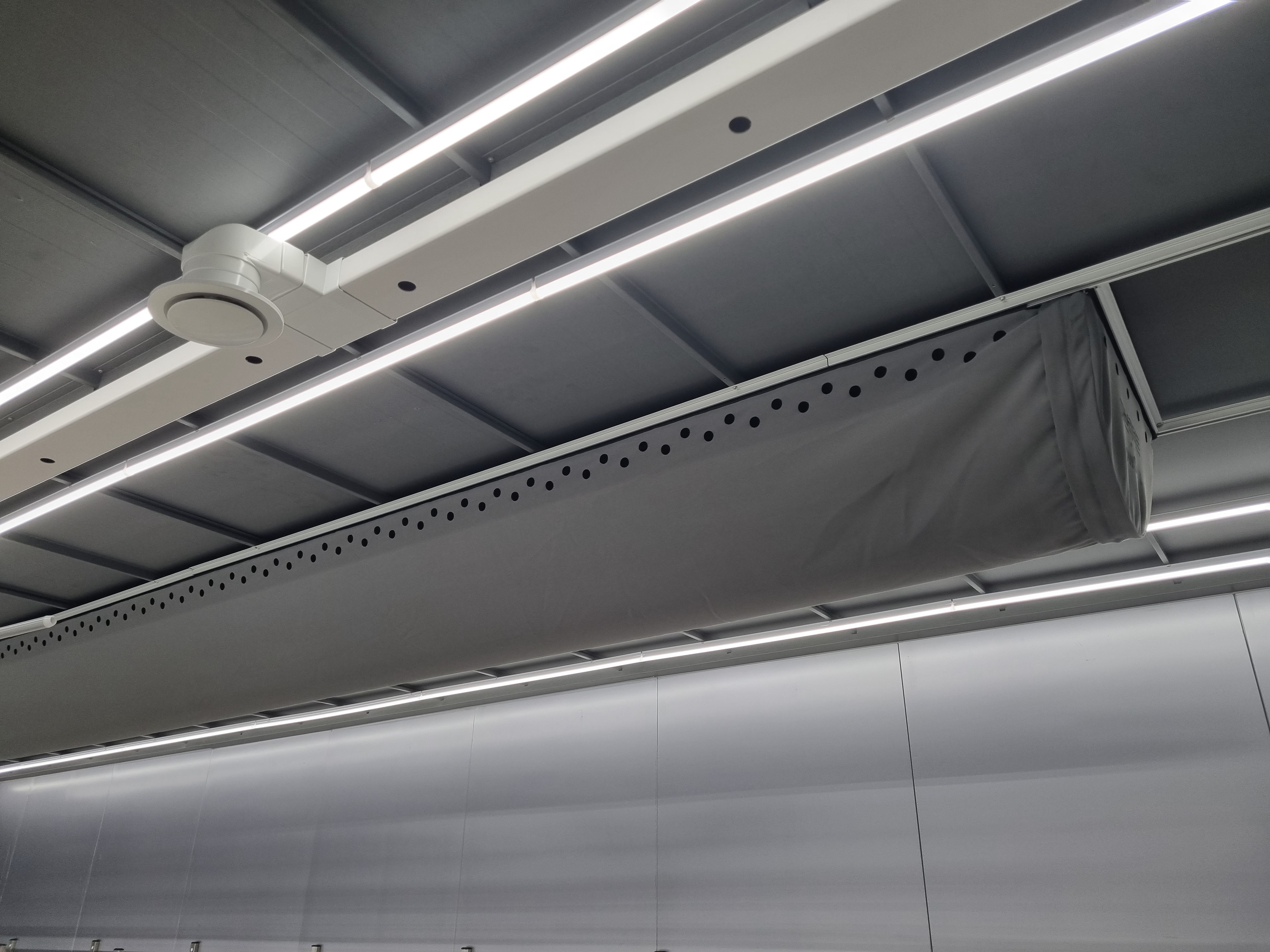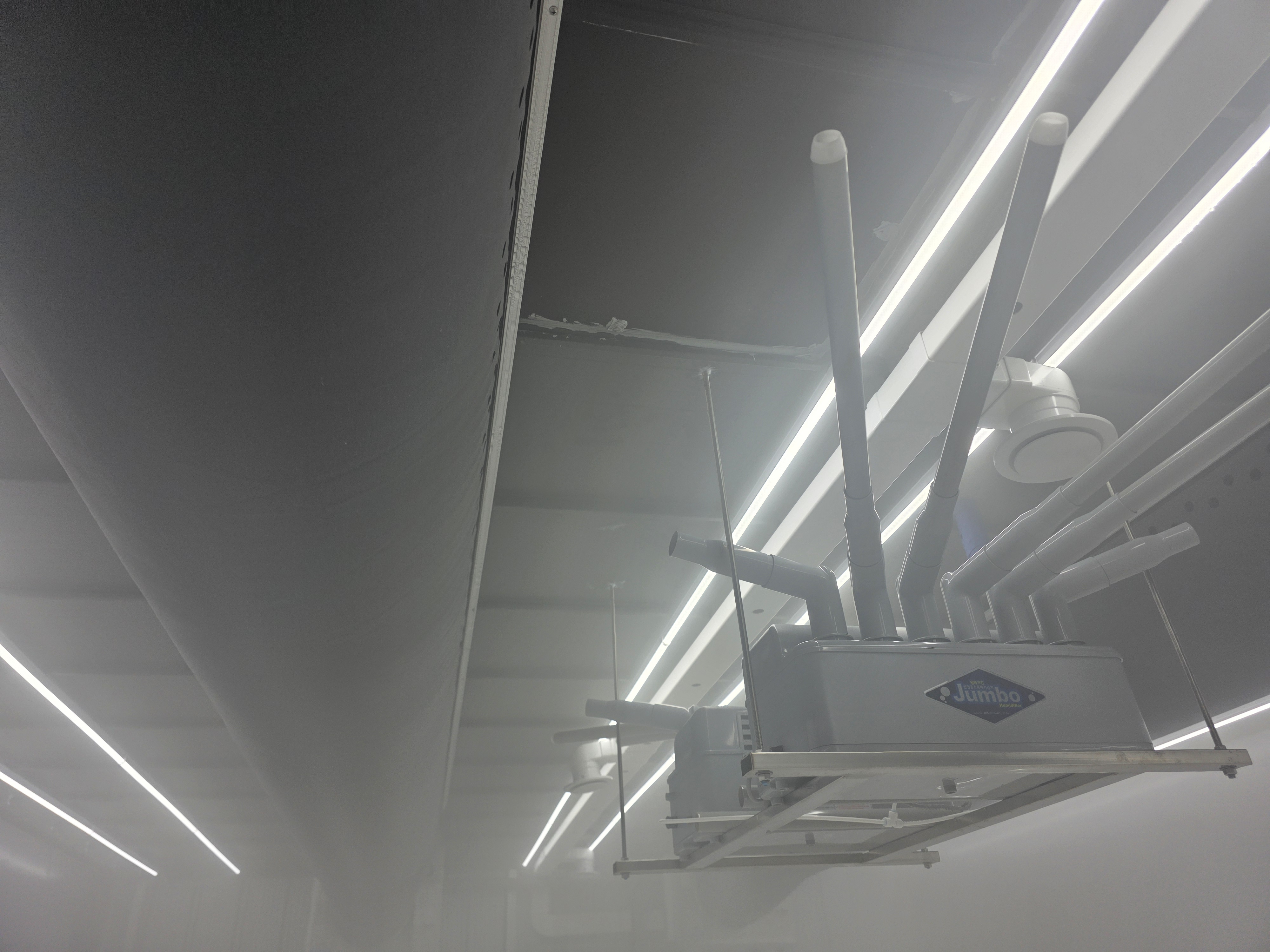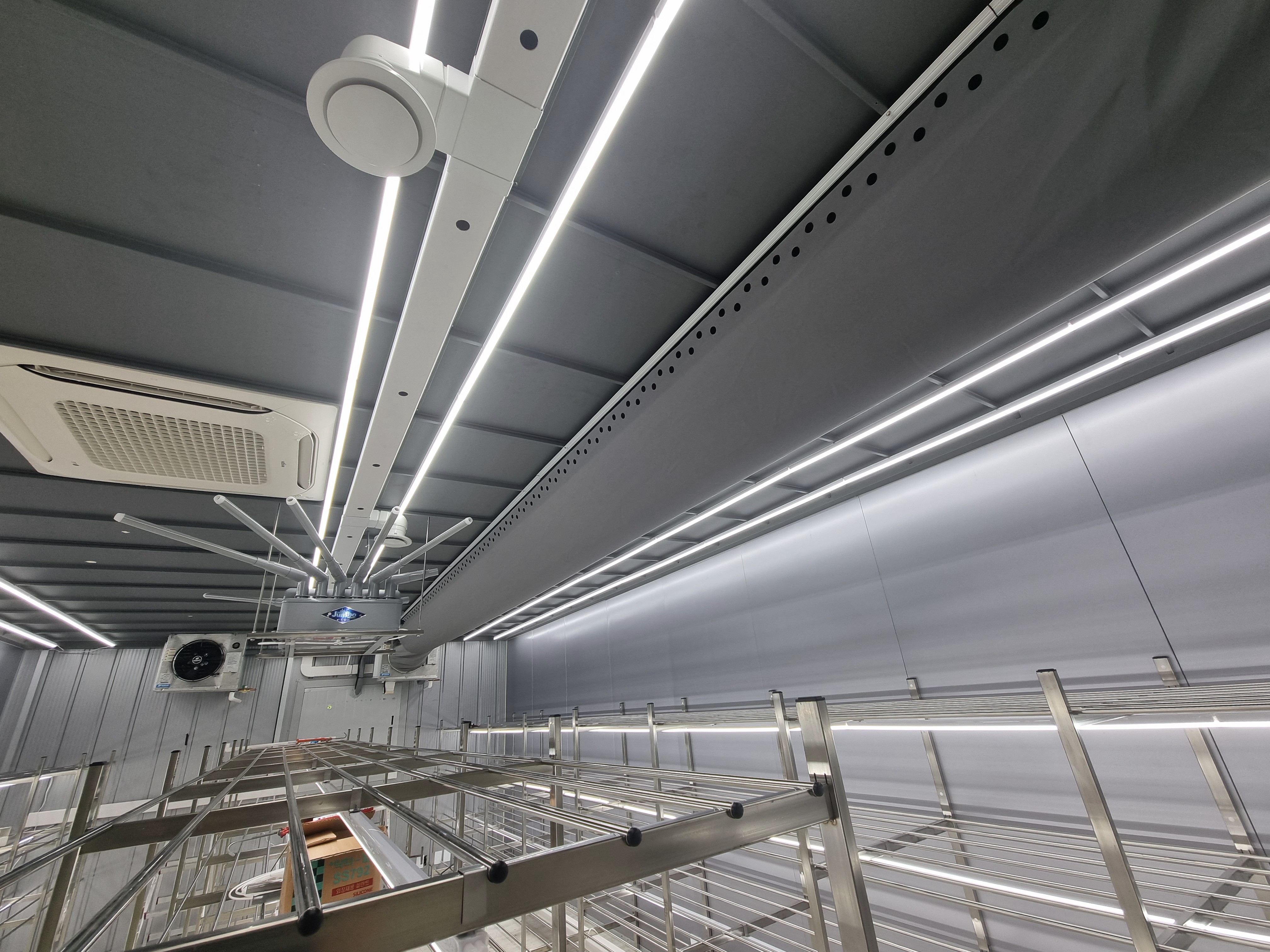
Strong cold air accelerated substrate evaporation and drying, creating uneven growth and quality. Air distribution needed to reduce direct drafts and stabilize moisture.
Direct drafts caused drying stress at the mushroom surface. Concentrated airflow on particular tiers increased browning, uneven growth and loss of marketability.
Mushrooms require high humidity, but 95% RH readily causes condensation on conventional metal ducts or cold outlets, creating drip, mold and contamination risks.
Small amounts of air passed through the fabric surface, forming an air layer that reduced condensation and enabled stable supply without droplets at 95% RH.
Gentle, room-wide diffusion reduced rapid substrate evaporation rather than blowing directly onto mushrooms, stabilizing substrate moisture across tiers.
Duct positions and discharge directions matched the vertical racks. Distributed supply reduced airflow concentration and temperature and humidity differences between tiers.
Gentle distribution of the unit-cooler air reduced rapid surface evaporation, stabilizing substrate moisture and reducing growth variability.
Room-wide diffusion reduced direct airflow at the mushroom surface, limiting drying and browning risks and easing growth stress.
No droplets formed on the duct surface in the humid environment, reducing drip, contamination and mold risks and confirming suitability for mushroom cultivation.