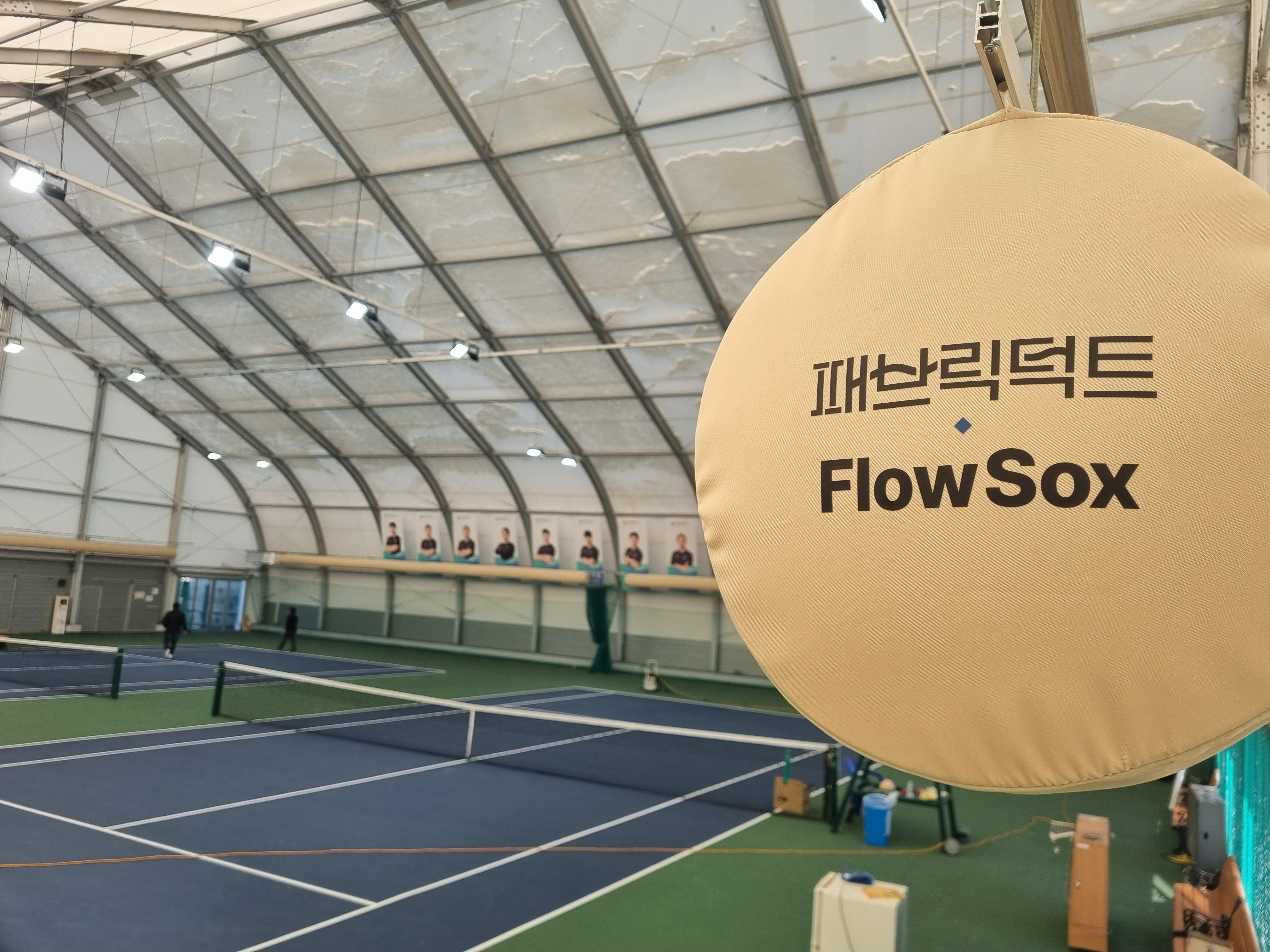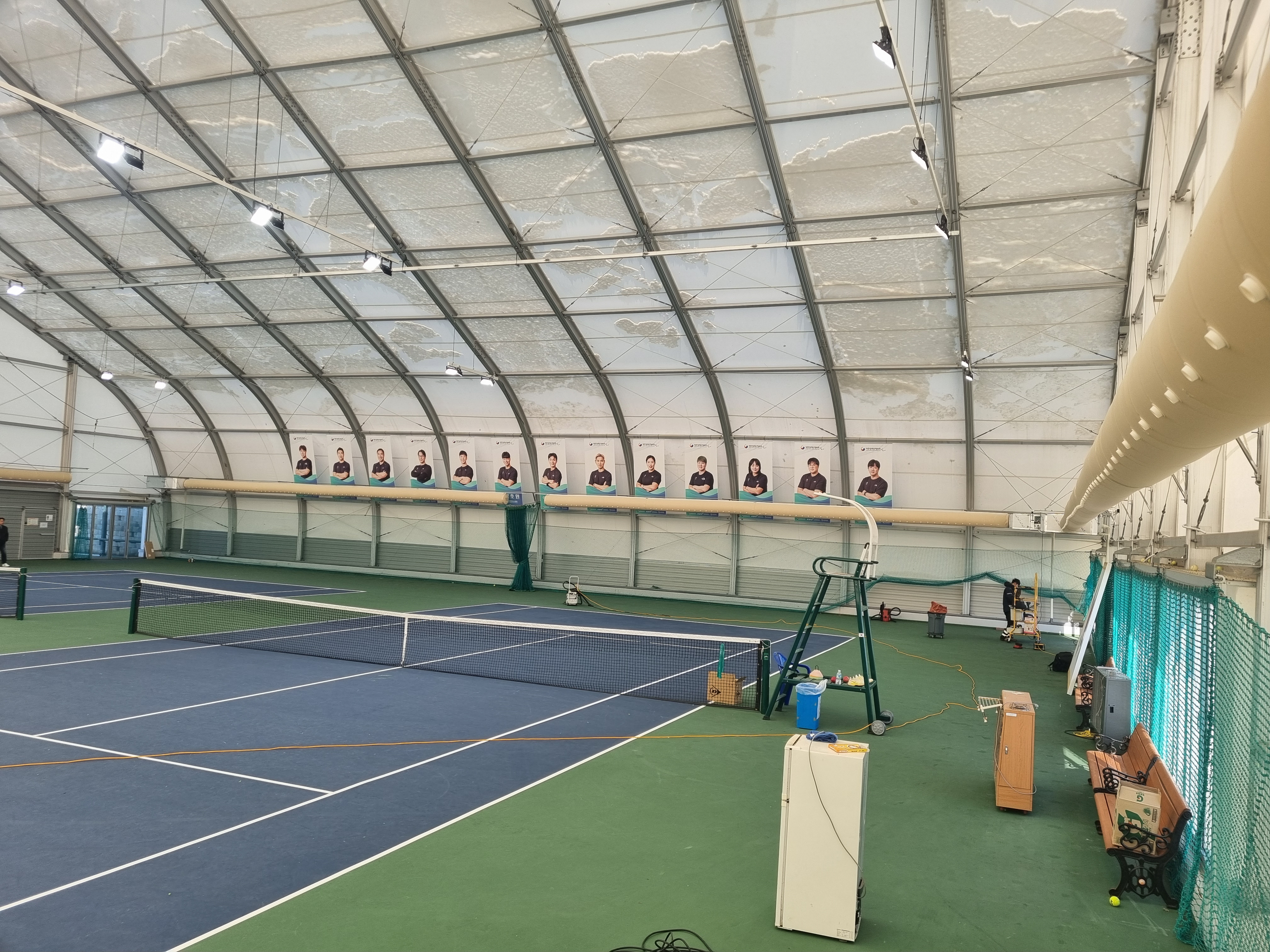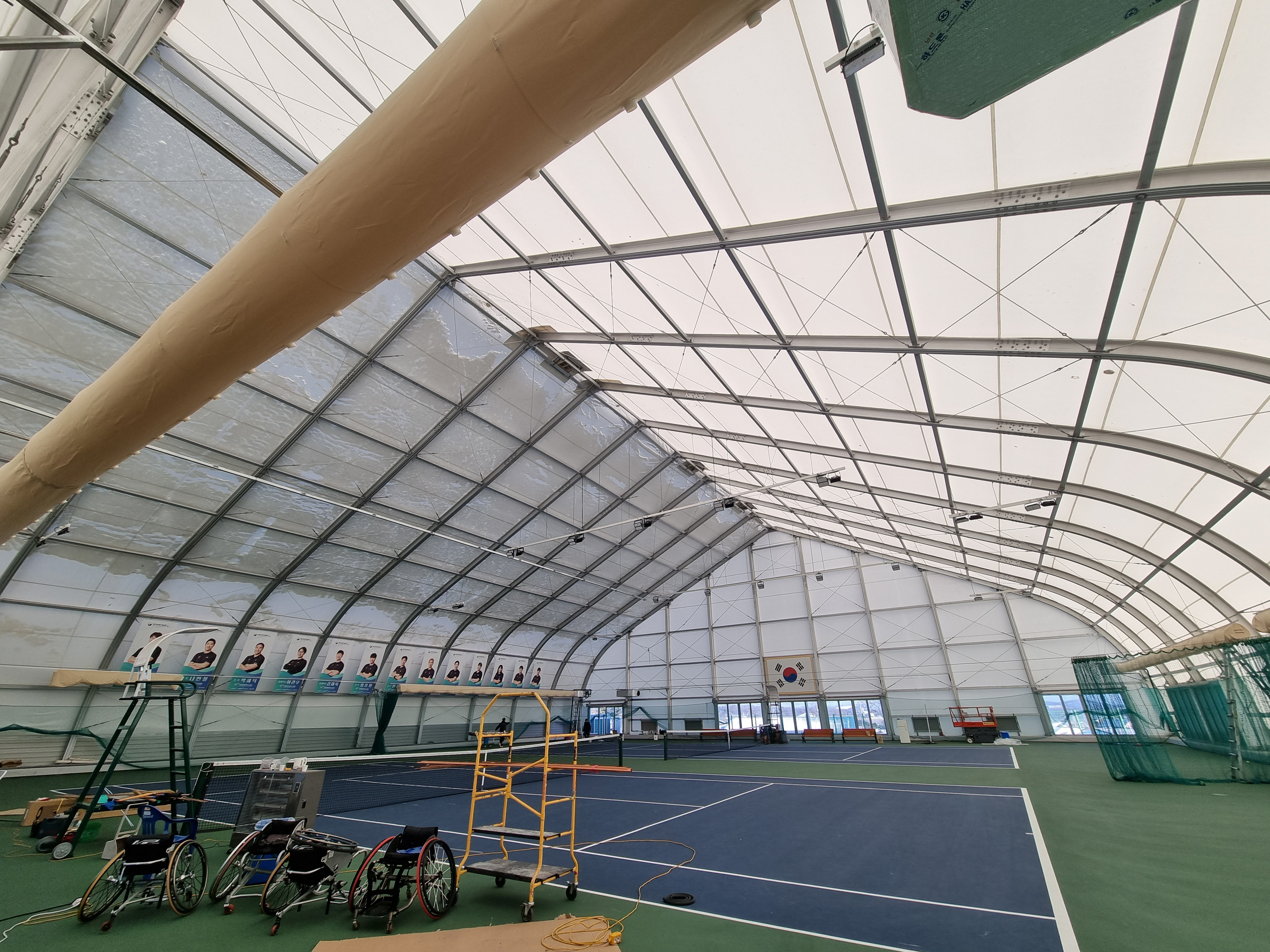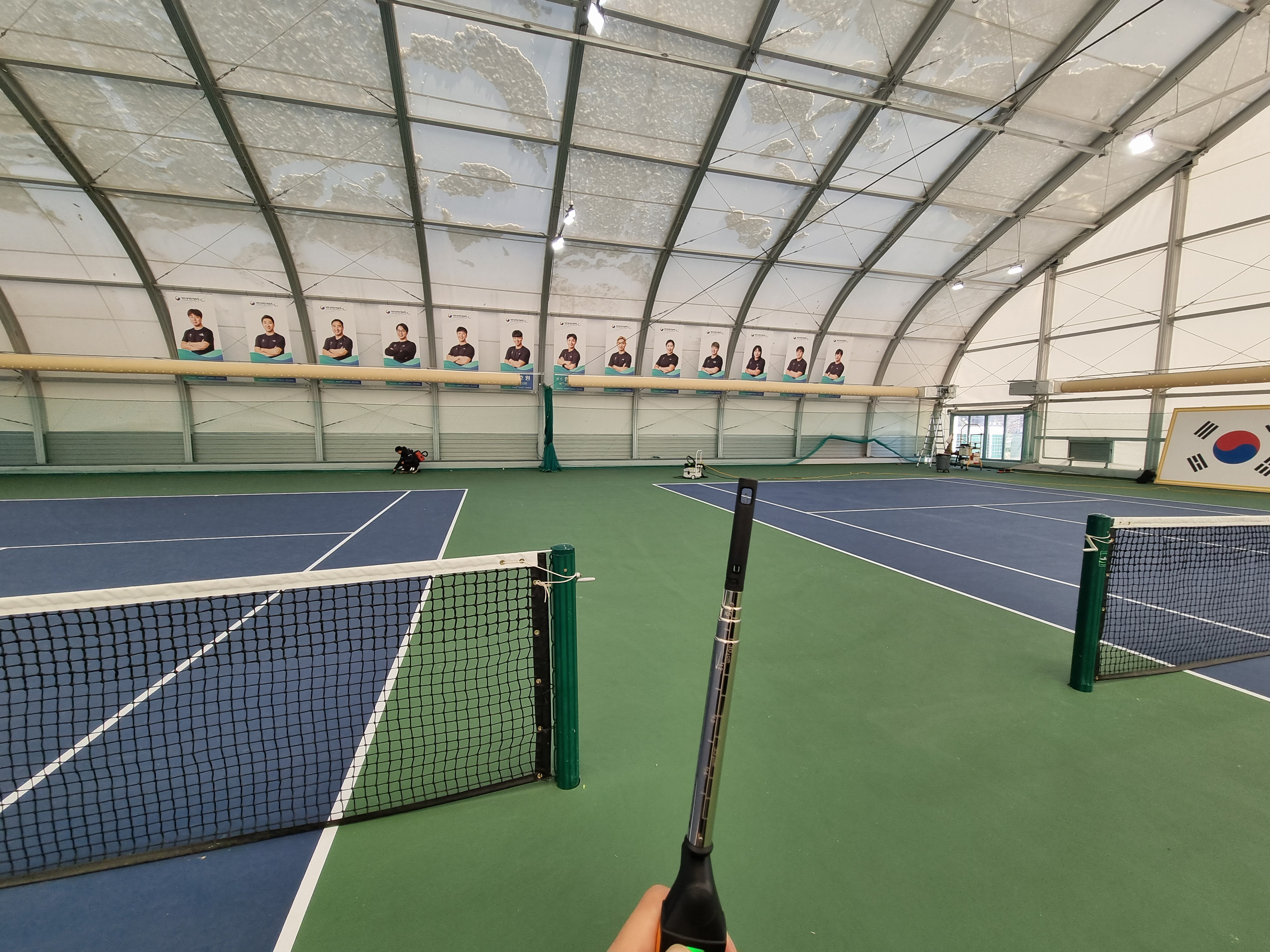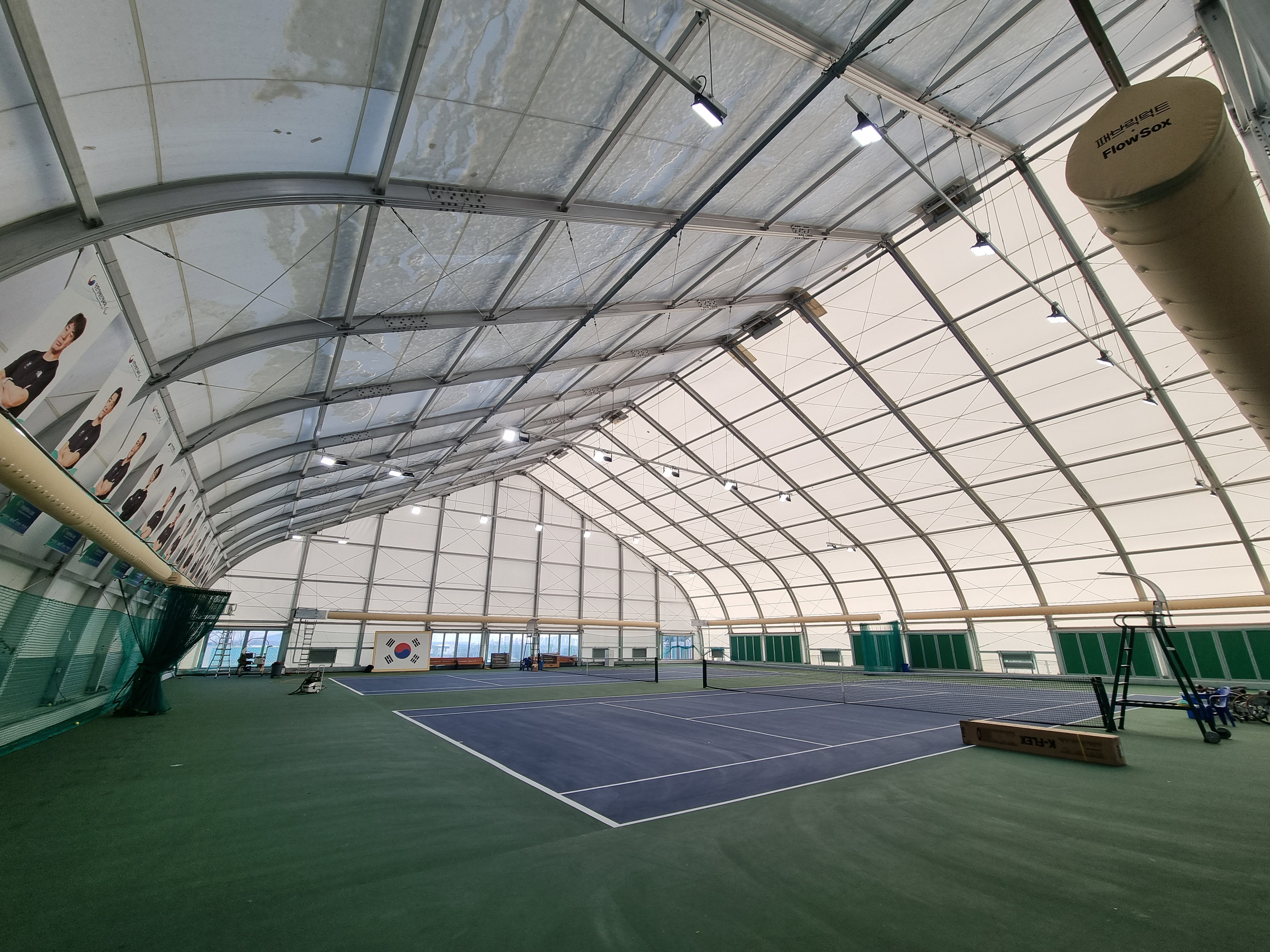
The temporary structure of H-beams and fabric roofing provided poor insulation. When the outdoor temperature was 0°C, the indoor temperature remained around 5°C, making target temperatures difficult to maintain with conventional heating.
Warm air accumulated high above the court and did not reach the players below. As a result, heating efficiency in the occupied zone remained low even while the equipment was running.
The poorly insulated, high-ceiling space required substantial HVAC capacity to reach the target temperature, increasing equipment and operating costs. Simply adding equipment was an inefficient solution.
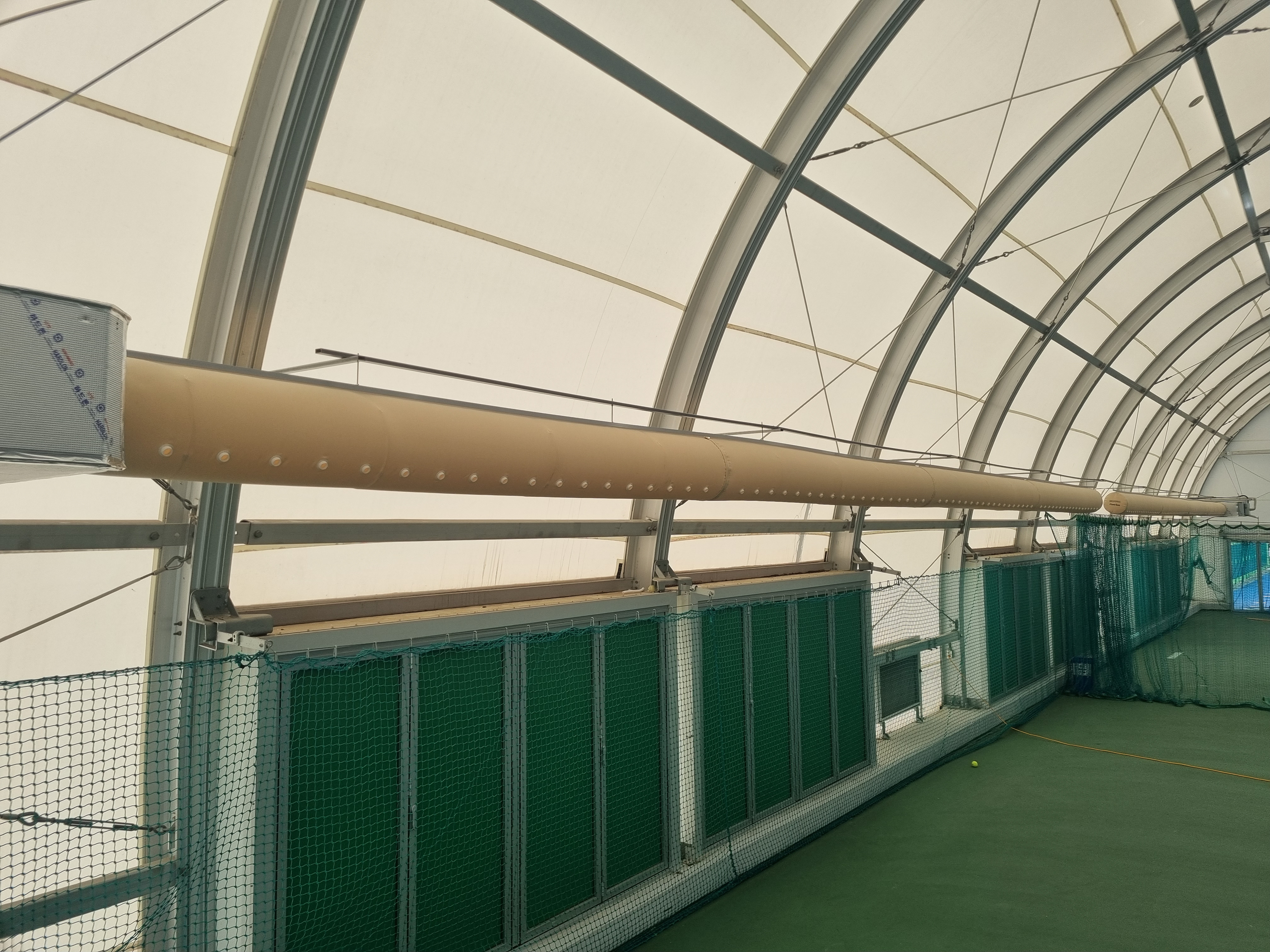
Fabric ducts were installed approximately 4 m above the ground, close to the players’ activity zone rather than in the upper region where heat accumulated.
We directed the outlets toward the center and used NozzleFlow instead of standard holes to deliver warm air across the court. This kept warm air around the playing area rather than allowing it to escape to the perimeter.
The airflow design encouraged warm air to circulate and remain around the court, improving heating efficiency where the players were active.
Stable duct static pressure ensured uniform discharge at both the beginning and end of the duct, providing consistent heating across the large court.
Fabric ducts distributed warm air efficiently to the occupied zone, enabling approximately 30% fewer air conditioners than the previous design required.
Within 30 minutes of operation, the court center reached 16°C, an increase of 11°C from the starting temperature, demonstrating effective heating despite poor insulation.
Concentrating warm air around the court instead of allowing it to stagnate above improved perceived heating in the occupied zone using the same heat source.
Recognized for its HVAC performance, the facility hosts national-team tennis matches during both extreme winter cold and summer heat.