Shinsegae Food – Defrost Pocket

Defrost Pocket

Applications
>
Defrost Pocket
>
Shinsegae Food – Defrost Pocket

Shinsegae Food – Defrost Pocket

No items found.
Defrost Pocket improved defrost efficiency and contained heat, maintaining freezer temperatures without additional coolers
Challenges
  • Addressing heat loads from frequent inbound and outbound traffic
  • Improving temperature recovery delayed by repeated defrost cycles
  • Stable storage temperatures without additional coolers

The Challenge

Summer outdoor-air entry and frequent defrosting prevented storage temperatures from falling, increasing frozen-food quality risks.

Outdoor air entering during logistics operations

Frequent deliveries in summer repeatedly introduced warm outdoor air, continuously increasing the refrigeration load.

Slow temperature recovery after repeated defrosting

Frequent unit-cooler defrost cycles leaked heater heat into storage, extending the time needed to return to the target temperature.

Unstable frozen-food storage conditions

Insufficiently low temperatures threatened frozen-food storage stability and could cause long-term quality and operational risks.

Our Solution

Containing defrost heat and shortening cycles stabilized storage temperatures without adding coolers.

Containing defrost heat

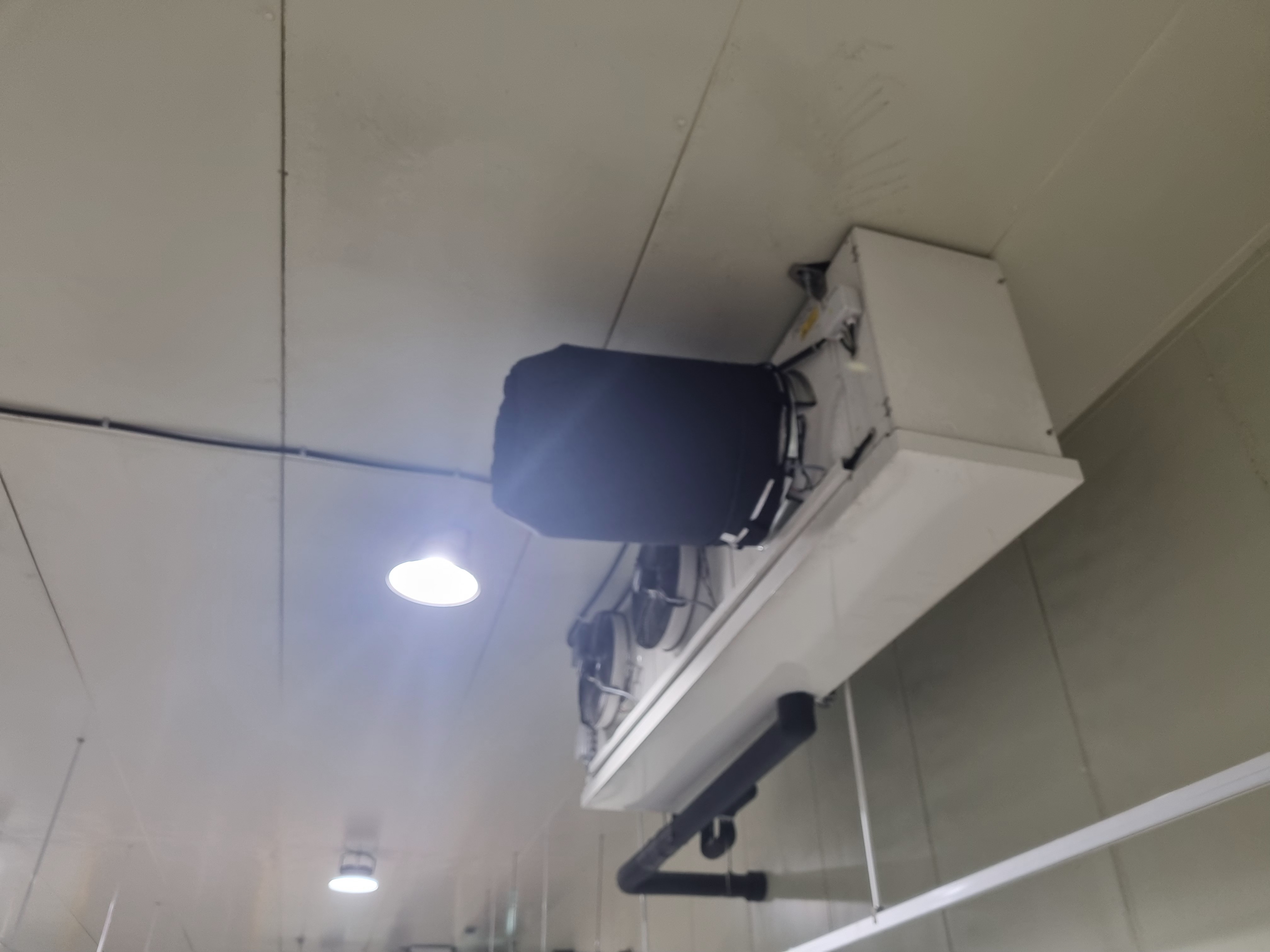
During defrosting, the cooler was enclosed within a separate pocket to prevent heater heat from spreading into storage.

Shorter defrost cycles

Blocking cold-air entry and concentrating heat around the defrosting area accelerated frost removal and shortened defrost time.

Temperature recovery without equipment expansion

Reduced defrost heat losses and recovery refrigeration load improved the existing system’s ability to maintain temperature without adding coolers.

Water-repellent fabric for extreme cold

The fabric was selected for repeated exposure to extreme cold and defrost temperature changes, remaining stable below −40°C.

Results

Defrost Pocket contained heat and shortened defrost cycles, stabilizing storage temperatures without additional coolers.

Shorter defrost time

Containing heat shortened frost-removal time from 40 to 32 minutes and improved defrost efficiency.

Temperature recovery without additional coolers

Lower defrost losses and recovery load improved the existing system’s temperature-maintenance performance without equipment expansion.

Reduced storage-quality risks

Shorter recovery delays and fewer temperature rises reduced the risk of frozen-food quality loss and improved operational stability.

Gallery

No items found.