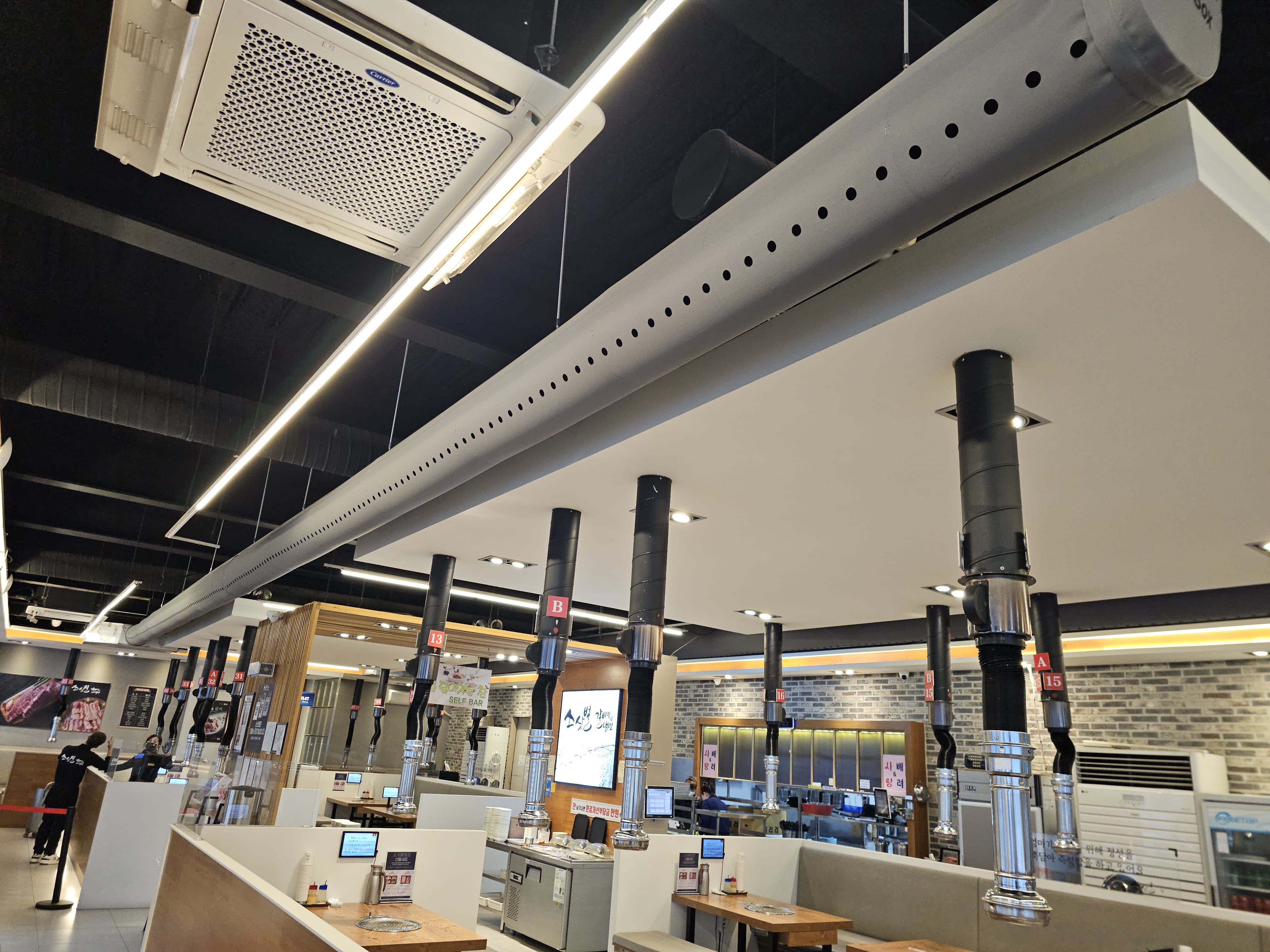
Due to the heat radiating from dozens of grills, even adding more air conditioning units couldn't keep up, forcing customers to battle the heat throughout their meal.
When increasing airflow to improve cooling, the strong currents would hit the grills, causing fine charcoal dust to scatter and drying out the meat, leading to hygiene and quality issues.
Extreme temperature variations—where some seats were hit by direct cold air while others remained in hot dead zones—were a major challenge for restaurant operations.
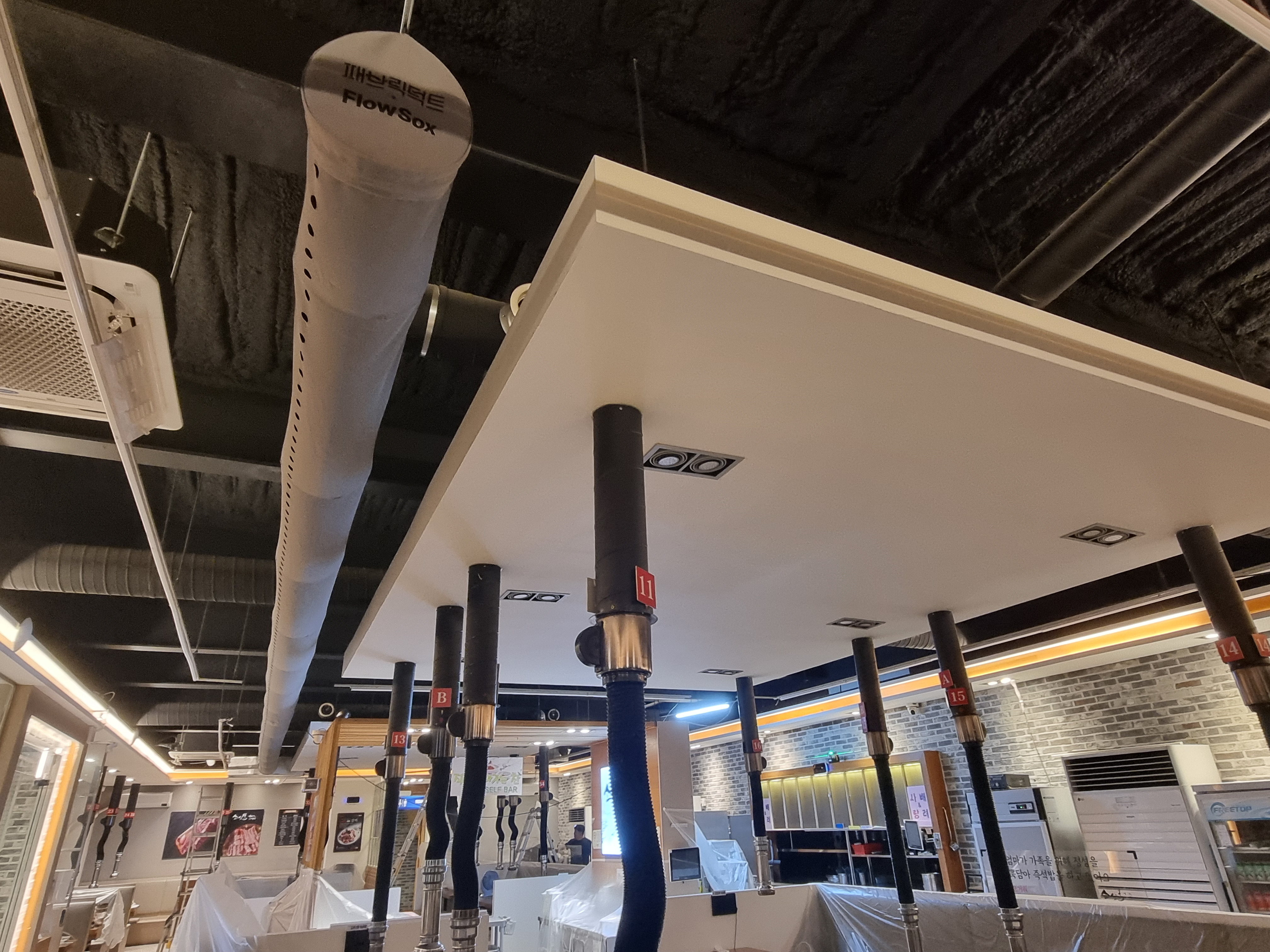
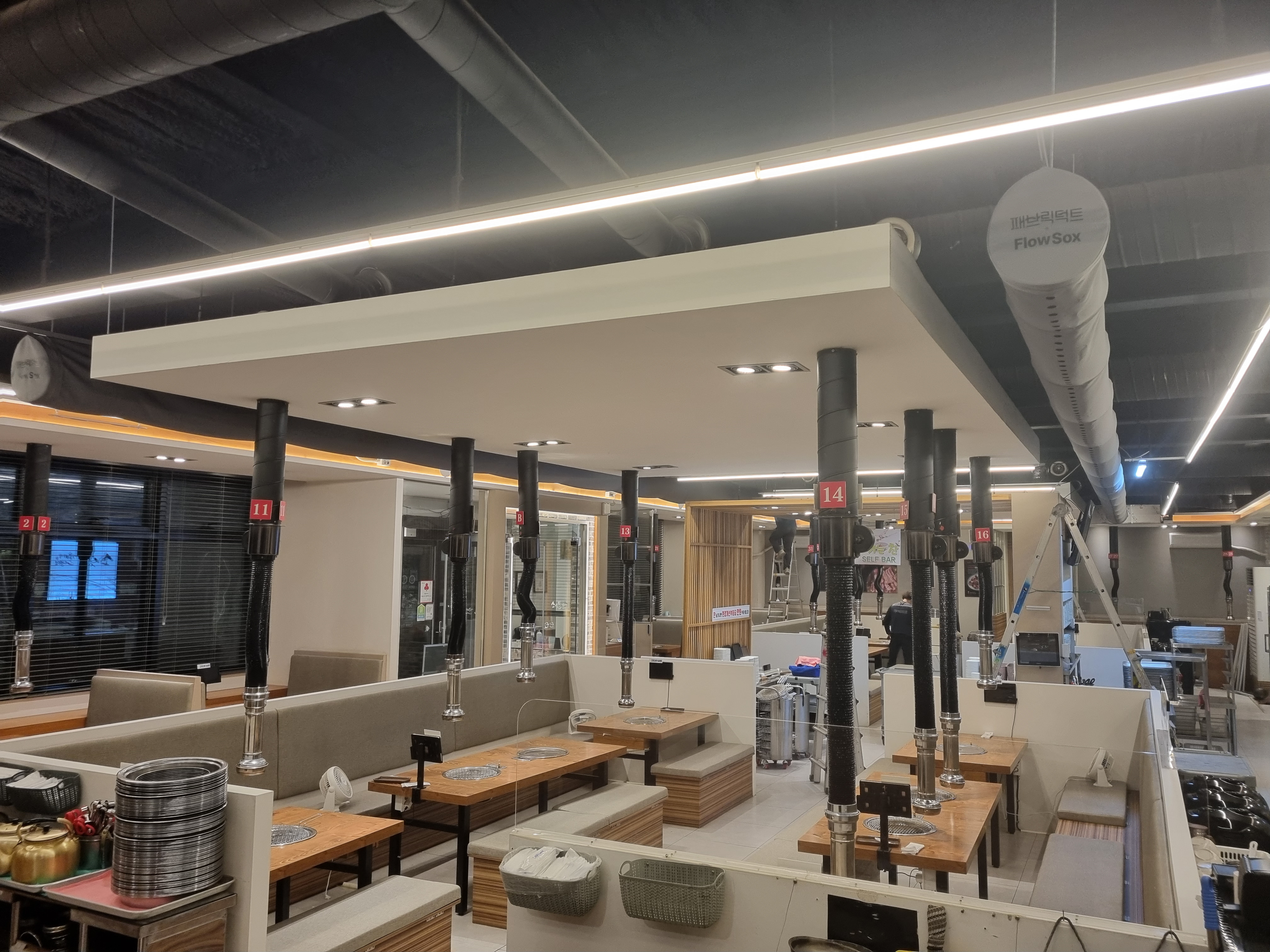
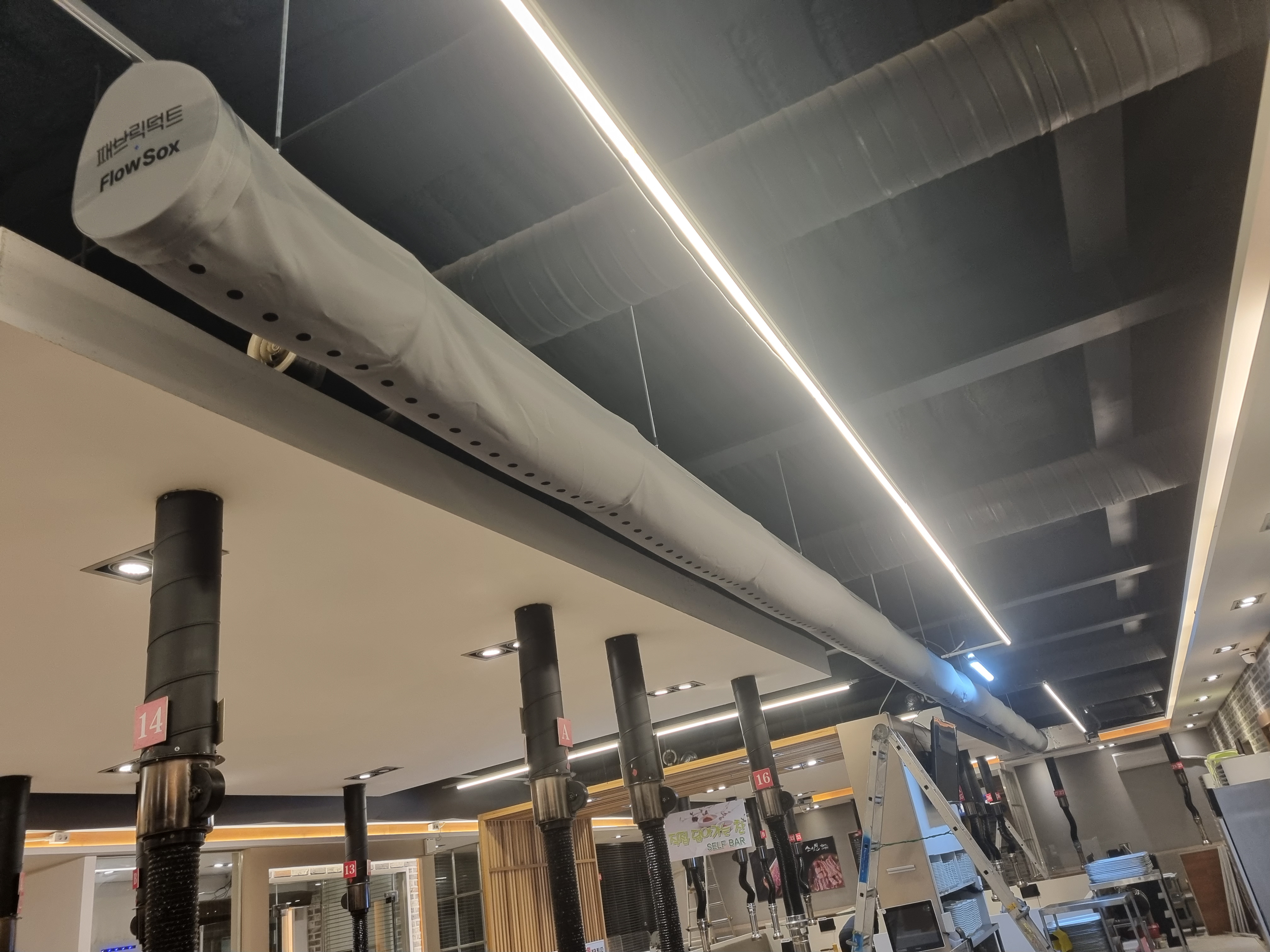
Instead of blasting air in one direction like metal ducts, we disperse cool air broadly and gently through micro-holes across the fabric surface. This maintains a low velocity (approx. 0.4–0.5 m/s) that prevents charcoal from scattering while ensuring a cooling effect is felt throughout the entire restaurant.
We designed duct placement and discharge directions based on the table layout where charcoal heat is concentrated, creating an airflow configuration that minimizes temperature disparities so that no specific seat is too cold or too hot.
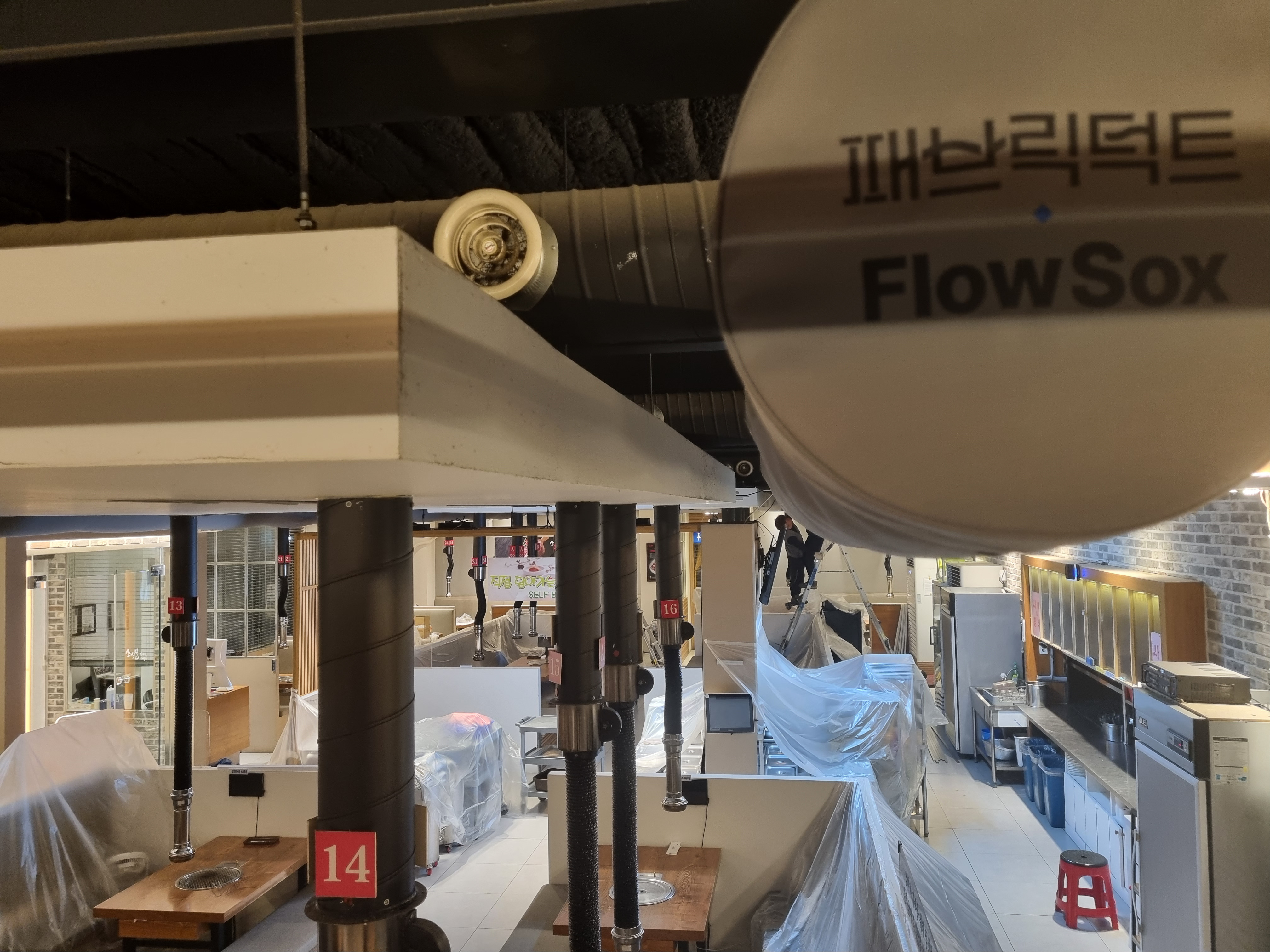
We used a permeable fabric that prevents condensation even in the high-temperature-difference environment of a barbecue restaurant, reducing the hygiene risk of water dripping onto food. Furthermore, the fabric’s soft texture and clean appearance create an HVAC design that blends more naturally with the restaurant's interior than traditional galvanized steel ducts.
We have achieved optimal thermal and acoustic comfort by precisely controlling temperature variations throughout the store while reducing HVAC noise through the material's inherent sound-absorbing properties.
Our high-efficiency airflow design enables powerful cooling without scattering charcoal dust through a low-velocity, uniform discharge method, ensuring stable heat levels.
By applying a custom design that resolves the issue of exposed metal ducts, we have enhanced the visual harmony of the interior while maintaining full functional performance.