
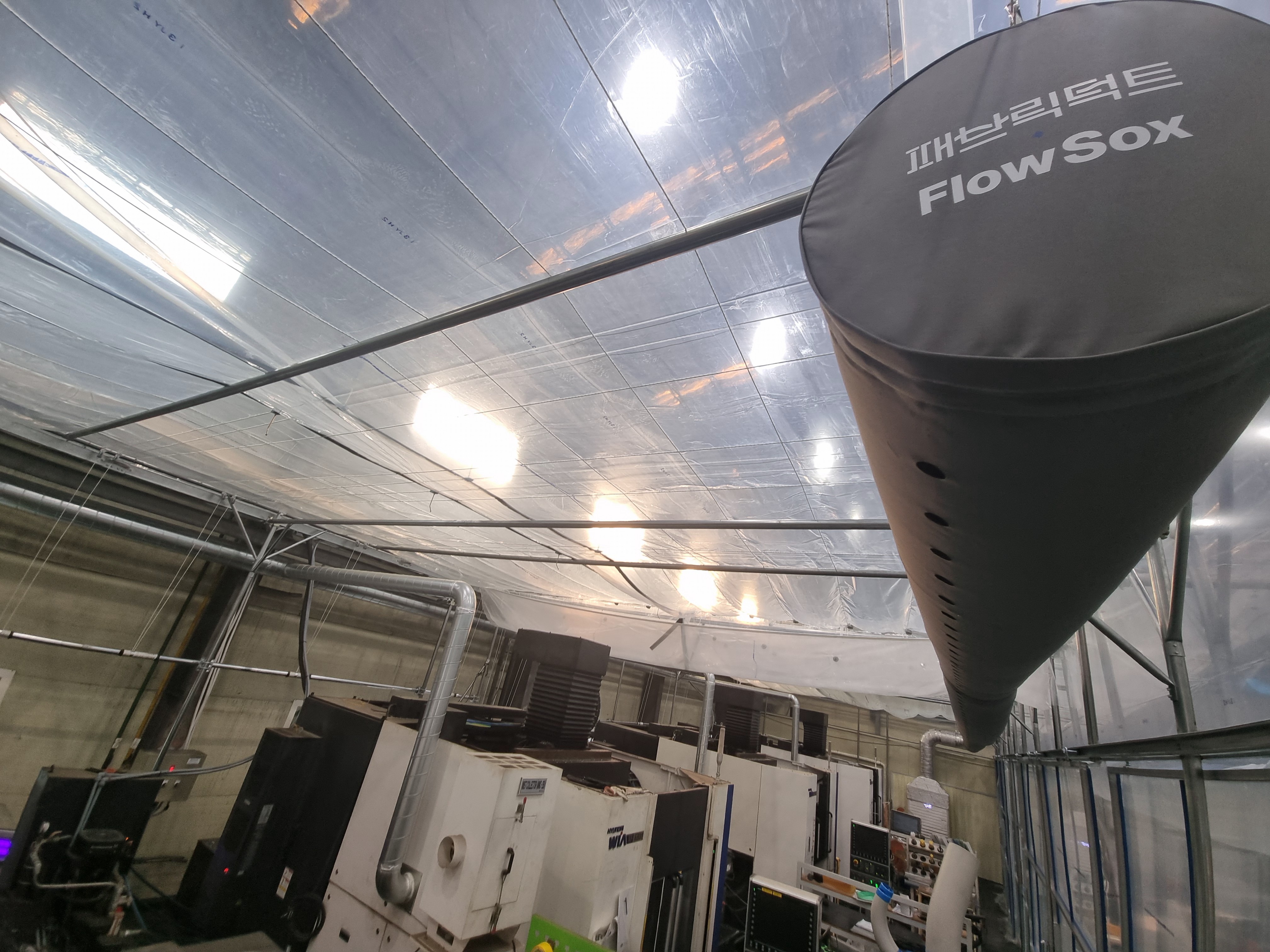
The S plastic injection molding facility is a site where heat is continuously generated by injection machines and peripheral equipment. The mechanical heat produced during operation causes the factory temperature to rise rapidly, creating an environment that places a significant thermal burden on workers.
In manufacturing plants with high mechanical heat, cooling the entire space requires high capacity and long operating hours. However, since the areas that actually require cooling are where the workers are stationed, cooling the entire space uniformly is inefficient.
Even with cooling equipment installed, if the cold air is not evenly distributed to the workers' positions, the perceived cooling effect is low. Especially in environments with high heat sources like injection molding plants, a design that reliably distributes cooling air to the necessary zones is essential.
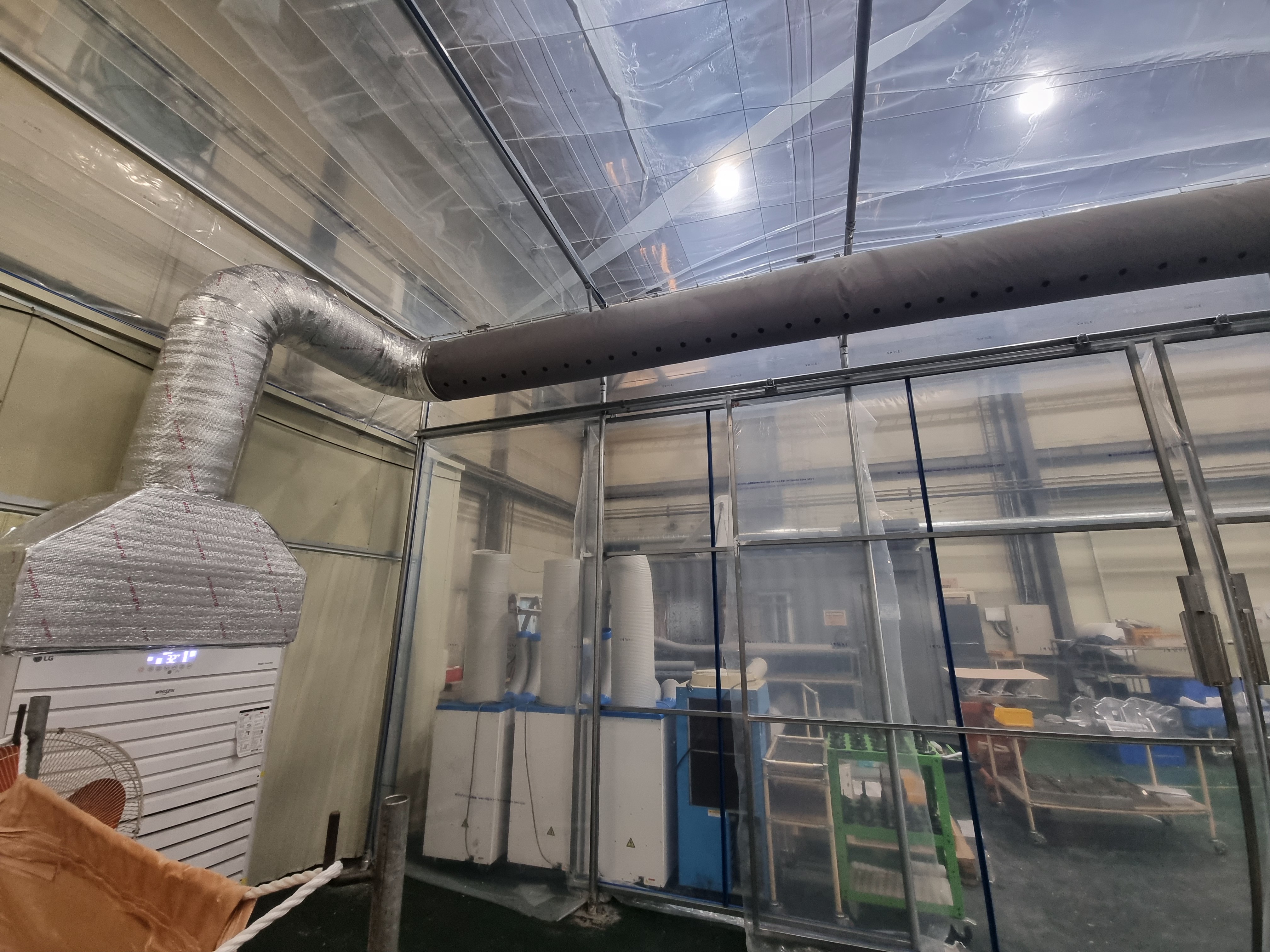
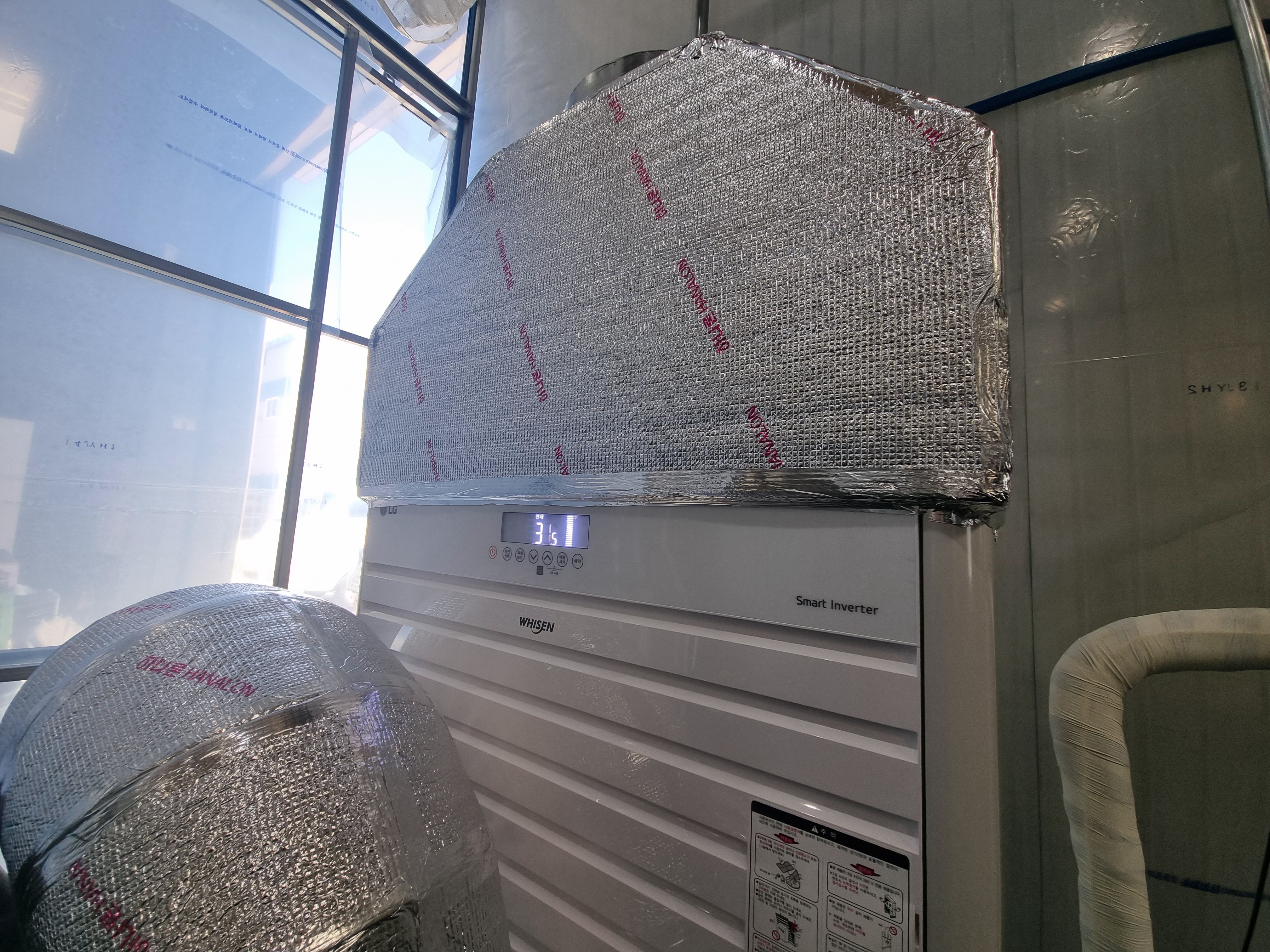
We connected the cooling air from two 80-pyeong air conditioners to fabric ducts. Instead of blowing cold air directly from the air conditioner outlets, the system was configured to distribute cooling air through the ducts, focusing on the work zones.
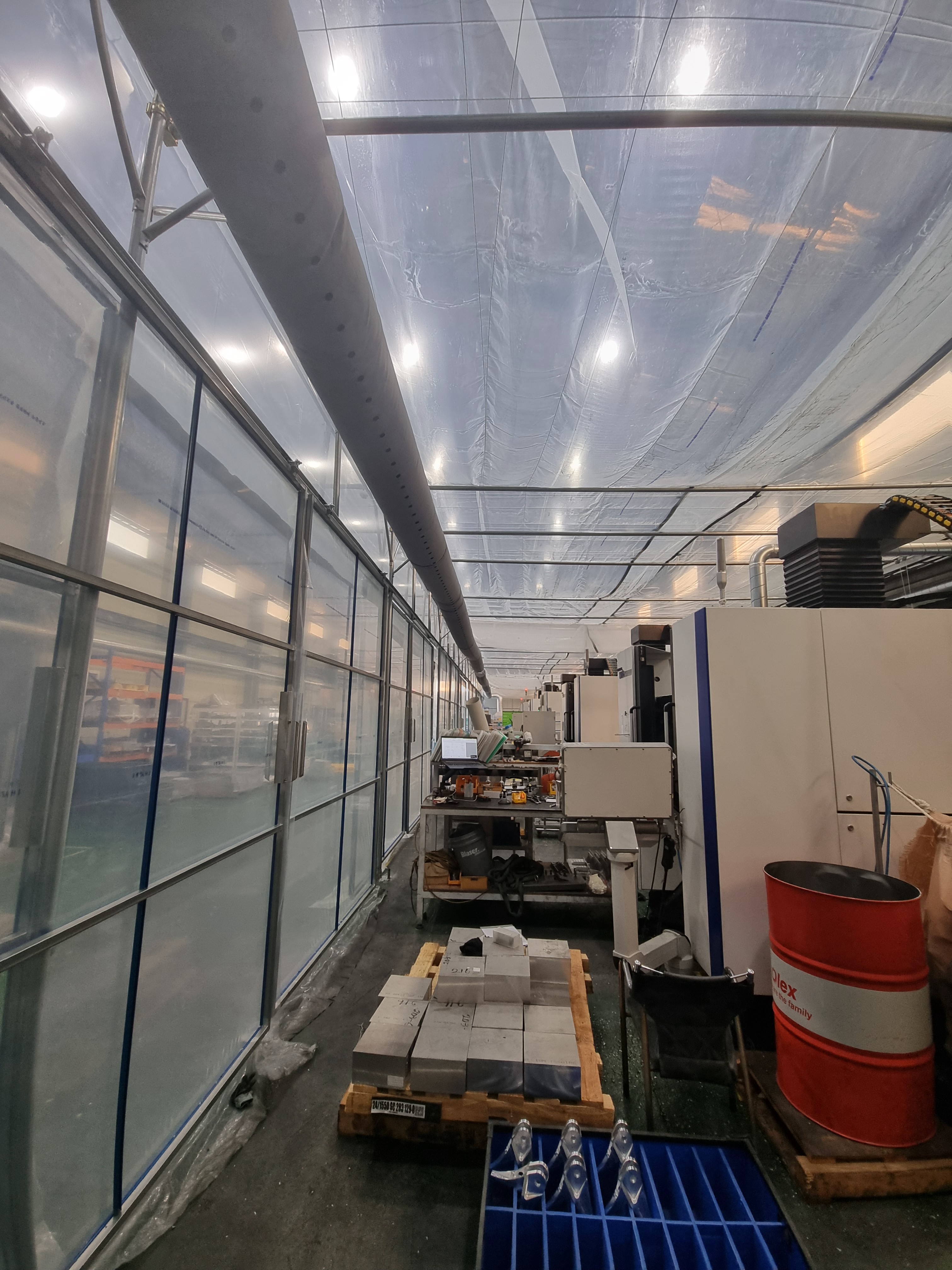
Rather than attempting to cool the entire factory, we applied spot cooling focused on the areas where workers actually spend their time. This allowed us to minimize the impact of heat from the injection machines and focus on creating a comfortable cooling environment for the workers.
We designed the system to prevent cold air from being immediately diluted by the heat from the injection machines or concentrated in only a few areas, ensuring stable distribution in the required directions. This allows the same cooling equipment to provide effective cooling across a wider work area.
After installing the fabric duct, the cooling air was discharged at approximately 13℃ from the first outlet and 15℃ from the last. With a temperature difference of less than 2℃ between the start and end of the duct, we confirmed that cooling air is being distributed consistently to the very end of the system.
Even in the high-heat environment of an injection molding factory, cooling air was effectively dispersed around the areas where workers are stationed. Rather than attempting to cool the entire factory, we focused the cold air directly on the actual work zones to create a cooling environment that workers can truly feel.
Instead of cooling the entire factory space, we designed the system to deliver cooling air specifically to the areas where workers are present. This reduces unnecessary cooling loads and allows for concentrated supply from two 80-pyeong air conditioners, leading to expected savings in operating costs.
.png)
.png)
