
Degraded fabric produced uneven permeability, surface condensation and dust adhesion, creating a risk of secondary contamination.
Simple air delivery did not circulate warm upper-level air down into the high-ceiling work area, allowing stratification to increase HVAC load and reduce energy efficiency.
Uneven discharge concentrated cold air in certain areas, over-drying products and causing worker complaints about cold drafts, leaving gaps in precision temperature control.
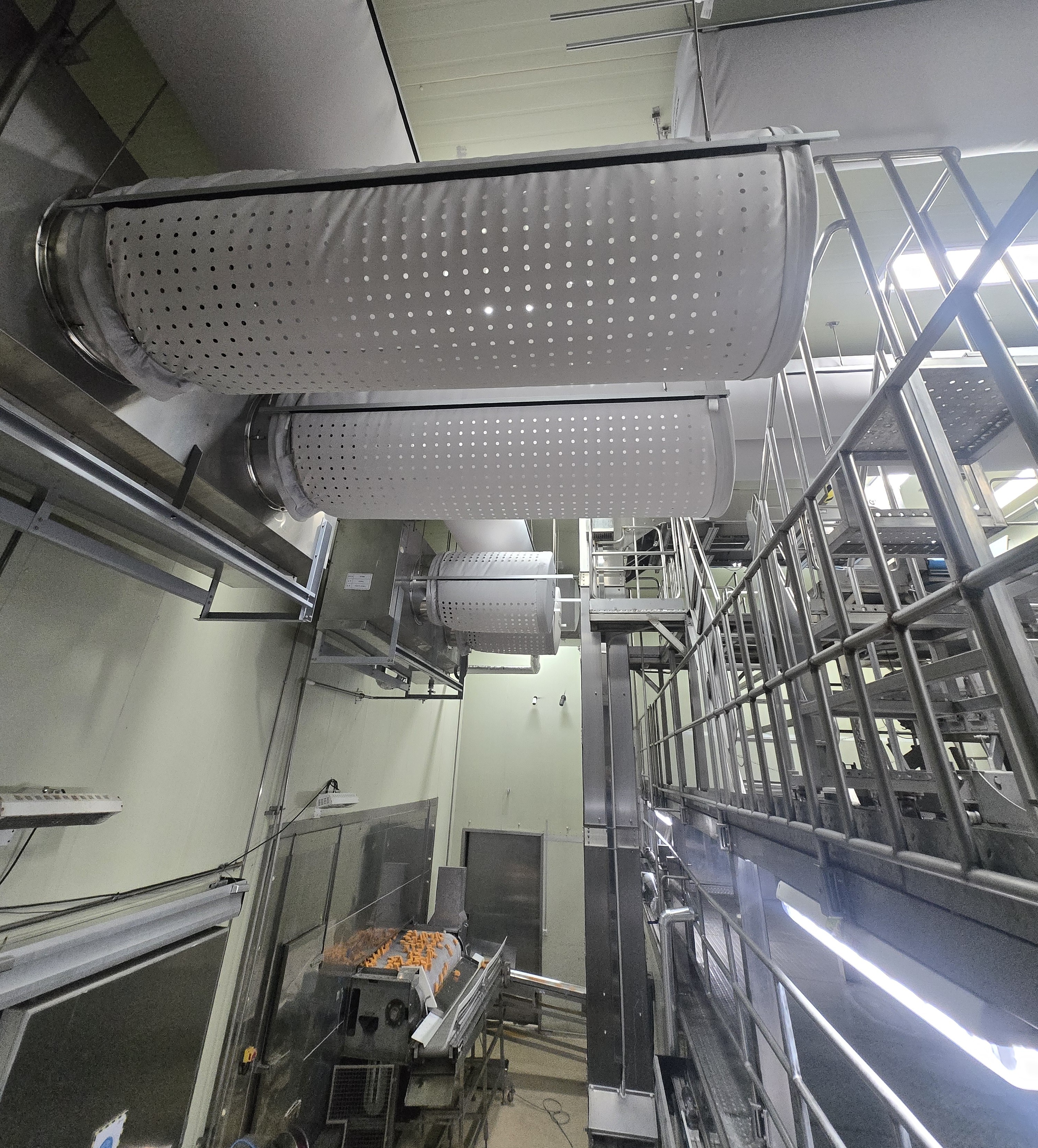
Precision holes maintained outward airflow over the duct surface, reducing external dust adhesion and foreign-material ingress while preventing contamination from internal dust.
Vertical directional airflow moved warm upper-level air downward, controlling temperature differences to within 1°C in the space over 6 m high.
Shape-stable, high-density antibacterial fabric maintained designed permeability and velocity over time. Stainless-steel profiles replaced less durable suspension wires to improve safety.
Uniform surface discharge through precision microholes physically reduced external dust adhesion and foreign-material ingress, supporting high hygiene standards.
Vertical airflow moved stagnant upper-level heat into the lower work zone, controlling vertical temperature differences to within 1°C and substantially reducing HVAC load.
Shape-stable, high-density antibacterial material suppressed condensation and mold while retaining the designed permeability during long-term operation.
