

In the enclosed sandwich-panel space, cooler noise reflected from walls and resonated, amplifying perceived noise to 86 dB and increasing hearing-related risks.
The cooler’s strong discharge struck workers directly and reduced work efficiency.
Persistent high noise can contribute to occupational illness and requires workplace management under Korea’s Serious Accidents Punishment Act and Occupational Safety and Health Act. The existing system struggled to maintain the required noise conditions.
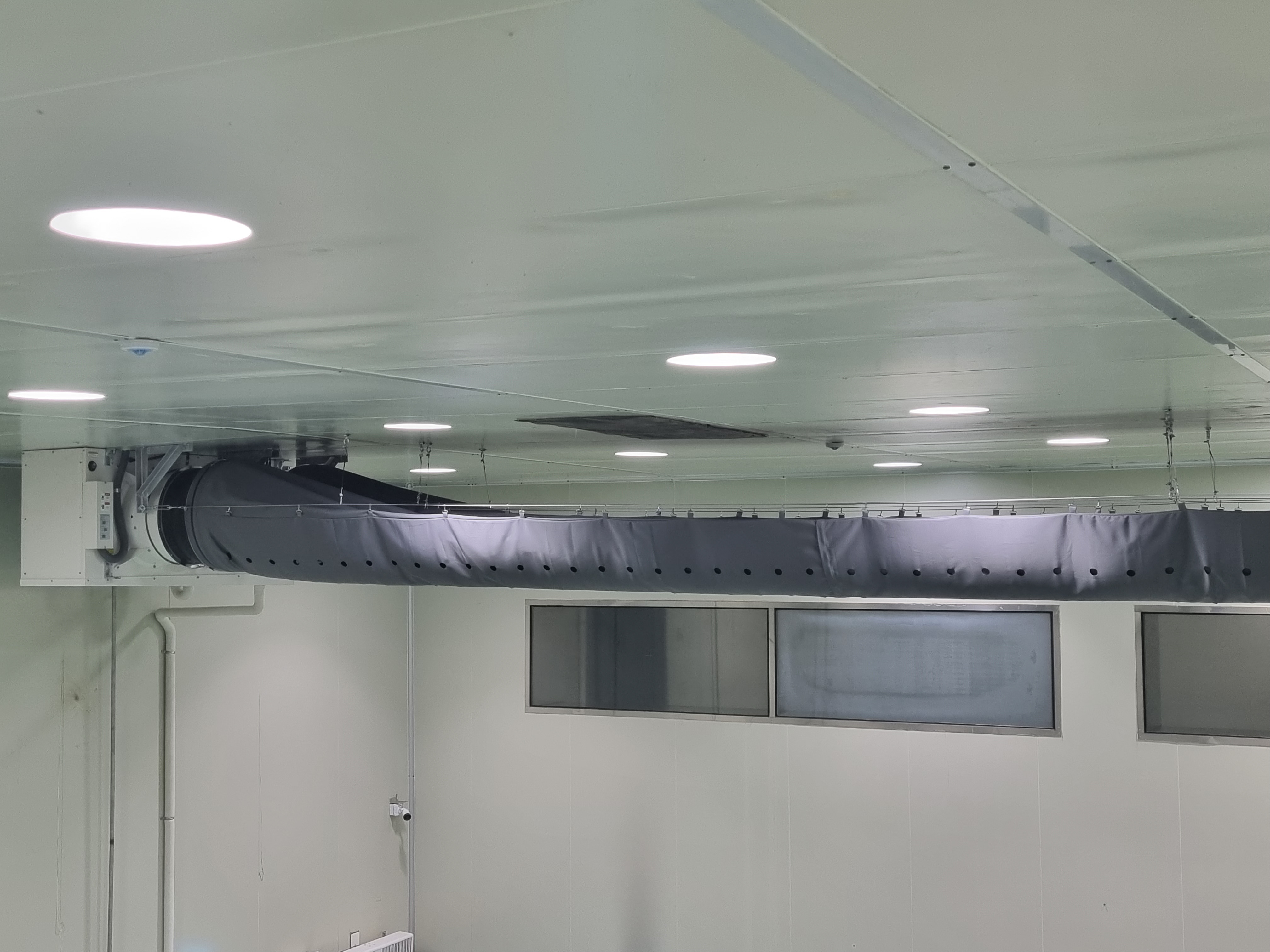
The flexible, porous fabric acts as a silencer for high-frequency fan noise. Minimizing airflow friction inside the duct also reduced room resonance.
Laser-cut holes spread air uniformly rather than releasing a strong jet in one direction. Lower air velocity reduced airflow-generated noise.
Permeable fabric prevented surface condensation in the humid food-processing environment, supporting hygiene management suited to HACCP processes.
Duct length and discharge area were designed to reduce noise measured at workers’ ear height and support a safer working environment.
The fabric absorbed sharp mechanical and reflected noise, reducing overall workplace noise to 76 dB and allowing easier communication between workers.
Uniform air distribution resolved 100% of worker complaints about direct cold drafts.
Uniform cool-air delivery reached previously underserved areas and maintained temperatures suited to preserving product freshness.
.jpg)


.jpg)
.jpg)


