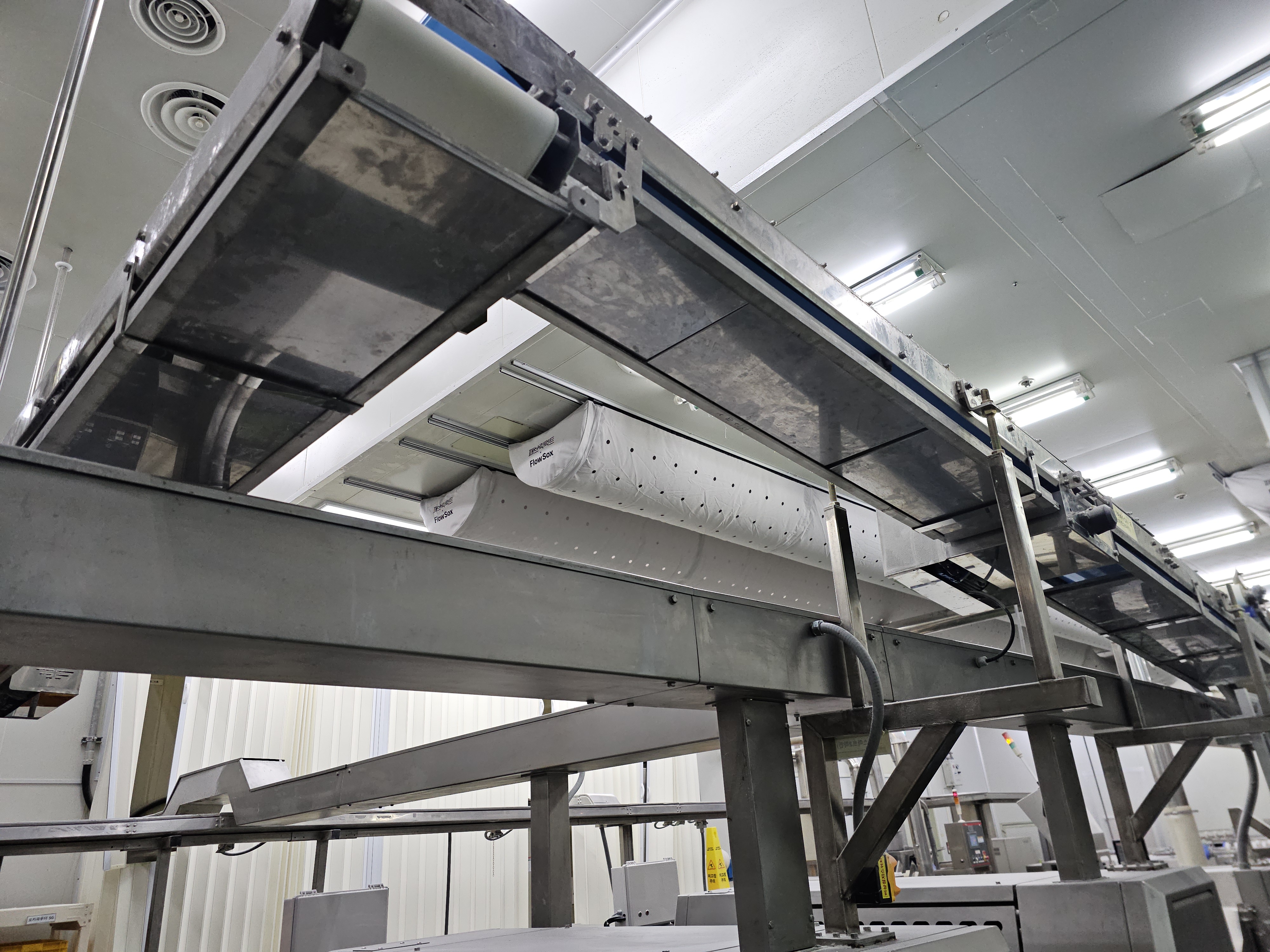
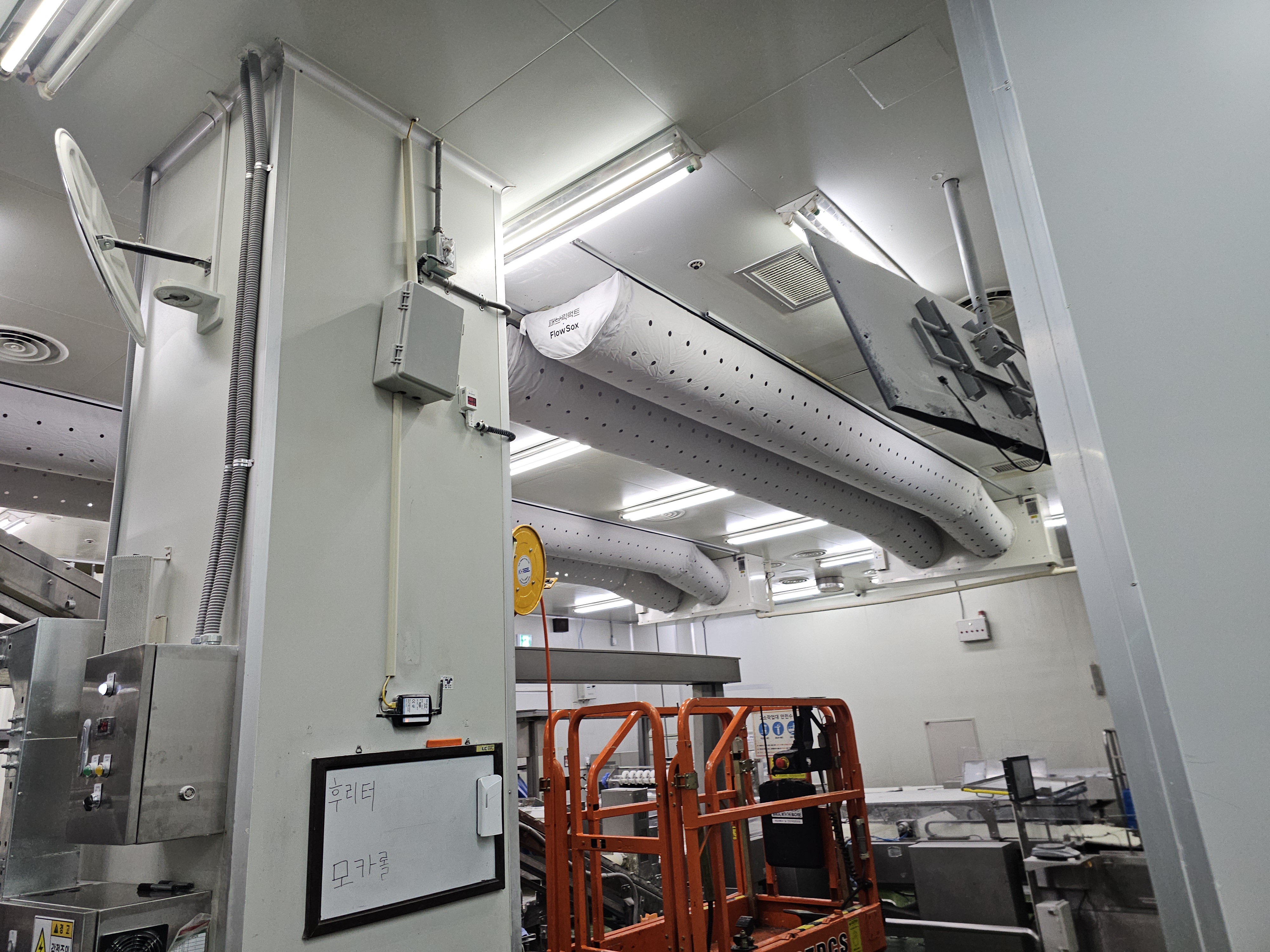
Condensation on the imported duct surfaces was accompanied by mold. In food factories, these issues can create hygiene risks rather than merely equipment problems, so a fundamental improvement was needed.
Doughnut production generates airborne flour dust. The existing MicroFlow system used small holes that could clog, destabilizing air discharge.
Non-permeable fabric combined with MicroFlow was unsuitable for an environment with high flour dust levels. Blocked holes caused uneven surface airflow and increased the likelihood of recurring condensation and contamination.
FlowSox permeable fabric creates a small airflow through the duct surface, reducing stagnant cold air at the surface and conditions that promote condensation.
Considering the flour dust, we selected WideFlow with a lower clogging risk rather than MicroFlow with small outlets. This improved discharge stability and maintenance.
The antibacterial fabric design considered condensation, mold and dust together. The solution addressed the site’s contamination factors and airflow model rather than simply replacing the ducts.
Permeable fabric created airflow over the duct surface and improved the conditions that had caused repeated condensation, helping reduce mold risk.
WideFlow avoided the small-outlet structure prone to flour-dust blockage, supporting stable air supply over time.
The fabric duct solution addressed condensation, mold and dust together, reducing HVAC-related hygiene risks and providing stable air distribution suited to food production.