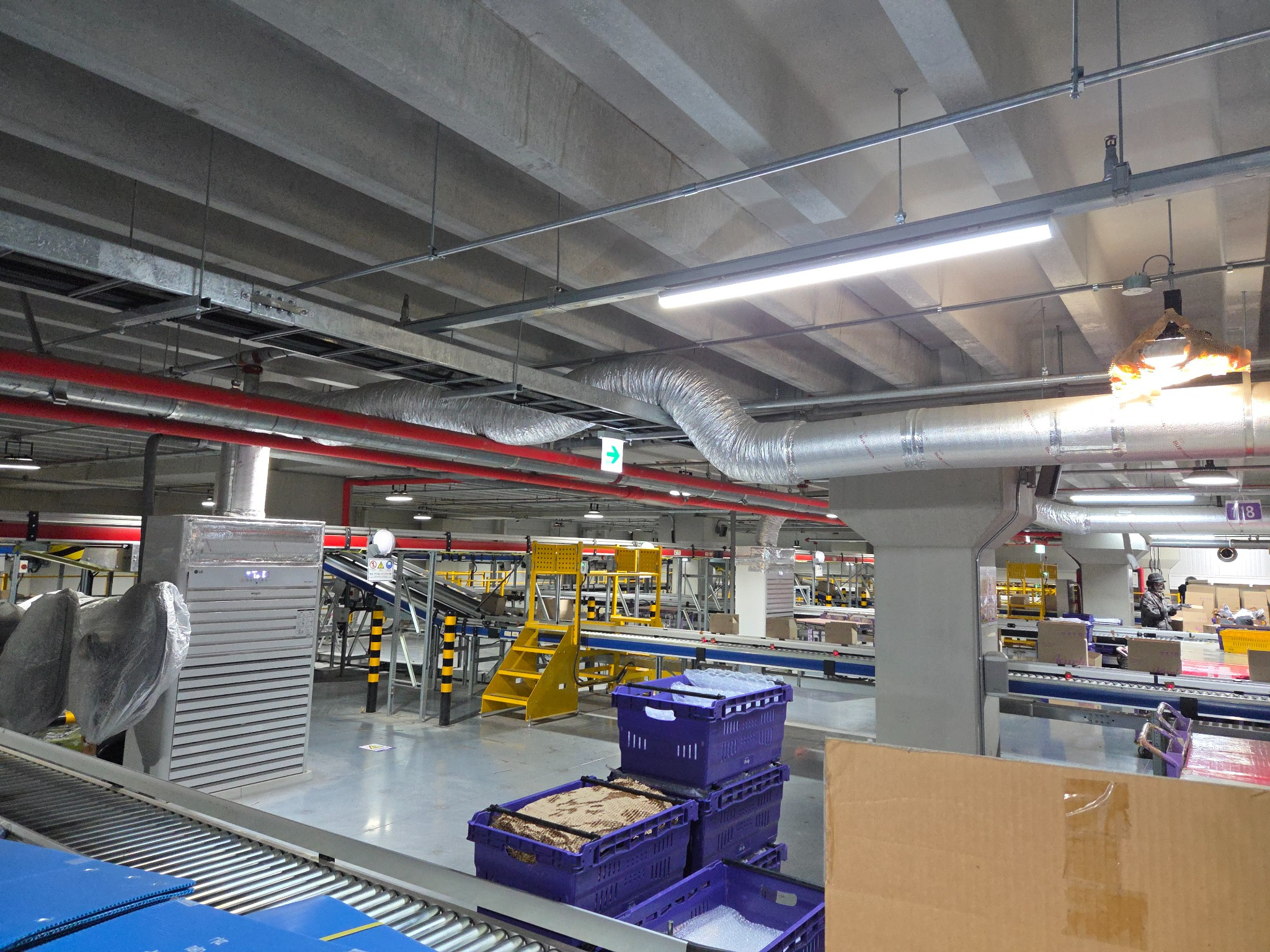
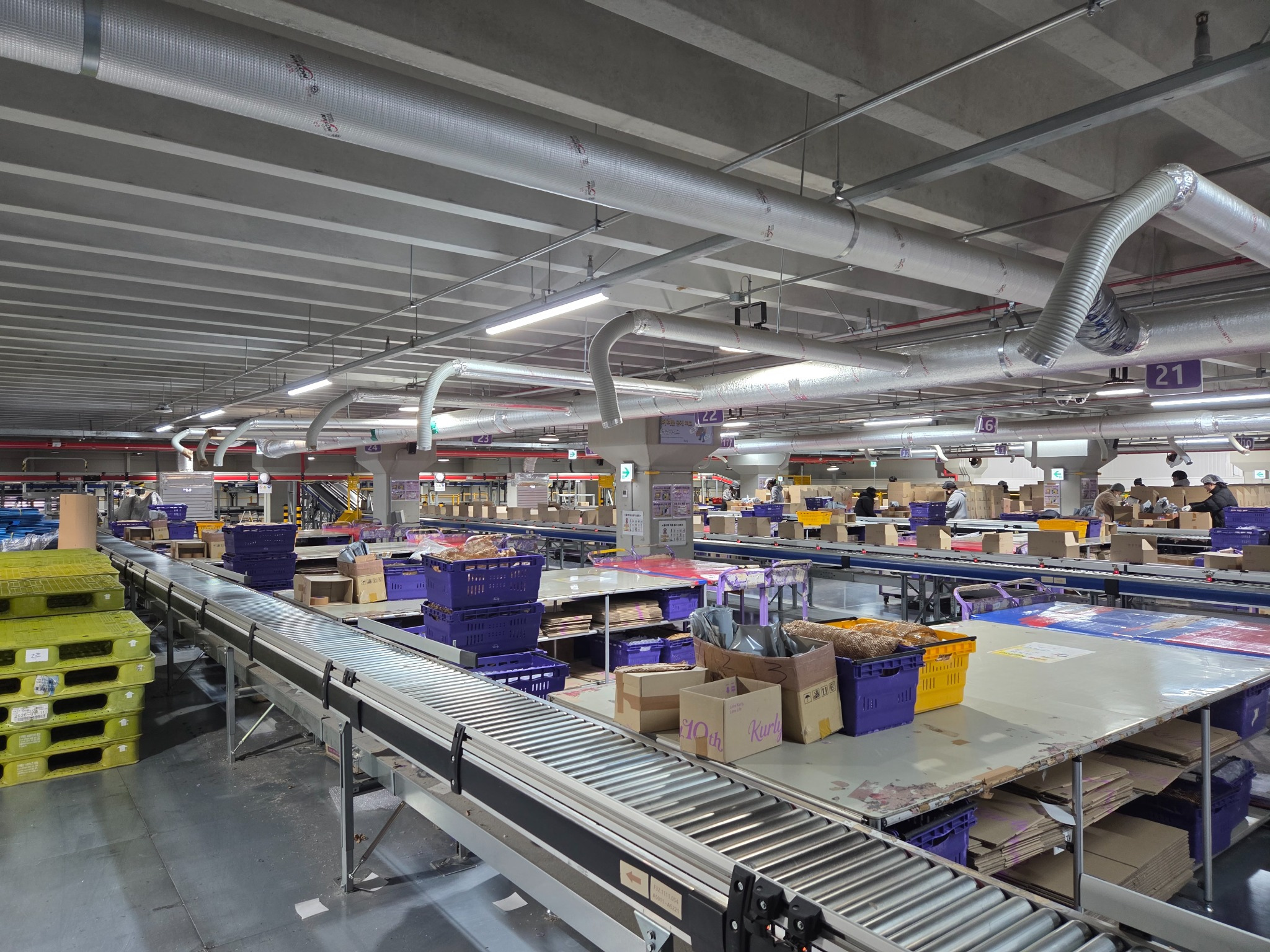
Air escaped through the front of the metal duct, sharply reducing airflow toward the end of the long line. Front workers were cold while rear workers barely felt the cool air.
Additional air conditioners and fans did not sufficiently improve cooling because the distribution structure remained unchanged, while electricity and equipment costs increased.
Workers at the rear remained in a cooling dead zone, exposed to heat-related illness risks during heat waves. This was also an occupational health and safety concern.
Maintaining consistent static pressure throughout the duct limited airflow and velocity variation to within 5% between the start and the final outlet 27 m away.
We optimized the air route from one 80-pyeong-class air conditioner to the occupied zone above workers, reducing intermediate losses and serving the long line without additional equipment.
CFD simulation predicted air velocity at 27 m before installation. Field measurements then verified the design with data.
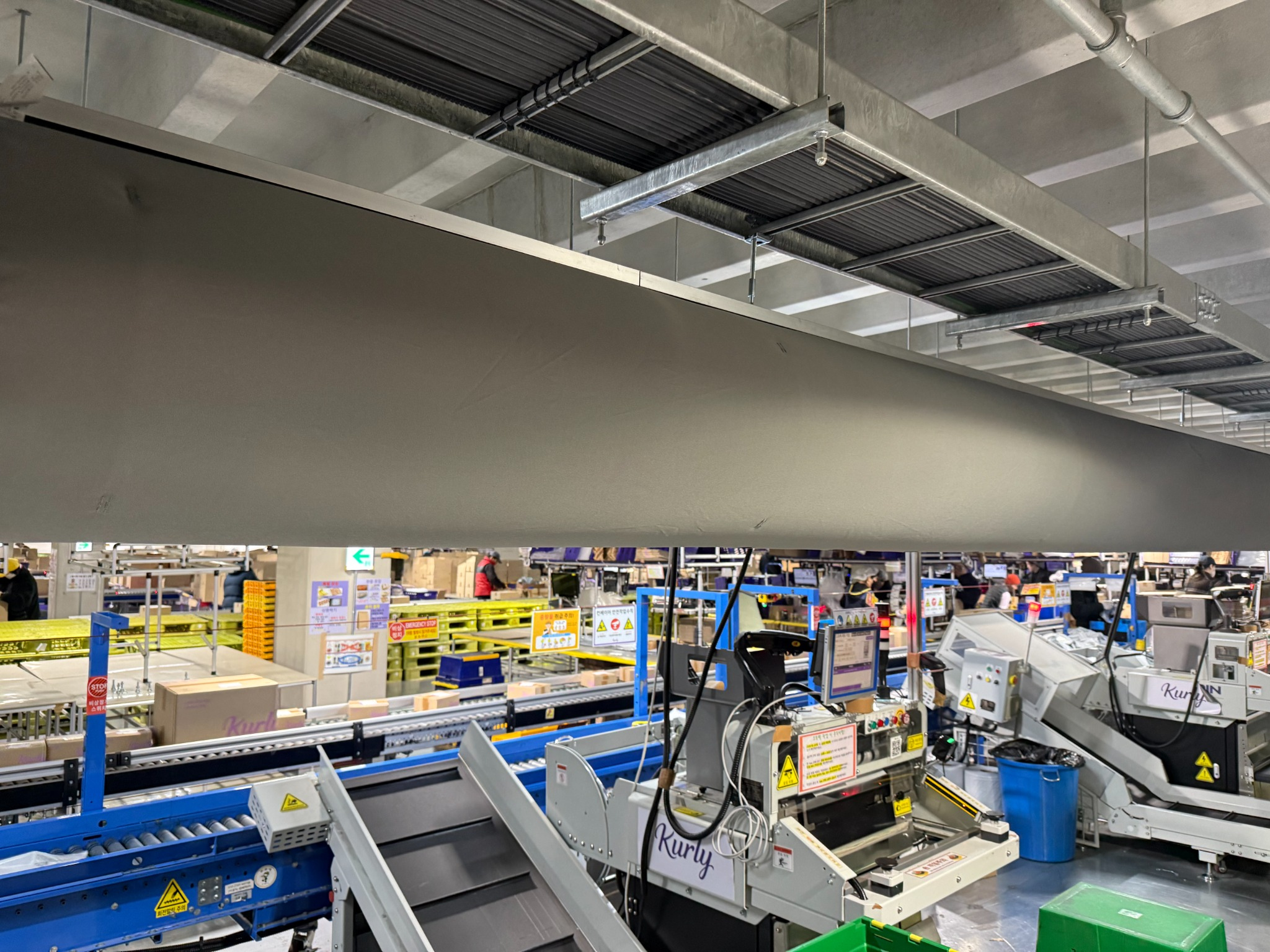
Ducts were precisely manufactured for the 27 m line. Domestic FlowSox production enabled manufacturing and installation within one week, minimizing the cooling interruption.
Measurements confirmed airflow variation within 5% between the front and rear, resolving the previous end-of-line airflow deficit and providing uniform cooling along the 27 m line.
Cool air was no longer concentrated in a few sections. Workers across the line experienced more uniform cooling without separate fans, improving comfort throughout the work zone.
Improved air distribution served the long line without adding air conditioners, reducing unnecessary equipment and operating costs while improving cooling for workers.
More uniform cooling across the line reduced heat exposure and heat-related illness risks for rear-line workers, supporting occupational health and safety risk management under Korea’s Serious Accidents Punishment Act.