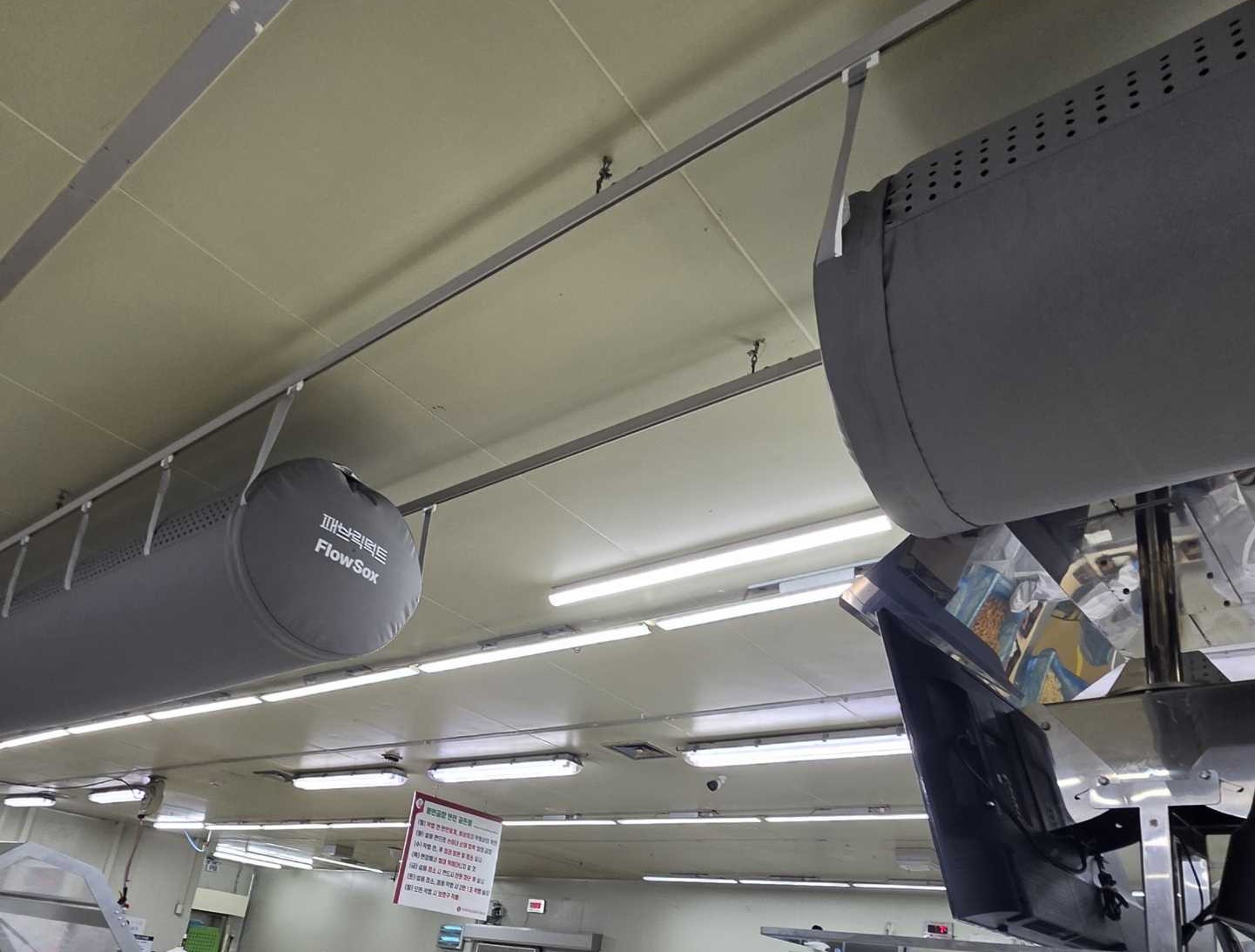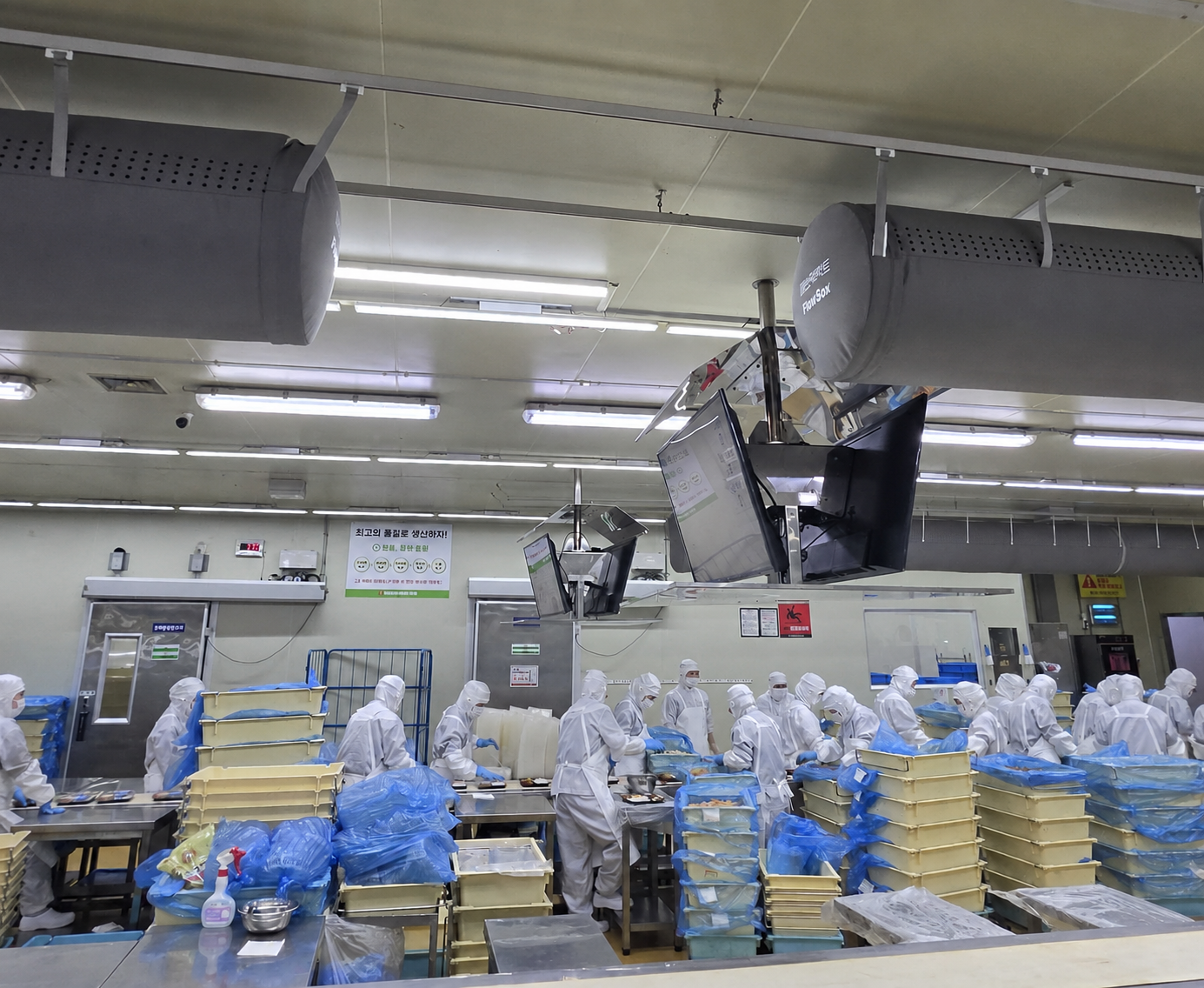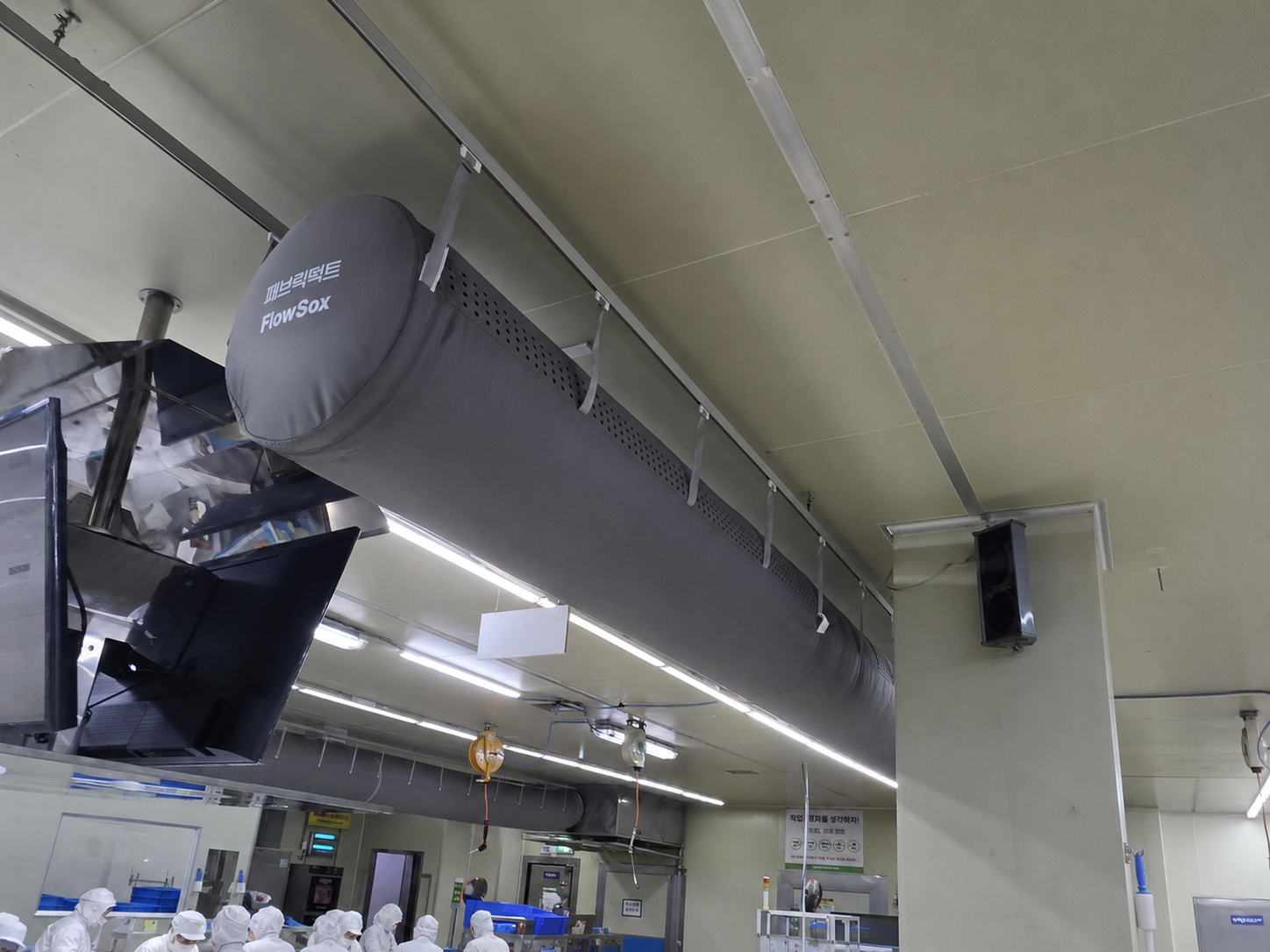
When strong airflow hits walls and ceilings, surface dust can be stirred up and dispersed. As this is a food production area, it was necessary to minimize direct airflow impact.
Direct downward discharge of air can carry airborne particles into food or work areas. Therefore, a design that avoids direct downward drafts was necessary.
If strong air continuously hits prepared meals, surface moisture can evaporate quickly, leading to drying or quality degradation. A gentle, low-velocity airflow was needed around the food instead of strong direct drafts.
Instead of directing air downward, we designed the discharge vents at 9:30 and 2:30 positions relative to the duct. We also adjusted the discharge angle to prevent direct impact on walls and ceilings.
We applied 4-row, 7.8mm discharge vents. By splitting the airflow through multiple holes, we ensured that the air is dispersed widely rather than concentrated in one spot.
By adjusting hole size, arrangement, and discharge direction, we designed for an airflow of less than 0.3m/s in the work area. This ensures that workers barely feel any strong wind on the production line.
By reducing direct airflow against walls and ceilings, we have minimized the re-dispersion of surface dust.
Instead of downward discharge, we utilized a low-velocity design to suppress airflow directed at food products.
We have created an airflow distribution environment that considers not just heating and cooling, but exactly where the air makes contact.