When nuts are exposed to high temperatures for extended periods, quality control becomes difficult, and an environment prone to stored-product pests can develop.
To reduce the likelihood of stored-product pests, we had to reduce heat stagnation throughout the entire space where nuts are stored and processed, rather than just cooling specific work areas.
Nut processing sites generate dust and involve repeated precision weighing in gram increments. Strong winds can disperse dust or affect weighing accuracy, so we needed to distribute air at a low velocity.
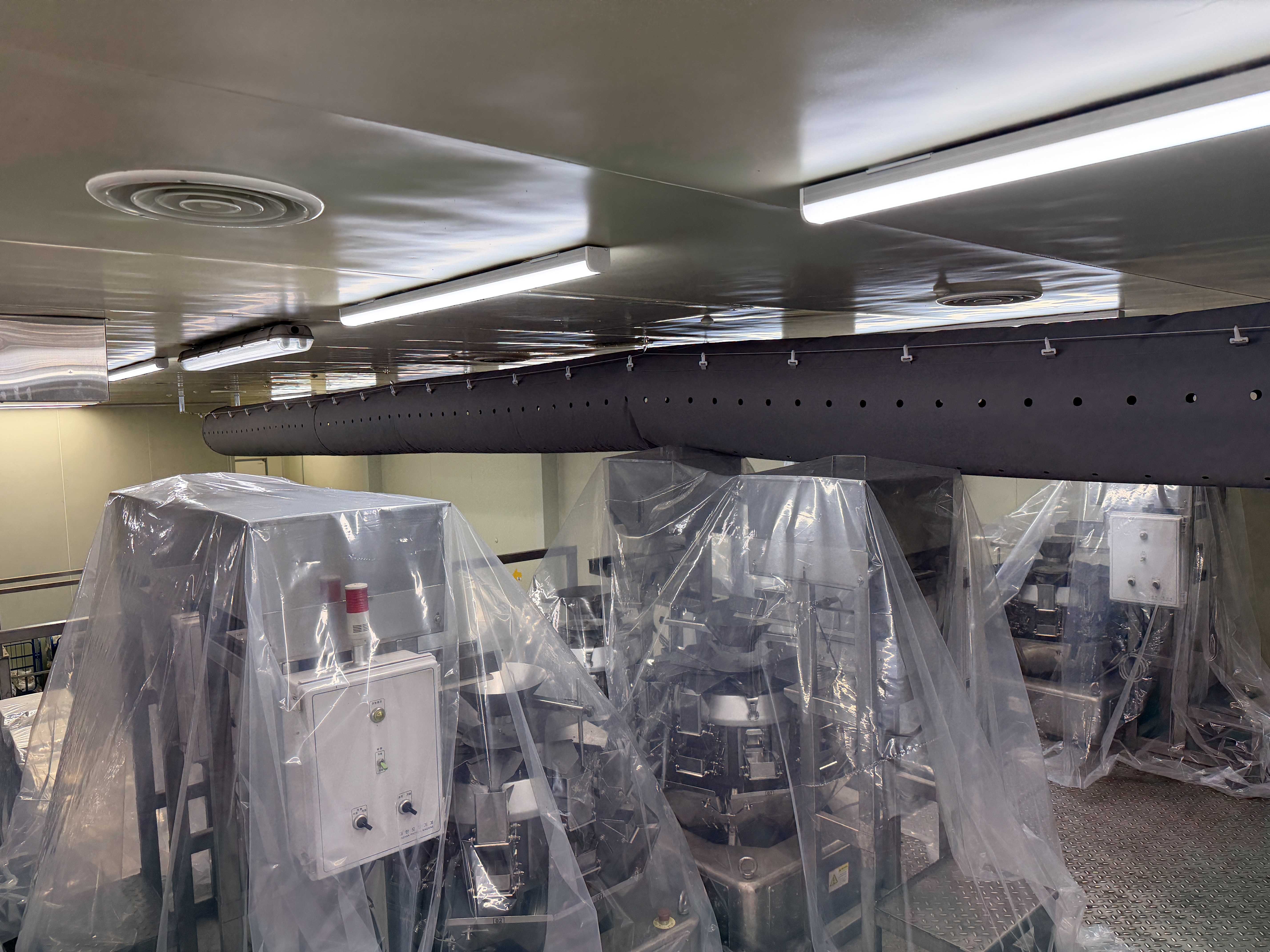
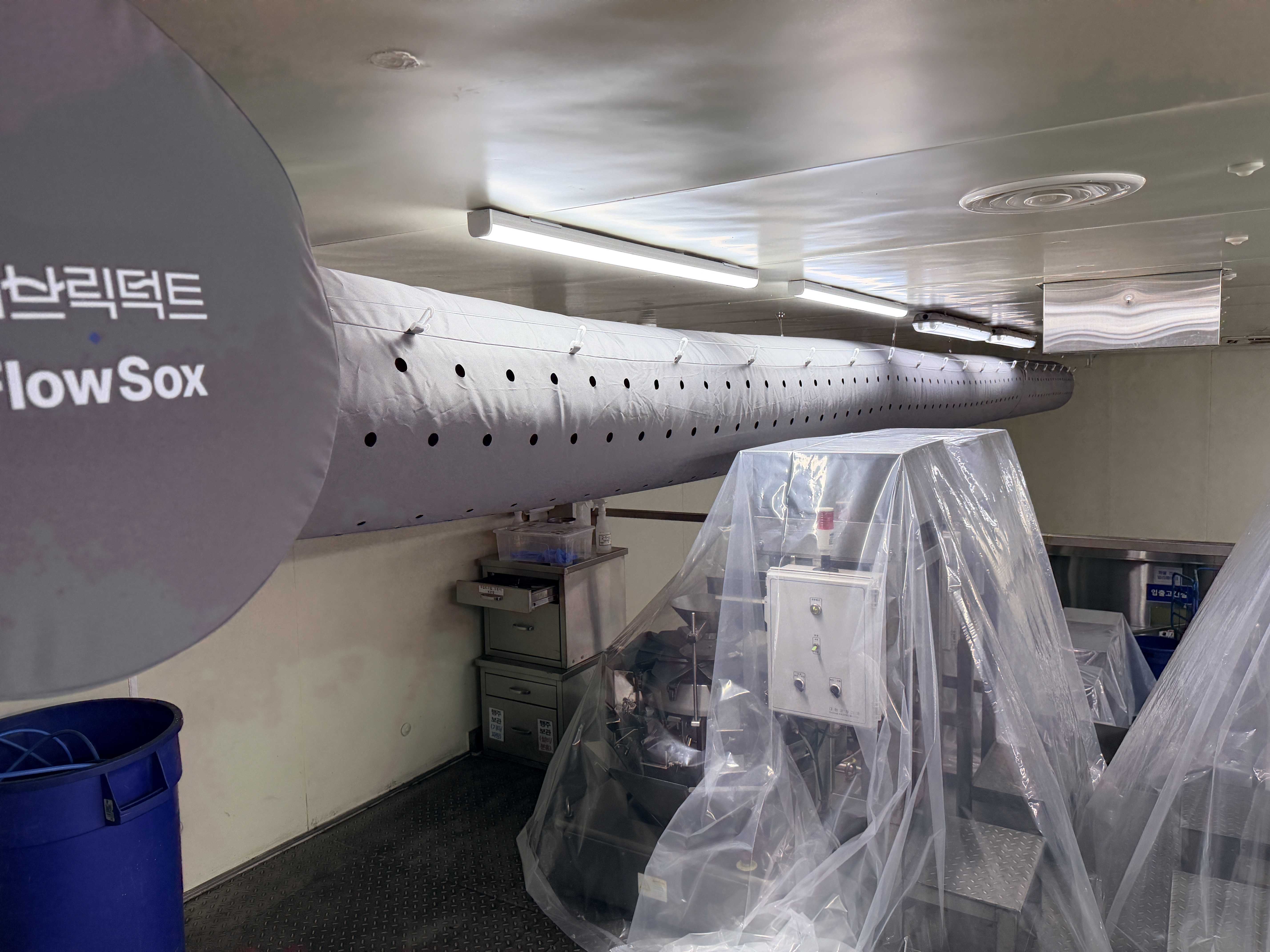
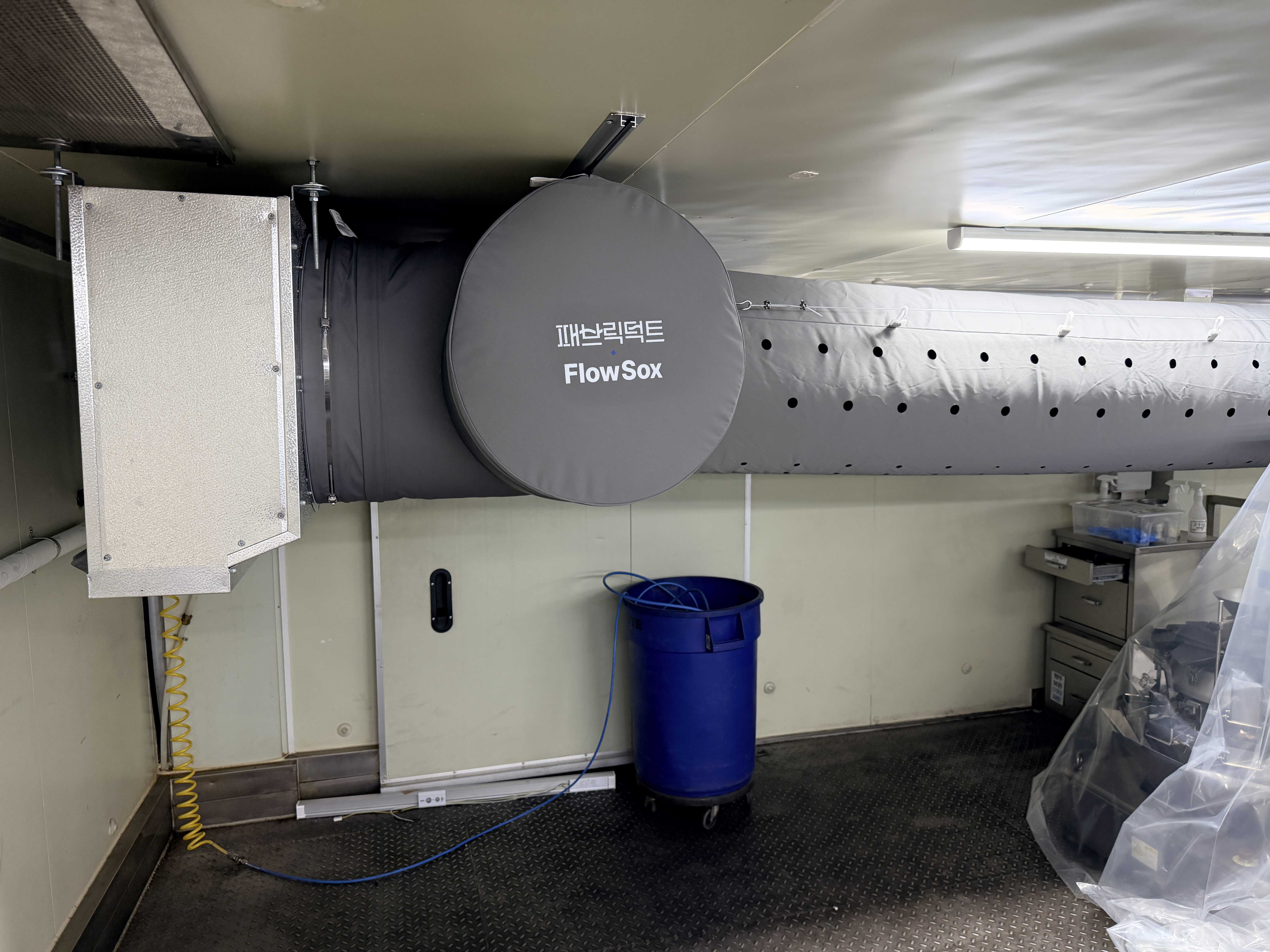
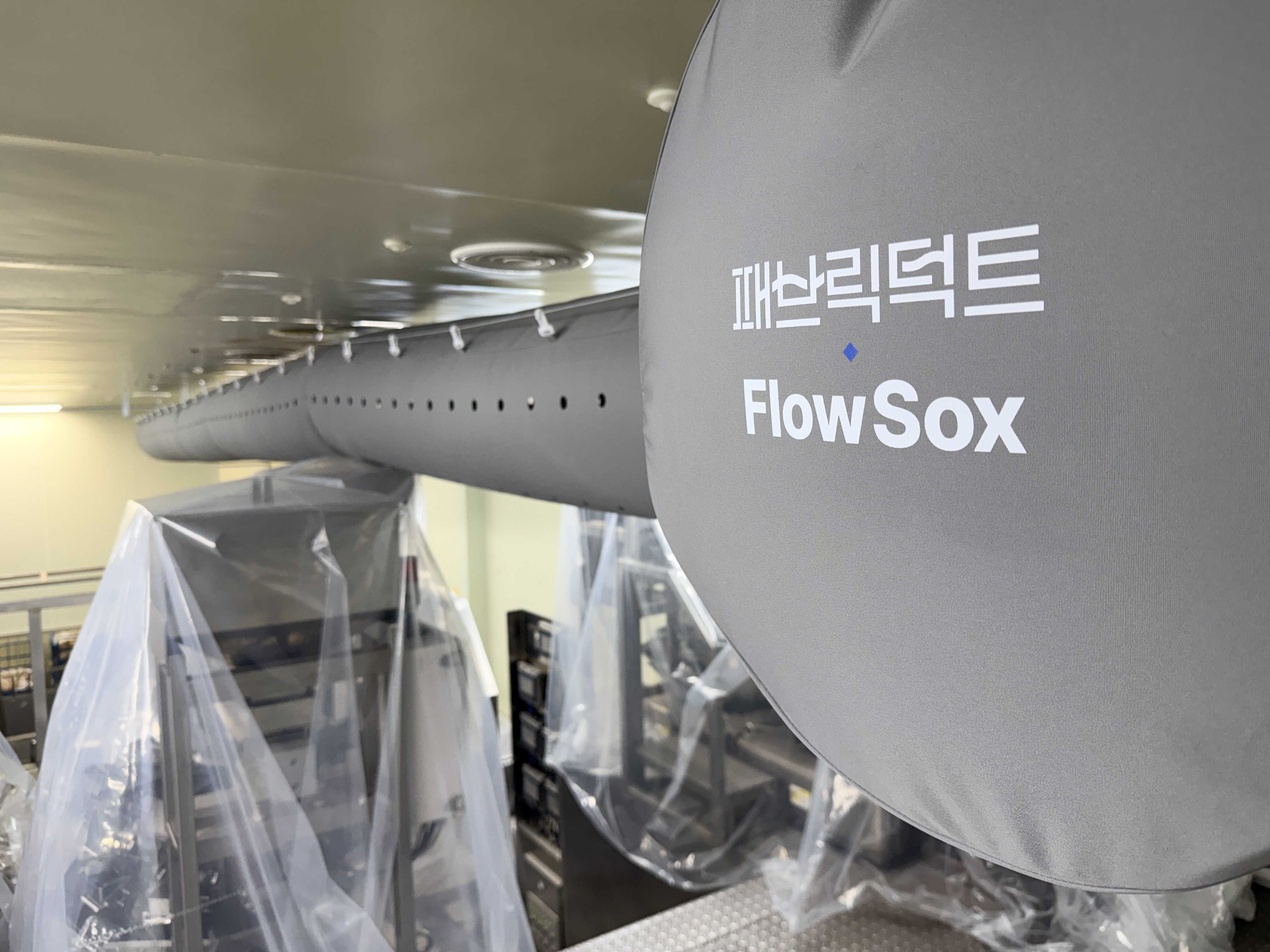
To supplement aging cooling equipment, we installed unit coolers and distributed cool air through fabric ducts. The system was designed to discharge cool air along the entire length of the duct to prevent wind from concentrating on specific points.
We installed circulation fans in areas where duct installation was difficult or where cool air did not reach directly. By circulating cooled air into these zones, we reduced heat stagnation and temperature variations between areas.
To reduce dust accumulation inside the ducts, we used a two-row wire suspension system instead of internal rings. Additionally, we directed approximately 70% of the airflow to the sides of the duct and discharged air at a low velocity from the 6 o'clock position to ensure it would not affect weighing operations.
We have established a temperature-controlled environment that reduces the risk of stored-product pests by improving high temperatures and heat stagnation zones within the factory.
By using fabric ducts and circulation fans to distribute cool air throughout the facility, we have reduced the issue of heat buildup in specific areas.
In food factories where dust is generated, it is crucial to design airflow with low velocity to prevent dust from becoming airborne and to avoid interfering with sensitive weighing processes. Our fabric ducts are designed to minimize maintenance burdens, even in food processing environments like nut processing plants where dust management is critical.